
Who is Ahmad Vahidi, Interpol-wanted IRGC general and key Iranian war strategist?
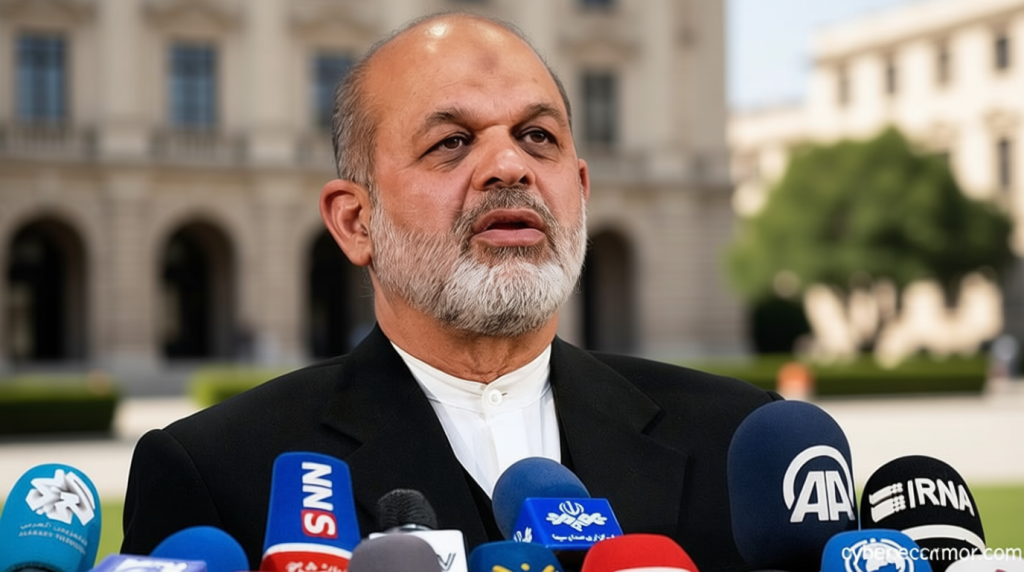
Who Is Ahmad Vahidi? Interpol-Wanted IRGC General and Iranian War Strategist
Who is Ahmad Vahidi Interpol wanted – Ahmad Vahidi, an Interpol-listed IRGC general, has emerged as a pivotal figure in Iran’s military and diplomatic strategies. His designation as a wanted individual by Interpol highlights his role in shaping Tehran’s approach to regional conflicts, particularly its rivalry with the United States. Vahidi’s responsibilities as deputy commander-in-chief of the Islamic Revolutionary Guard Corps (IRGC) place him at the core of Iran’s operational and negotiation frameworks. His engagement in critical discussions with global intermediaries, such as Pakistan’s Interior Minister, underscores his significance in the country’s efforts to manage international tensions.
Strategic Roles and Leadership
Vahidi’s influence spans both military and political spheres, making him a key player in Iran’s strategic landscape. He is part of a select group of advisors that guide the Supreme Leader’s son, Mojtaba Khamenei, who has been less visible since targeted strikes on his residence in early February. The Institute for the Study of War emphasized that Vahidi’s leadership has unified Iran’s military actions with its diplomatic maneuvers, positioning him as a linchpin in the nation’s response to global pressures. His Interpol status further cements his role as a central figure in Iran’s geopolitical strategies.
Back-Channel Diplomacy and Misinformation
Recent diplomatic efforts by Iran have seen Vahidi engage in secret talks with regional actors, aiming to de-escalate hostilities with the West. However, the meeting with Mohsin Naqvi, Pakistan’s Interior Minister, initially sparked debate. Iranian state media quickly clarified that the photographs of Vahidi in that role dated back to 2024, when he held a different position under President Ebrahim Raisi. This correction adds layers to the narrative, as it suggests Vahidi’s strategic interactions may extend beyond the present moment, involving complex historical and current contexts.
Military Background and Global Impact
As a long-time IRGC officer, Vahidi’s career began in 1980, following his birth in Shiraz in 1958 as Vahid Shahcheraghi. His early work in military intelligence during the Iran-Iraq War established the IRGC as a versatile force, combining defense with political influence. By 1988, he had risen to lead the Quds Force, an elite unit instrumental in training and supporting Shia militias across the Middle East. This role positioned him as a key architect of Iran’s regional alliances, with the Quds Force playing a critical part in conflicts involving Hezbollah and Hamas.
AMIA Bombing and International Sanctions
Vahidi’s involvement in the 1994 AMIA bombing in Buenos Aires remains a cornerstone of his international notoriety. The attack, which killed 85 and injured over 300, is regarded as the deadliest antisemitic event in the Western Hemisphere since World War II. Argentina’s prosecutors linked him to the planning of the attack, leading to his inclusion on Interpol’s Red Notice list. Despite Iran’s denial of responsibility, his connection to the incident has sustained his presence on the global wanted list, impacting diplomatic relations and sanctions efforts.
Rise to Political Influence
Following his military career, Vahidi transitioned into political leadership under Mahmoud Ahmadinejad, serving as defence minister from 2009 to 2013. During this tenure, he focused on advancing Iran’s self-reliance in weapon production, including missiles and drones. The Fars News Agency noted this period as a high point for Iran’s defensive capabilities, showcasing Vahidi’s ability to merge military and political agendas. His later appointment as interior minister under President Ebrahim Raisi in 2021 placed him at the forefront of managing security during nationwide protests, further solidifying his status as a strategic leader.
Legacy and Current Significance
From his early days in military intelligence to his current role as an Interpol-wanted figure, Ahmad Vahidi’s career reflects Iran’s evolving strategic priorities. His leadership in the Quds Force and subsequent political roles highlight his adaptability in navigating complex international scenarios. As tensions persist between Iran and global powers, his continued presence in the spotlight underscores his enduring importance in both military and diplomatic contexts. The combination of his historical actions and present-day influence ensures his role remains central to understanding Iran’s geopolitical trajectory.

