Lindsay Clancy’s attorney asks Trump for pardon after mistrial

Daftar Isi
Defense Lawyer Seeks Presidential Pardon for Lindsay Clancy Days After Hung Jury, But Constitutional Limits May Block the Request
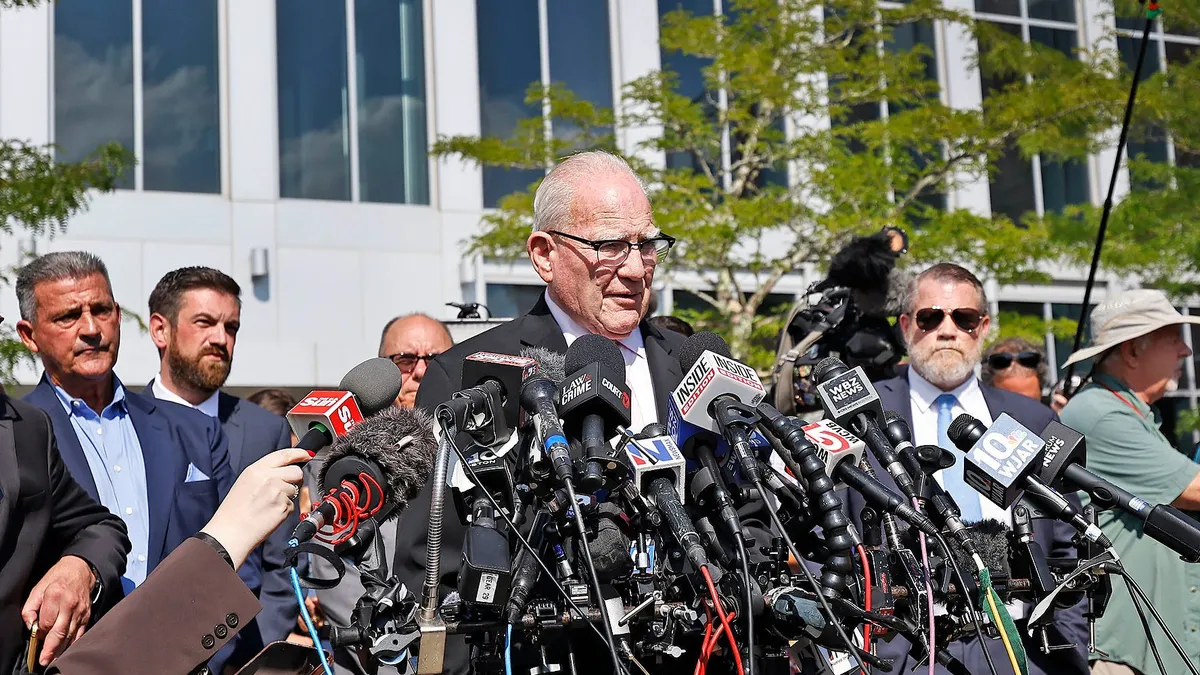
Cybersecarmor.com – Kevin Reddington, the attorney who spent weeks in a Massachusetts courtroom defending Lindsay Clancy against murder charges tied to the strangulation deaths of her three young children, turned to the highest office in the land on September 8. Appearing on “Good Morning America” in an interview with anchor George Stephanopoulos, Reddington urged President Donald Trump to grant his client a pardon — a request that immediately ran into a fundamental wall of American constitutional law.
The plea came just four days after a Plymouth County judge declared a mistrial in the case, leaving Clancy’s fate unresolved and the question of a second trial hanging in the balance. The timing made the pardon ask feel urgent, but the legal reality is stark: the U.S. Constitution grants the president authority to issue reprieves and pardons only for offenses against the United States, with the sole exception being impeachment proceedings. State-level criminal charges, such as the murder counts Clancy faces in Massachusetts, fall outside that power entirely.
The Mistrial and the Charges Behind It
Clancy, a 36-year-old woman from Massachusetts, stood accused of deliberately killing her children — 5-year-old Cora, 3-year-old Dawson, and 8-month-old Callan — in 2023. Prosecutors built their case over a weekslong trial, presenting evidence they said showed intentional strangulation. The defense, by contrast, argued that Clancy was suffering from postpartum psychosis at the time of the deaths, a severe psychiatric condition that can emerge in the weeks following childbirth and that may impair a person’s capacity to form criminal intent.
The jury, after deliberating, could not reach a unanimous verdict. On September 4, the judge dismissed the trial as a mistrial. Plymouth County District Attorney Tim Cruz subsequently announced he would determine in the near future whether to seek a retrial, leaving Clancy in a state of legal limbo.
Trump’s Oval Office Remarks
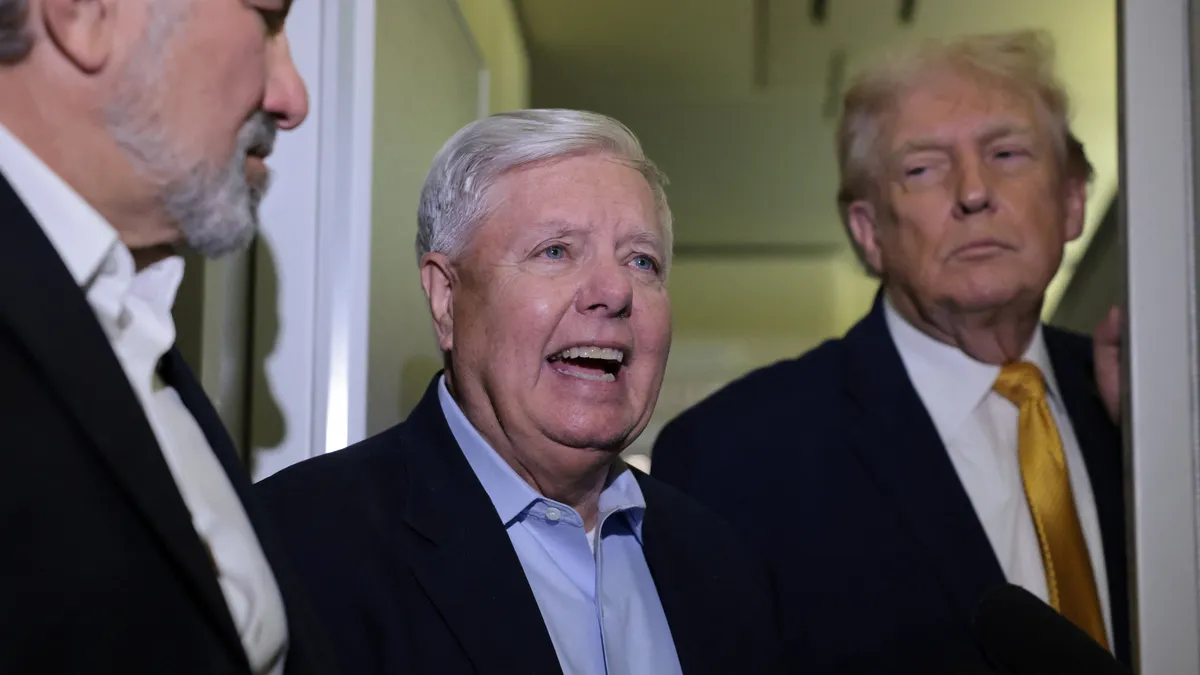
The president had already weighed in on the case publicly. Speaking at a September 4 event in the Oval Office, Trump described the situation as “terrible” and offered a blunt assessment of what he expected the outcome to be.
“Look, she did a horrible, horrible thing. Can’t be worse. But you’ll find out what the price to pay is, there’ll be a price. It’s going to be mental institution or jail or something.”
Those remarks, delivered days before the mistrial was formally declared, drew widespread attention and amplified public scrutiny of a case that had already generated enormous online discussion. They also set the stage for Reddington’s pardon appeal, which arrived in the media cycle shortly after the president’s comments circulated.
The Constitutional Barrier
Article II of the U.S. Constitution gives the president the “power to grant Reprieves and Pardons for Offences against the United States, except in Cases of Impeachment.” That language has been interpreted consistently since the founding era to apply exclusively to federal crimes. State prosecutions — including state murder charges — remain under the jurisdiction of state governors, state pardon boards, and state courts. In practical terms, even if Trump wished to intervene directly in Clancy’s case, the mechanism would have to run through Massachusetts’s own clemency apparatus, not the White House.
Reddington nonetheless framed his request as a matter of moral appeal rather than strict legal procedure, asking the president to “consider this young lady, the type of person she is, what she’s been through, and consider a pardon.” Whether that language was intended as a literal petition or as a rhetorical gesture aimed at shaping public sympathy remains a matter of interpretation.
Retrial and Plea Negotiations
Beyond the pardon question, Reddington addressed the more immediate procedural path. He said he was “willing to listen” to District Attorney Cruz and expressed hope that, after both sides had presented their evidence over the course of the trial, Cruz might revisit his position and work toward a resolution acceptable to both parties.
“I hope, however, after sitting through this trial and seeing the evidence that was presented from the government as well as from the defense, that he would revisit that issue and hopefully would be able to work something out that would be acceptable to both sides.”
A retrial would mean another weekslong proceeding, another jury, and another round of public spectacle. A negotiated resolution, if one could be reached, would spare the parties that ordeal but would require Clancy to accept some form of conviction or plea arrangement.
Patrick Clancy’s Fight Against a Defamation Campaign
Running parallel to the criminal case was a separate but emotionally charged dispute involving Patrick Clancy, Lindsay’s former husband. His attorney, Howard Cooper, issued a statement on September 8 condemning what the firm called “a relentless, escalating and destructive defamation campaign” directed at Patrick. Cooper alleged that “minor celebrities, so-called influencers and outright conspiracy theorists” had circulated unsupported claims suggesting Patrick played a role in his children’s deaths.
“This spread of blatant and baseless falsehoods must stop. Those responsible should understand that there will be consequences, and every appropriate measure will be pursued to hold them accountable, including legally.”
Cooper added that law enforcement had been notified of the campaign. The statement closed with Patrick’s stated goal: halting what the family described as injurious behavior, creating accountability for what it characterized as self-serving lies, and redirecting his attention toward preserving the memory of Cora, Dawson, and Callan while supporting other women navigating perinatal mental health challenges.
David Meier, another attorney representing Patrick Clancy, had released a separate statement immediately after the mistrial was declared, thanking jurors for their commitment and acknowledging the emotional toll of the proceedings.
“The prospect of reliving this tragedy through another trial is extraordinarily painful – for Patrick, for his family, and for all of us.”
Why the Case Drew National Attention
The Clancy trial captured public interest for several converging reasons. The ages of the victims — an infant, a toddler, and a preschooler — made the facts difficult to ignore. The postpartum psychosis defense introduced a medical and psychiatric dimension that invited debate about how the criminal-justice system handles mothers whose mental health deteriorates in the perinatal period. And the sheer volume of social-media commentary, much of it speculative, turned a state courtroom proceeding into a national talking point within days.
Postpartum psychosis, affecting roughly one to two women per thousand deliveries, is characterized by confusion, hallucinations, delusions, and sometimes a diminished awareness of one’s own actions. It is treated as a psychiatric emergency. Whether a diagnosis of that condition can negate the mens rea required for a murder conviction depends on jurisdiction-specific standards and on the strength of clinical evidence presented at trial — questions the hung jury was evidently unable to resolve unanimously.
As the case now sits, the next decisive move belongs to District Attorney Cruz. Whether he files new charges, negotiates a plea, or takes a different path will determine whether Lindsay Clancy ever faces a second jury. Until then, the pardon request, the defamation statements, and the public commentary will continue to orbit a trial that ended without a verdict.
Related Reading
Frequently Asked Questions
What is Lindsay Clancy s attorney asks Trump?
Lindsay Clancy s attorney asks Trump is the main topic of this guide. The article explains the context, practical details, and next steps readers should understand.
Why does Lindsay Clancy s attorney asks Trump matter?
Lindsay Clancy s attorney asks Trump matters because readers are looking for a useful answer, not just a short summary. Good content should match search intent and help them decide what to do next.