Trump’s approval drops among Republicans ahead of midterms, new poll shows

Daftar Isi
Republican Loyalty Cracks Ahead of November Vote as New Survey Reveals Sharp Erosion in Trump Support
Cybersecarmor.com – With fewer than two months separating voters from the November midterm elections, a fresh national survey has exposed a meaningful fracture within the Republican base. The data, gathered by the NBC News Decision Desk between August 20 and September 1, shows that the share of party loyalists who describe their approval of President Donald Trump’s job performance as “strong” has fallen by roughly ten percentage points since the spring. The shift arrives at a moment when the White House faces its most consequential electoral test since taking office, and when economic anxiety and an ongoing military confrontation with Iran are reshaping the political conversation.
From Overwhelming Backing to a Narrower Margin
In polling conducted during March and April of this year, a commanding 52 percent of Republican respondents told surveyors they strongly approved of how the president was handling his duties, while 31 percent offered a softer, “somewhat approve” assessment. By the time the August-to-September fieldwork concluded, that dynamic had inverted almost entirely. Only 41 percent of Republicans now place themselves in the strong-approval bucket, and the somewhat-approve category has surged to 39 percent. The two groups are now separated by a mere two points, a configuration that signals considerable ambivalence among the party’s most committed constituency.
The findings were presented publicly by Steve Kornacki, the network’s senior data analyst, who framed the numbers as a record low for NBC’s polling operation during the current presidential term. Trump’s composite approval rating — combining all respondents regardless of party affiliation — settled at 36 percent, a figure that sits just three points above the 33 percent trough captured in a Reuters poll released the previous month. For a president who entered office with historically elevated support levels, the trajectory underscores how quickly public sentiment can migrate when economic conditions deteriorate and foreign-policy risks escalate.
Economic Worry and the Iran Conflict as Backdrop
The timing of the survey coincides with a period of heightened domestic unease. Americans are entering the final quarter of the calendar year carrying fresh anxieties about inflation, employment stability, and the trajectory of the broader economy. Simultaneously, the United States remains entangled in a military engagement with Iran, a conflict that has introduced a layer of unpredictability into daily life and into the calculus voters will bring to the ballot box. Pollsters have long noted that wartime and economic stress tend to compress the gap between strong and moderate approval, precisely the pattern visible in these numbers.
Trump’s Counter-Narrative: Confidence Despite Historical Headwinds
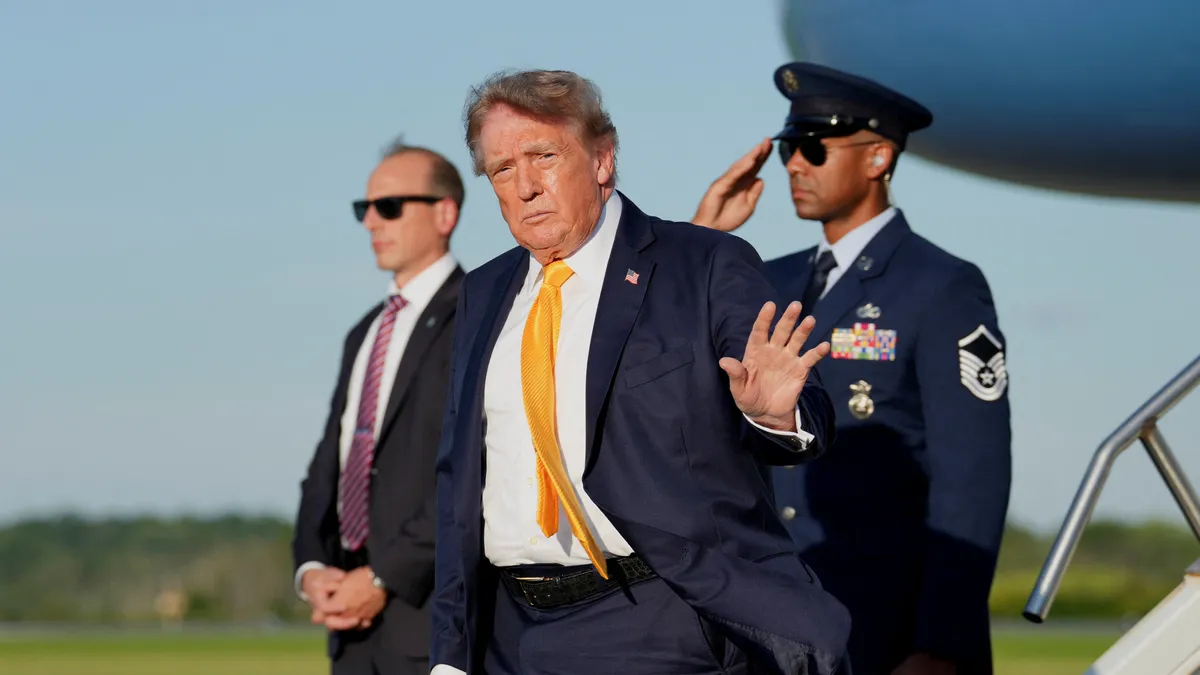
The president has publicly pushed back against the conventional wisdom that suggests the party holding the White House typically cedes seats in both chambers of Congress. Speaking on August 30 during an appearance on Fox News’ program “Sunday Night In America With Trey Gowdy,” Trump dismissed the historical pattern with characteristic bluntness:
“For some reason, the voters tend to go the other way. I think we’re gonna do very well.”
That optimism is set to be tested in earnest over the coming weeks. Trump and Vice President JD Vance are expected to take the stage at the Republican Party’s midterm convention in Dallas, an event that marks the first such gathering in recent decades. The convention is designed to energize the party’s grassroots ahead of a campaign that will see Republicans on the defensive in a cluster of competitive swing states. Organizers hope the rally will convert residual enthusiasm into turnout, particularly among the cohort of voters now wavering between strong and moderate approval.
Why the Midterm Structure Favors the Opposition
Historical patterns in American electoral politics suggest that the president’s party loses seats in both the House and Senate in midterm contests more often than not. The mechanism is straightforward: the electorate tends to use the midterms as a referendum on the incumbent’s performance, rewarding the opposition with a check on executive power. When approval ratings sit in the mid-to-upper 30s and the base itself shows measurable softening, the arithmetic becomes even more unfavorable for the party in power. Analysts watching the Dallas convention will be listening not only for rally rhetoric but for any signals about where campaign resources will be concentrated in the weeks before Election Day.
Methodology and Caveats
The NBC News Decision Desk survey examined 7,105 adults recruited online over the period spanning August 20 through September 1. The stated margin of error for the full sample is plus or minus 3.3 percentage points. Online panel methodologies of this size can capture broad national trends with reasonable reliability, though they may underrepresent certain demographic segments that are less likely to participate in web-based surveys. Readers should interpret the figures as directional indicators of sentiment rather than precise measurements of individual voter intent.
As the calendar turns toward November, the interplay between economic conditions, the Iran situation, and the internal cohesion of the Republican coalition will determine whether the president’s confidence translates into electoral outcomes or whether the historical pattern of midterm punishment reasserts itself. The two-point gap between strong and somewhat-approve Republicans, measured just weeks before the vote, is perhaps the single most telling number in the dataset: it represents a constituency that has not abandoned the president but has stopped rallying behind him with the same fervor it displayed in the spring.
Related Reading
Frequently Asked Questions
What is Trump s approval drops among Republicans?
Trump s approval drops among Republicans is the main topic of this guide. The article explains the context, practical details, and next steps readers should understand.
Why does Trump s approval drops among Republicans matter?
Trump s approval drops among Republicans matters because readers are looking for a useful answer, not just a short summary. Good content should match search intent and help them decide what to do next.