Mobsters, terrorists and now fraudsters: FBI’s new ‘Most Wanted’ list

Daftar Isi
FBI Expands Its Wanted Arsenal With a Dedicated Fraud Fugitive List
Cybersecarmor.com – The Federal Bureau of Investigation has formally added a third category to its long-standing wanted-poster program, turning its sights on white-collar con artists who have drained billions from federal programs, defense contractors, and private tech investors. The move, announced publicly on September 3, marks a significant escalation in how the bureau publicly brands and pursues economic criminals alongside the violent offenders and terrorists it has chased for decades.
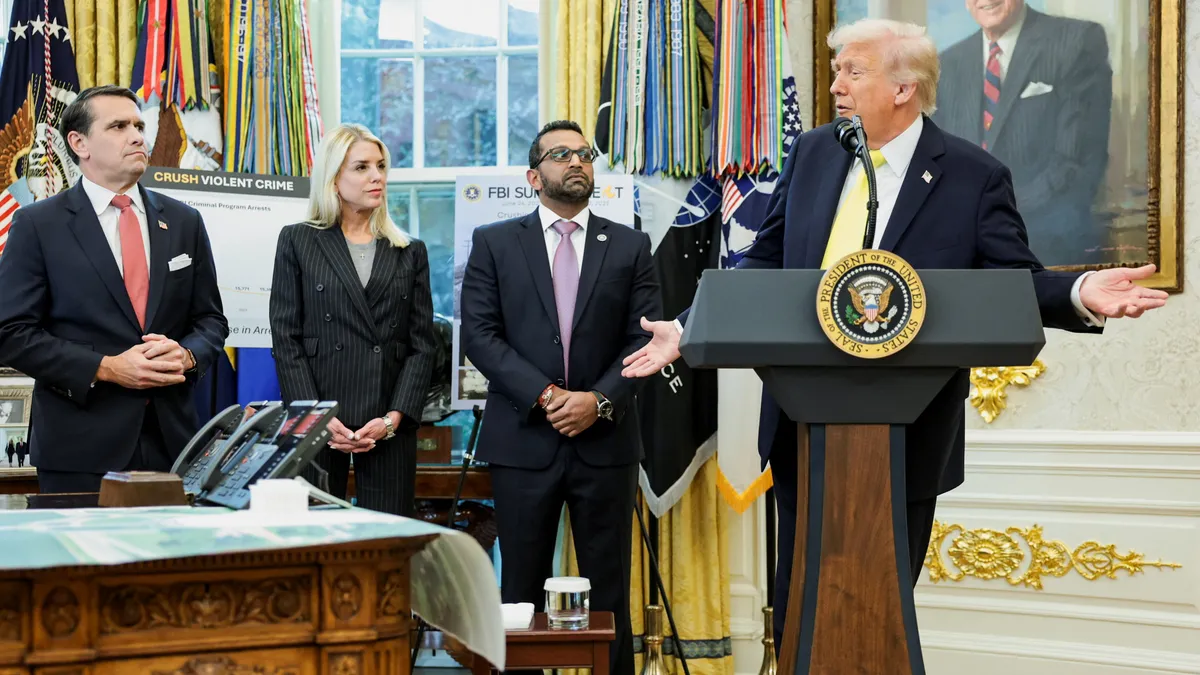
Three men were placed on the new roster that day, accused of defrauding a government food-stamp program, the Department of Defense, and technology-sector investors. FBI Director Kash Patel unveiled wanted posters for each of the three fugitives in a social-media post on X, framing the addition as part of a broader crackdown already yielding results.
“We’ve already caught four subjects responsible for almost $2 billion in alleged fraud, on three different continents,” Patel wrote, “and returned them to the U.S. to face justice. They were on the run for a combined 3,500 days previously, but not anymore. We’re not slowing down.”
Three Official Lists, One Bureau
The FBI’s National Press Office confirmed in a written statement that the bureau now maintains exactly three officially sanctioned wanted lists. The newest joins two predecessors with deep institutional roots: the Ten Most Wanted Fugitives List, established in 1950, and the Most Wanted Terrorists List, created in 2001 in the aftermath of the September 11 al-Qaeda strikes on New York City and Washington, D.C.
“This is a new official FBI Wanted List which joins the historic Ten Most Wanted Fugitives List founded in 1950 and the Most Wanted Terrorists List founded in 2001,” the press office stated. “The FBI only has three officially sanctioned official Lists.”
The statement emphasized that the fraud roster “features fugitives who have committed different types of fraud against the American people and shine a spotlight on the importance the FBI places on arresting those who commit these types of crimes.” It also described the list as a public warning, signaling to ordinary Americans that the bureau intends to track down and prosecute the individuals named on it.
A June Launch, A September Expansion
According to an FBI news release, the fraud list was formally activated in June of this year. The release noted that fraud strips Americans of “tens of billions of dollars every year,” a figure the bureau cited to justify elevating economic crime to the same public-visibility tier as violent crime and terrorism.
The bureau already maintains a web page cataloguing top white-collar crime fugitives, covering what it describes as “the full range of frauds committed by business and government professionals.” Separate online resources exist for counterintelligence targets, cybercrime suspects, and violent-crime or gang members. What distinguishes the new list, however, is its formal status as an officially sanctioned campaign rather than an informational webpage.
Political Context: The White House Anti-Fraud Push
The timing aligns with a broader administration effort to root out waste and fraud inside federal agencies. In a June Facebook post, Patel described the FBI’s intensified fraud-hunting as part of a White House task force dedicated to eliminating government fraud, a body headed by Vice President JD Vance. Patel has since asserted that under President Donald Trump, the bureau has achieved its highest-ever success rate in apprehending Most Wanted criminals.
For readers unfamiliar with the mechanics of these lists, the distinction matters. A webpage listing fugitives is informational; an officially sanctioned wanted list carries institutional weight, dedicated resources, and a public-appeal mandate. It transforms a case file into a national campaign.
Origins of the Most Wanted Tradition
The concept of publishing wanted posters to enlist public help dates to a 1950 exchange between the bureau and a reporter for the International News Service wire. The journalist asked the FBI for names and physical descriptions of its “toughest guys” it wanted captured. The resulting story generated enormous public interest, and FBI Director J. Edgar Hoover formalized the Ten Most Wanted Fugitives program in response.
Since its inception on March 14, 1950, the bureau said in a March 14, 2025 release, 535 fugitives have appeared on the Ten Most Wanted list, and 496 have been apprehended or located. Public tips alone have led to the arrest of 163 of those individuals. Last year the bureau marked the program’s 75th anniversary, calling it “one of its most iconic crime-fighting tools.”
How Candidates Are Chosen
The Ten Most Wanted list is compiled by the Criminal Investigative Division and the Office of Public Affairs at FBI Headquarters. All 56 field offices are called upon to submit candidates. Selection weighs two criteria: first, the individual must have a lengthy record of serious crimes or be considered a particularly dangerous menace to society based on current charges; second, FBI officials must believe that nationwide publicity could aid apprehension, provided the fugitive “should not already be notorious due to other publicity.”
The standard reward attached to each Ten Most Wanted fugitive is at least $250,000. Wanted posters traditionally display a photograph, height, weight, birthplace, last known residence, and in some cases identifying marks such as tattoos or scars. The public circulation of these posters has historically been the program’s most effective capture mechanism.
What the Fraud List Signals
By placing economic offenders on the same public-visibility platform as mob bosses and terrorist operatives, the FBI is making a categorical statement: large-scale fraud against taxpayers and investors is treated with the same institutional seriousness as gun crimes and bombings. For the three men now named on the September 3 posters, that means their faces, descriptions, and alleged schemes are now matters of national public record, subject to tips from anyone who recognizes them in a grocery store, an airport, or a neighborhood across any of the continents where they have been hiding.
The practical implication for ordinary Americans is straightforward. If you see a poster matching someone you know, the bureau wants you to call. The history of the program suggests that a single phone number, a single tip, can end years of flight and bring a fugitive back to face charges in a federal courtroom.
Related Reading
Frequently Asked Questions
What is Mobsters terrorists and now fraudsters?
Mobsters terrorists and now fraudsters is the main topic of this guide. The article explains the context, practical details, and next steps readers should understand.
Why does Mobsters terrorists and now fraudsters matter?
Mobsters terrorists and now fraudsters matters because readers are looking for a useful answer, not just a short summary. Good content should match search intent and help them decide what to do next.