Still sending checks in the mail? It’s time to stop.

Daftar Isi
The Paper Check Is a Target: Why Mailing One Could Cost You Thousands
Cybersecarmor.com – The humble paper check has survived decades of digital disruption, but its shrinking footprint in everyday commerce has made each remaining slip a high-value prize for organized criminals. Federal data from 2025 reveals that Americans lost more money to check fraud than to debit card or gift card scams combined — a striking reversal given that checks now account for a tiny fraction of all transactions. The fewer checks that circulate, the more each one is worth, and fraudsters have adapted their operations accordingly.
A Shrinking but More Valuable Instrument
By 2024, paper checks represented just 3% of all payments in the United States, according to the Federal Reserve. Two decades ago, consumers routinely wrote checks for groceries, gym memberships, and utility bills. Today, the typical check covers a contractor’s invoice, a quarterly tax payment, or another large one-time obligation. That shift in purpose changes the calculus for anyone who intercepts mail.
“Criminals know that when they see a check in the mail, it’s less likely to be a $10 check and more likely to be a $10,000 check,” said Scott Anchin, senior vice president of strategic initiatives and policy at the Independent Community Bankers of America.
From Solo Operators to Organized Rings
Check fraud is not new, but the scale and sophistication of modern operations have outpaced the technology built into the check itself. Where earlier schemes involved lone individuals altering a single slip, today’s networks steal entire bags of mail from USPS routes and process hundreds of instruments in a single evening.
“Twenty years ago, 30 years ago, we were talking about solo operators. Now, you have real organized criminal gangs who engage in check fraud. They steal checks en masse. And then they have an incredible amount of technology they can use to alter the check or to create new checks out of whole cloth,” Anchin explained.
The check format has not evolved to match. Joe Bernardo, head of fraud and claims at Wells Fargo, noted that the instrument remains fundamentally unchanged since its inception, leaving persistent vulnerabilities that fraudsters exploit.
“The check is still fundamentally the same,” Bernardo said. “And fraudsters are always looking for weak points in the process to exploit.”
How the Theft Unfolds
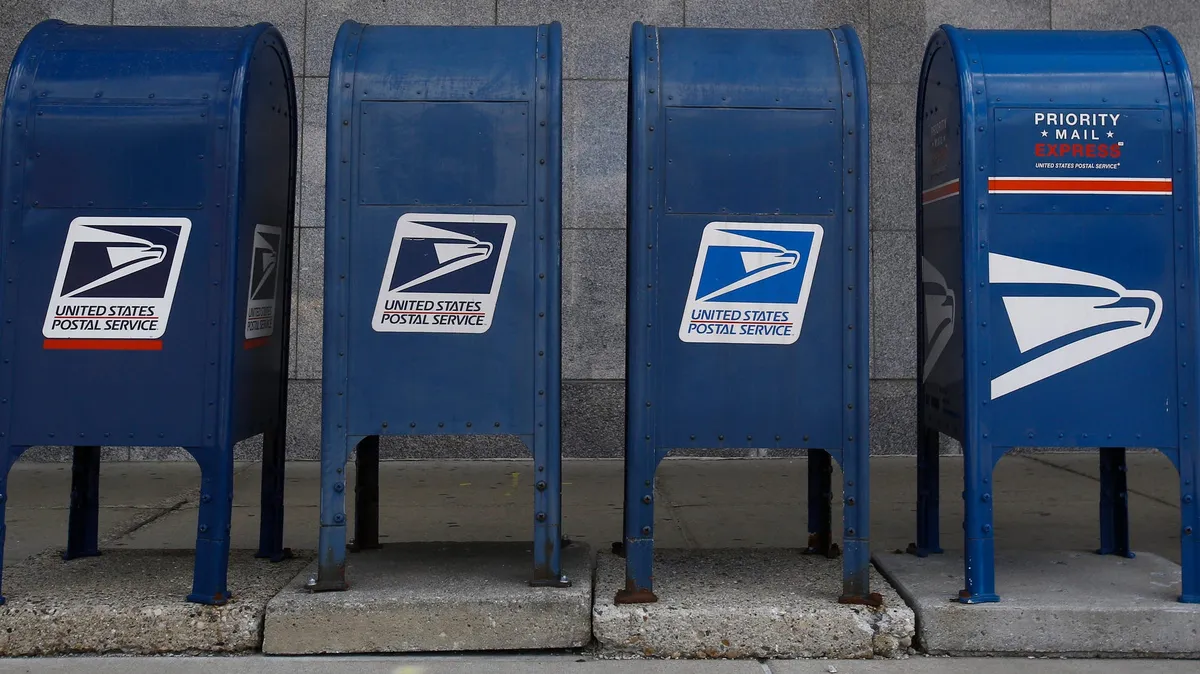
Thieves pull checks from residential mailboxes, fish them from USPS collection boxes, or intercept entire mail bags during transit. Once in hand, the instrument becomes a blank canvas. Adam Rust, director of financial services at the Consumer Federation of America, described how criminals use acetone, bleach, or rubbing alcohol to “wash” the printed name and amount, then rewrite the payee and figure fields before depositing the altered check into their own account. Alternatively, they leave the slip blank and sell it on the dark web to a third party who completes the transaction.
Even without altering the check, the printed account number and routing number expose the victim to follow-on fraud. Rust emphasized that those identifiers are deeply personal and sensitive, and their presence on a mailed slip means your banking identity travels through the postal system in plain sight.
A Personal Cost
Chuck Bell, programs director for advocacy at Consumer Reports, learned the stakes firsthand in 2021. Thieves located his heating-bill check in a collection box, doctored the instrument, and cashed it for $25,000. He recovered the funds a few weeks later, but the episode underscored how quickly a routine bill payment can become a five-figure loss.
The Push Toward Digital-Only Payments
The most straightforward remedy, advocates argue, is to stop writing checks altogether. In 2025, President Donald Trump issued an executive order directing the phase-out of paper checks to and from the federal government, a move that signals institutional intent to retire the format at least within government operations.
Yet the transition is uneven. Bell acknowledged that some Americans have never grown comfortable making payments through a phone or computer, and that moving an entire population to digital rails is far more complex than a policy memo suggests.
What Replaces the Check
Consumer advocates point to several alternatives that carry lower fraud exposure. Online portals offered by most businesses, government agencies, and medical practices allow card or electronic-check payments without a physical slip entering the mail stream. A bank’s automatic bill-pay feature is another option; while the bank may occasionally issue a paper check behind the scenes, Anchin noted the process is considerably safer than a consumer mailing their own instrument.
Peer-to-peer transfer apps present their own risk profile. The banking industry favors Zelle, a money-transfer service embedded within existing banking applications, on the reasoning that integration with a regulated institution adds a layer of oversight. A 2023 Consumer Reports analysis compared Venmo, Zelle, Cash App, and Apple Cash across safety, privacy, and transparency metrics. Cash App and Apple Cash earned high safety ratings, while Apple received the top marks for privacy protections.
“I think an electronic payment is always safer than a check payment,” Anchin said.
If You Must Mail a Check: Practical Safeguards
For transactions where a paper instrument is unavoidable, several steps reduce exposure:
Choose checks with built-in security features. Consumer Reports advises looking for watermarks, holographic elements, and chemically sensitive paper or ink that reveal tampering. These features make it harder for a thief to alter the amount or payee without leaving visible traces.
Use permanent or indelible ink. The American Bankers Association recommends writing checks in ink that resists solvents. A slip completed in permanent ink is far more difficult to “wash” than one written in ballpoint or pencil, narrowing the window in which a thief can rewrite the instrument.
Mail promptly and track delivery. The longer a check sits in a mailbox or collection box, the greater the chance of interception. Dropping it directly into a USPS box at a post office, rather than a curbside collection box, reduces the time it spends in an unsecured location.
Verify the deposit. If you must mail a check, confirm with the recipient that the funds cleared before assuming the transaction is complete. A quick phone call or portal check can catch a bounced or altered deposit before it becomes a dispute.
The paper check will likely persist for years in niche contexts — rural areas, certain government filings, and transactions where digital rails remain inaccessible. Until the format fully retires, each mailed slip carries a measurable fraud premium. Understanding that premium, and choosing the lowest-risk payment channel available, is the single most effective step a consumer can take to protect their account.
Related Reading
Frequently Asked Questions
What is Still sending checks in the mail?
Still sending checks in the mail is the main topic of this guide. The article explains the context, practical details, and next steps readers should understand.
Why does Still sending checks in the mail matter?
Still sending checks in the mail matters because readers are looking for a useful answer, not just a short summary. Good content should match search intent and help them decide what to do next.