Mistrial declared in Lindsay Clancy triple-murder case. What’s next?

Daftar Isi
Seven Days of Deadlock End in Mistrial for Lindsay Clancy Triple-Murder Case
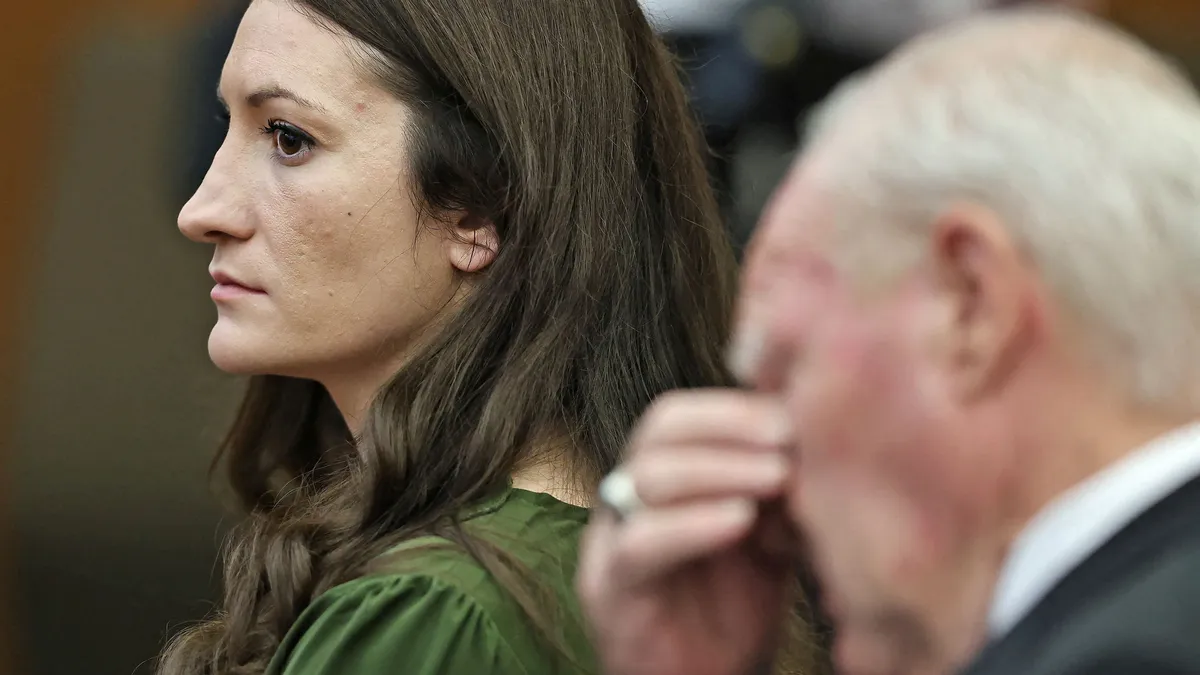
Cybersecarmor.com – On September 4, Judge William Sullivan of Massachusetts’ Plymouth County court severed the jury’s deliberations and declared a mistrial in the high-profile prosecution of Lindsay Clancy, a mother charged with first-degree murder for the strangulation of her three young children. The ruling came after the twelve-member panel returned to the courtroom for a third time unable to reach a unanimous verdict, ending seven days of closed-door debate that had consumed the attention of the entire nation.
The case, which began in January 2023 when Clancy, then 36, killed Cora (age 5), Dawson (age 3), and Callan (8 months) at the family residence, has become one of the most closely watched criminal trials in recent Massachusetts history. Nearly six weeks of testimony from more than eighty witnesses filled the courtroom before the jury was sent to deliberate on August 27. The central question before them was whether Clancy bore criminal responsibility for the deaths or whether her actions were the product of postpartum psychosis, a severe psychiatric condition that can emerge in the weeks following childbirth.
The Defense and the Prosecution’s Competing Narratives
Clancy’s legal team, led by attorney Kevin Reddington, built its case around the argument that postpartum psychosis rendered her incapable of forming the intent required for first-degree murder. Under this theory, the killings were not acts of a rational actor but manifestations of a psychiatric crisis that overwhelmed her capacity to understand or control her behavior.
Prosecutors told the jury a fundamentally different story. They contended that Clancy had methodically planned the killings, specifically sending her husband away from the home under the pretext of needing food and medicine before carrying out the strangulations. After the children were dead, Clancy slashed her own wrists and neck and leapt from a second-floor window, an act that left her paralyzed. The state’s position was that these were deliberate, sequential choices made by a fully aware individual.
The Jury’s Impasse and the Failed Emergency Appeal
For seven consecutive days, the jurors could not agree. On the morning of September 4, Sullivan announced the mistrial after the panel reported its deadlock for the third time. In an unusual procedural move, Reddington immediately petitioned for a single-justice appeal to the Massachusetts Supreme Judicial Court, arguing that one juror was effectively blocking a verdict and that the trial should continue rather than be thrown out. Sullivan granted him one hour to file the emergency motion. The higher court rejected the stay, and the mistrial stood.
What Happens Next: The September 29 Hearing
One element of certainty remains in an otherwise uncertain landscape: the judge has already set a status and trial-assignment hearing for September 29. At that proceeding, the court will determine whether the case proceeds to a new trial, whether charges are modified, or whether some other disposition is appropriate.
Plymouth County District Attorney Timothy Cruz confirmed that he will decide in the near future whether to retry the case before a fresh jury. Speaking after the mistrial was declared, Cruz offered a brief statement:
“We proceed accordingly and consistent with the evidence and the law.”
Cruz added that he would “never be swayed” by public sentiment, a pointed remark given the enormous volume of online advocacy that has surrounded Clancy since the trial began. He indicated that a decision on a new trial would come soon.
Reddington, for his part, has publicly stated that he expects the prosecution to seek a new trial before a different jury. A retrial would require an entirely new jury selection process, new scheduling of trial dates, and potentially new witness availability. Alternatively, prosecutors retain the option of reducing the charges and negotiating a plea agreement, though no indication has been given that such a path is being explored.
A Community and a National Conversation
The trial took place in the coastal town of Plymouth, where dozens of spectators filled the courthouse gallery throughout the weeks of testimony. Many were openly identified as supporters of Clancy, and their presence underscored how the case had transcended local boundaries to become a national story. Headlines across the country tracked each day’s proceedings, and the trial ignited a broader public debate about postpartum mental-health screening, access to psychiatric care in the postpartum period, and the question of how the criminal-justice system should treat mothers whose actions occur during acute psychiatric episodes.
Clancy herself has remained at Tewksbury Hospital, a psychiatric facility in Tewksbury, Massachusetts, where she has been receiving court-ordered mental-health treatment since May 2023. She has not appeared in court since the trial’s early stages and is expected to remain in that facility pending the outcome of the September 29 hearing.
For the families of Cora, Dawson, and Callan, and for the broader community watching from Plymouth and beyond, the mistrial offers no closure. The question of whether Lindsay Clancy will face a second jury, negotiate a resolution, or see some other legal outcome will not be answered until at least the end of September. Until then, the case hangs in a state of suspended judgment, its final chapter yet to be written.
Related Reading
Frequently Asked Questions
What is Mistrial declared in Lindsay Clancy triple?
Mistrial declared in Lindsay Clancy triple is the main topic of this guide. The article explains the context, practical details, and next steps readers should understand.
Why does Mistrial declared in Lindsay Clancy triple matter?
Mistrial declared in Lindsay Clancy triple matters because readers are looking for a useful answer, not just a short summary. Good content should match search intent and help them decide what to do next.