As Lindsay Clancy trial unfolded, so have these similar cases

Daftar Isi
When Mothers Face the Court: Parallel Cases Illuminate the Lindsay Clancy Trial
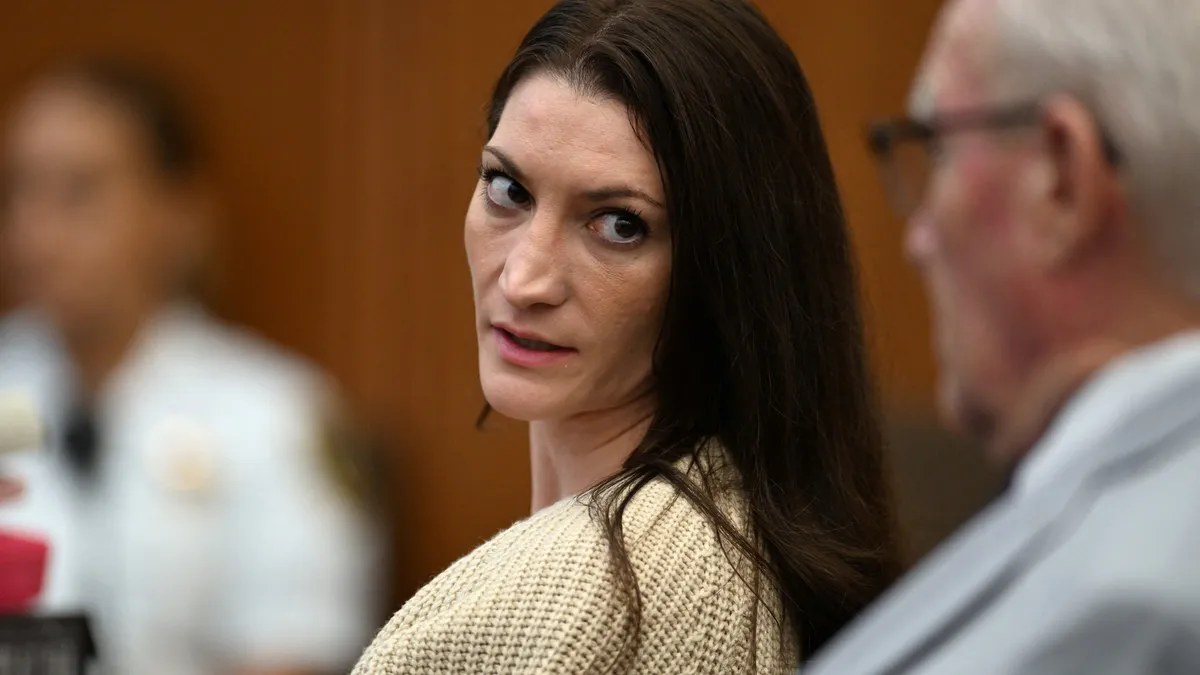
Cybersecarmor.com – The courtroom drama surrounding Lindsay Clancy, a 36-year-old mother from Duxbury, Massachusetts, has drawn national attention since proceedings opened in July. She stands accused of murdering her three young children — Cora, age 5; Dawson, age 3; and Callan, just 8 months old — in January 2023. Prosecutors contend she strangled each child before attempting to take her own life in what they describe as a calculated act. Her legal team, by contrast, maintains she lacked criminal responsibility at the time, pointing to postpartum anxiety, depression, and psychosis as the driving forces behind the killings.
Clancy’s case does not exist in isolation. Across the country, other mothers have faced charges of killing their own children while invoking the insanity defense, and several of those proceedings have produced significant developments in recent weeks. Together, these cases sharpen questions about how the American legal system evaluates postpartum mental illness, parental intent, and the boundaries of criminal culpability.
Understanding Filicide in American Courts
Filicide — the killing of a child by a parent — accounts for roughly 2.5 percent of all homicide arrests in the United States, according to research from Palo Alto University. Though a small fraction of overall homicide statistics, each case carries enormous emotional weight and often triggers intense public debate about mental health, parenting, and the adequacy of postpartum care. When a parent invokes the insanity defense in such a case, the stakes multiply: jurors and judges must weigh the horror of the act against the clinical reality of the perpetrator’s mental state at the moment it occurred.
Dimone Fleming: A Bronx Verdict on Mental Disease
In New York City, a judge issued a landmark finding on August 24, declaring Dimone Fleming, 26, not responsible by reason of mental disease or defect for the 2022 deaths of her two children. Fleming had been charged with first-degree murder after Daishawn, age 3, and Octavius, age 11 months, were discovered fatally stabbed and submerged in a bathtub filled with water at a family shelter in the Bronx in November 2022.
Psychiatric evaluations commissioned by both the prosecution and the defense concluded that Fleming was experiencing a psychotic episode at the time of the killings. Rather than proceed to a full trial, the Bronx District Attorney’s Office agreed to accept the not-responsible finding. Tiffany Wichman, a Bronx assistant district attorney, explained the decision by stating that taking the matter to trial would not serve justice.
Fleming’s defense attorney, Jodi Morales, spoke to the broader significance of the outcome:
“I would be hesitant to draw direct comparisons between individual women. But these cases underscore why we need a legal system capable of looking beyond the horror of an event and carefully examining the mental illness that may have driven it.”
Morales added that the Fleming matter and the Clancy trial together “raise difficult questions about how we understand severe postpartum mental illness.” Fleming will now undergo further psychiatric evaluations, with a follow-up court hearing set for September 18 to determine next steps in her treatment and supervision.
Latarsha Sanders: A New Trial Ordered in Massachusetts
Just one month before Clancy killed her three children — and in the very same courthouse where Clancy would later face trial — Latarsha Sanders was convicted of two counts of murder. In February 2018, then-43-year-old Sanders fatally stabbed her sons, 8-year-old Edson “Marlon” Brito and 5-year-old La’Son Brito, inside their Brockton, Massachusetts, apartment.
Sanders, like Clancy, entered a plea of not guilty by lack of criminal responsibility. She was found guilty in December 2022. However, on August 6, the Massachusetts Supreme Judicial Court reversed that verdict and ordered a new trial. The court determined that the trial judge had committed prejudicial error by excluding Sanders’ post-arrest medical records from evidence.
The ruling stated:
“We hold that the exclusion of the defendant’s relevant medical records relating to the diagnoses or treatment of mental illness constituted prejudicial error, and as a result, the defendant is entitled to a new trial.”
During the original December 2022 trial, clinical neuropsychologist Thomas Deters testified that Sanders was “grossly psychotic” at the time of the killings. Having evaluated Sanders and reviewed her medical history, Deters diagnosed her with “schizophrenia spectrum and other psychotic disorders.” Judge William Sullivan, who also presides over the Clancy case, had denied Sanders’ motion to introduce her post-arrest medical records — a decision that ultimately prompted the appellate reversal.
Sanders’ attorney, Robert F. Shaw Jr., described himself as “extremely grateful” for the Supreme Judicial Court’s ruling, signaling that his client will return to trial with a fuller evidentiary record of her psychiatric condition.
What These Cases Reveal
The convergence of the Clancy, Fleming, and Sanders proceedings in a narrow window of time highlights a recurring tension in American criminal law: how to adjudicate acts of extreme violence when the perpetrator’s mental state at the moment of the act was profoundly altered by postpartum or other psychotic illness. Postpartum psychosis, though rare — affecting roughly one to two in every thousand new mothers — can produce hallucinations, delusions, and a complete detachment from reality within days or weeks of delivery. When it goes untreated or unrecognized, the consequences can be catastrophic.
For families, advocates, and policymakers watching these dockets, the central question is not whether grief and public outrage are justified — they are — but whether the legal framework adequately distinguishes between a mother who planned a killing and one who acted under the compulsion of untreated psychosis. The answers emerging from these courts will shape how postpartum mental illness is treated in criminal proceedings for years to come.
Related Reading
Frequently Asked Questions
What is As Lindsay Clancy trial unfolded so have?
As Lindsay Clancy trial unfolded so have is the main topic of this guide. The article explains the context, practical details, and next steps readers should understand.
Why does As Lindsay Clancy trial unfolded so have matter?
As Lindsay Clancy trial unfolded so have matters because readers are looking for a useful answer, not just a short summary. Good content should match search intent and help them decide what to do next.