Blown tire sparked the 90,000-acre Ross Fire in North Texas

Daftar Isi
A Single Tire Failure Set Off One of North Texas’s Largest Wildfires
Cybersecarmor.com – Nearly two weeks after a small roadside ignition near the town of Ross, the blaze that followed has consumed more than 90,000 acres of prairie and brush across two North Texas counties. Investigators with the Texas A&M Forest Service have now confirmed the origin: a tire that blew out on a vehicle traveling along Texas Highway 180, sending sparks and hot debris into dry vegetation on the shoulder.
The fire was first reported on August 24, when crews received calls about a modest 25-acre burn just west of Palo Pinto, a small unincorporated community roughly 80 miles west of Fort Worth. What began as a manageable roadside spot fire rapidly escalated under a combination of extreme heat, low humidity, and sustained winds that pushed flames through the surrounding grassland and oak savanna. Within days, the perimeter had expanded beyond anything local agencies had prepared for.
Investigation Points to a Vehicle Tire Blowout
After days of on-scene examination, the Forest Service’s law enforcement division concluded the ignition was human-caused, linked to equipment or vehicle use at a roadside location. Public information officer Laura Stevens issued a statement confirming the finding:
“The fire originated from equipment/vehicle use associated with a roadside start.”
Adam Turner, a spokesperson with the Texas A&M Forest Service, explained that investigators collected physical evidence at the scene, including fragments of rubber and distinct tire marks pressed into the asphalt surface. Those traces, combined with witness accounts and the pattern of initial flame spread, pointed to a tire failure on a moving vehicle as the ignition mechanism.
How a Blown Tire Can Ignite a Wildfire
The physics behind the event are straightforward but consequential. When a tire fails at speed, the wheel rim or other metal components can scrape directly against the pavement, generating sparks and localized temperatures high enough to ignite dry organic material. Simultaneously, chunks of hot rubber and shredded tire fragments can be thrown onto the roadside, where they smolder in parched grass or leaf litter.
In late August, the grasses and brush lining rural highways across the Texas Hill Country and Blackland Prairie are often at their driest. A single spark or a piece of burning debris landing in that fuel bed can flash across the shoulder within seconds. If winds are present—even moderate ones at 10 to 15 miles per hour—the flame front accelerates, leaping into taller vegetation and climbing slopes. What starts as a coin-sized spot fire can become a multi-acre event before the first engine arrives.
Scale and Impact of the Ross Fire
The Ross Fire ultimately scorched at least 90,048 acres spanning Palo Pinto and Jack counties, according to acreage figures maintained by the National Weather Service. That places it as the second-largest wildfire recorded in North Texas history. The burn scar stretches across open range land, scattered ranches, and patches of post-oak woodland that had not seen fire of this magnitude in decades.
Structural losses have been significant. At least 157 buildings were destroyed outright, and another 140 sustained damage ranging from roof loss to complete gutting. Firefighters managed to save 453 structures through direct attack, defensive line construction, and evacuation of occupants ahead of the advancing front.
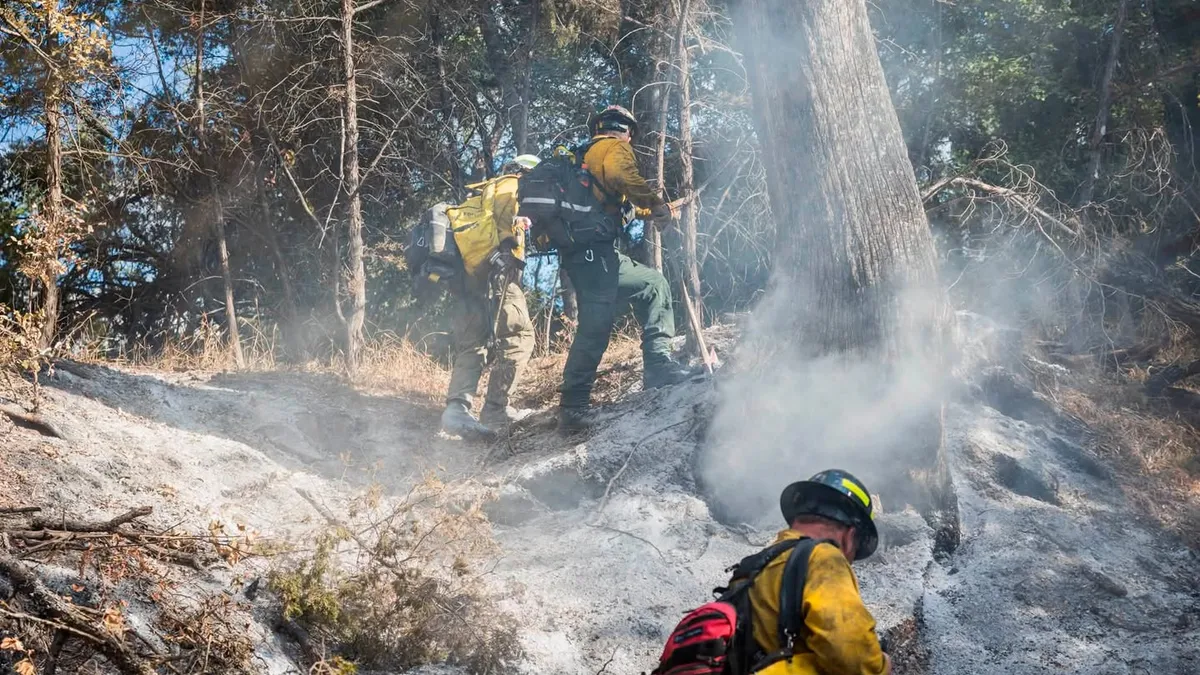
As of September 2, the latest official containment figure stood at 38 percent. Crews from across the state had been deployed to the perimeter, working around the clock in shifts to build control lines, mop up hot spots, and protect remaining structures in threatened neighborhoods.
Regional Context and Ongoing Risks
Palo Pinto County sits in the western reaches of the Texas Blackland Prairie, a region where summer drought cycles have grown more frequent and more severe over the past two decades. The area’s mix of native tallgrass, introduced brush, and scattered hardwoods creates a fuel mosaic that, once ignited under the right weather, can move faster than many residents expect. The proximity of Highway 180—a two-lane rural route with minimal shoulder width and limited sight distance—meant that the initial ignition occurred in a location where passing traffic could easily have been caught unaware.
Local officials and forest service planners have used the Ross Fire as a case study in how quickly a single-vehicle event can escalate when meteorological conditions align. The episode underscores the vulnerability of rural road corridors during peak fire season and has prompted renewed discussion about vegetation management along state highways in the region.
For residents of Palo Pinto and Jack counties, the coming weeks will center on smoke management, air-quality monitoring, and the slow process of post-fire recovery. Ranchers and landowners in the burn area face questions about forage loss, water-source contamination, and the long-term ecological trajectory of the affected grassland.
The investigation’s conclusion—that a routine tire blowout, an event most drivers would consider a minor roadside inconvenience—triggered one of the most destructive wildfires in the state’s recent history. The finding carries a blunt lesson for anyone traveling rural Texas roads in late summer: a flat tire on a dry, windy day is not merely an inconvenience. It is a potential ignition source for a landscape that may have been waiting for exactly that spark.
Related Reading
Frequently Asked Questions
What is Blown tire sparked the 90 000 acre?
Blown tire sparked the 90 000 acre is the main topic of this guide. The article explains the context, practical details, and next steps readers should understand.
Why does Blown tire sparked the 90 000 acre matter?
Blown tire sparked the 90 000 acre matters because readers are looking for a useful answer, not just a short summary. Good content should match search intent and help them decide what to do next.