President Trump rules out using nuclear weapons against Iran

Daftar Isi
Trump Dismisses Nuclear Option Against Iran as Conflict Enters Seventh Month
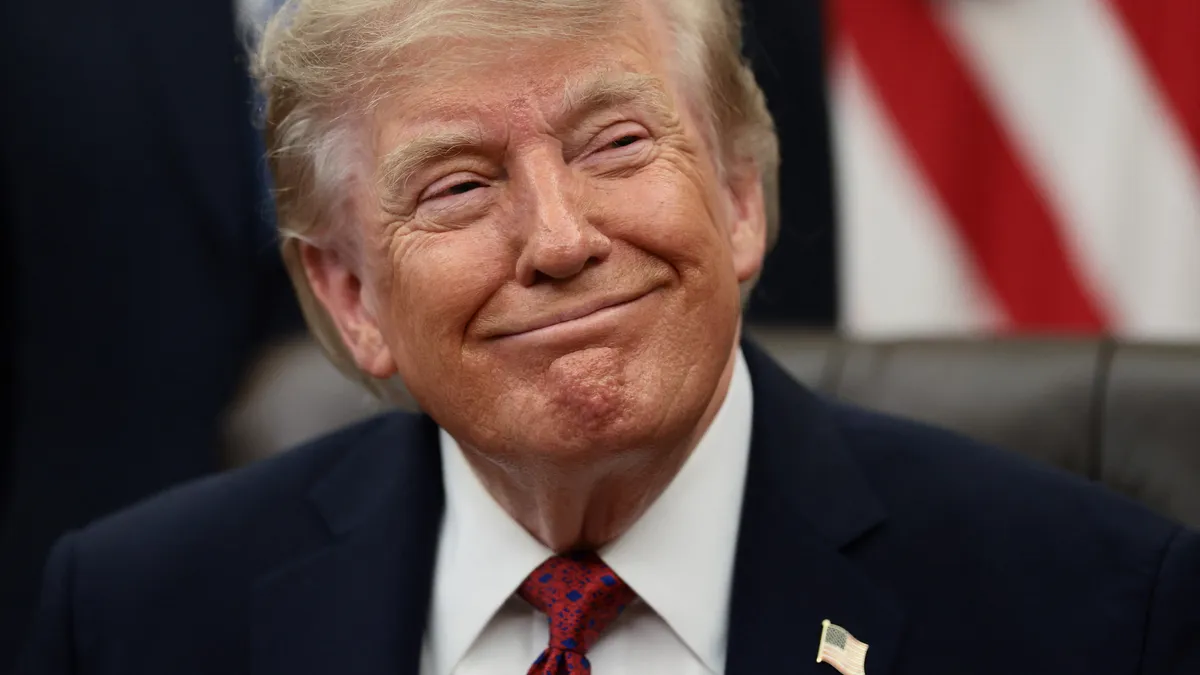
Cybersecarmor.com – Six months into a grinding military confrontation with Tehran, President Donald Trump flatly rejected the possibility of deploying nuclear weapons against Iran, calling the very notion of such a question absurd during an Oval Office appearance on August 31. The remark came at a moment when the administration was already preparing to resume conventional strikes after a month-long pause, underscoring that Washington’s strategic calculus remains anchored to airpower, missile defense, and economic coercion rather than to the ultimate weapon.
A Reporter’s Question Meets Sharp Rejection
The exchange unfolded when a journalist pressed the president on whether he could categorically rule out nuclear strikes on Iranian territory. Trump’s response was immediate, dismissive, and laced with irritation at what he perceived as an unnecessary question.
“I would never say that. But the answer’s yes. I rule out — there’s no reason for it. What a stupid question that is actually is. Here they are, they’re totally defeated militarily. So now, I defeat them and now I should use a nuclear weapon on top of them? What a stupid question.”
The tone of the reply was as telling as the substance. By framing the question as not merely unnecessary but foolish, Trump signaled that the administration views the military balance as already settled and that any escalation beyond conventional means would be gratuitous.
The Singular Precedent of Nuclear Warfare
The United States has employed atomic weapons in combat exactly once: against Japan in August 1945, bringing World War II to a close. The bombings of Hiroshima and Nagasaki killed an estimated 200,000 people and launched decades of international diplomacy aimed at preventing any recurrence of nuclear war. Since that moment, no nation has used a nuclear weapon in an active conflict. The global non-proliferation architecture — treaties, inspection regimes, and deterrence doctrines — was built in large part to ensure that the 1945 precedent would never be repeated. Any discussion of applying such a weapon against Iran would therefore represent not merely a tactical decision but a rupture in the postwar order that Washington has spent eighty years reinforcing.
Unsubstantiated Claims From Within the Party
The administration itself has offered no public signal that nuclear options are under consideration for the Iran campaign. However, former Georgia Congresswoman Marjorie Taylor Greene — once a close Trump ally who has since become a vocal critic — claimed this month that nuclear strikes on Iran had been discussed in internal strategy sessions. Greene provided no documentary evidence to support the allegation, and the White House publicly dismissed the assertion. The episode nonetheless illustrates how quickly speculation about nuclear use can take root in a polarized political environment, even when no official has placed such a measure on the table.
The Stated Objective: Denying Iran a Bomb
From the opening days of the conflict, Trump has framed the American military mission in straightforward terms: ensure that Iran never acquires a nuclear weapon. Speaking again on August 31, he tied the objective directly to regional security and to the survival of Israel.
“Iran cannot have a nuclear weapon. If Iran had a nuclear weapon, Israel would have been wiped out. And they’d be hitting our cities at some point because they’re sick people.”
The logic is circular in a way that has drawn criticism from arms-control analysts: the stated goal is to prevent Iran from building a bomb, yet the president simultaneously ruled out using one himself. That distinction, while technically sound, leaves little room for ambiguity in a conflict that has already produced six months of intermittent violence.
Retaliatory Strikes and the Promise of a Hard Response
Even as he dismissed nuclear warfare, Trump signaled that conventional force would resume within days. Earlier on August 31, he told Fox News that the United States would respond forcefully to Iranian retaliatory strikes carried out on August 30 against two American military installations in Jordan. Those Iranian attacks — which were intercepted before reaching their targets — came in response to U.S. forces striking two launchers on Larak Island. That engagement marked the first American attack on Iranian territory since July 30, ending a brief lull in direct hostilities.
“We’re going to hit them hard. There will be a response.”
The Jordan-based installations have served as forward staging points for American air operations throughout the conflict. Their targeting, even if intercepted, represented a calculated Iranian attempt to raise the cost of continued U.S. airpower and to test American air-defense commitments in the region.
The Sanctions Interlude and Its End
The brief resumption of kinetic operations follows roughly a month during which the Trump administration paused direct military strikes in favor of an economic-pressure strategy built on expanded sanctions. The pivot back to force suggests that the sanctions track has not yet produced the concessions Washington sought, and that the administration has concluded the economic lever alone is insufficient to compel Tehran’s compliance. The interplay between financial pressure and kinetic action now appears to be the operating rhythm of the campaign: strikes to create urgency, sanctions to sustain cost, and periodic pauses to allow diplomacy a narrow window.
“A Failed Nation” — Framing the Next Phase
When asked whether the renewed strikes represented a limited operation or a return to full-scale war, Trump characterized Iran in blunt terms, calling it “a failed nation” before adding:
“That doesn’t mean we won’t smack them. We’ll see what happens.”
The characterization underscores the administration’s view that the conflict’s outcome is already decided and that remaining operations are about enforcing terms rather than achieving surprise. By labeling the adversary a failed state, Trump frames continued strikes not as a contest of equals but as a matter of discipline imposed on a weakened opponent.
What Comes Next
The sixth month of this conflict has produced a recognizable pattern: brief surges of kinetic action followed by pauses in which economic tools are deployed. Trump’s categorical rejection of nuclear weapons narrows the strategic menu considerably. With conventional air and missile capabilities remaining the primary instruments, the question for observers shifts from “what will America do?” to “how hard, and for how long, will conventional force be applied before Tehran recalculates?” The answer, as the president himself put it, remains to be seen.
Related Reading
Frequently Asked Questions
What is President Trump rules out using nuclear?
President Trump rules out using nuclear is the main topic of this guide. The article explains the context, practical details, and next steps readers should understand.
Why does President Trump rules out using nuclear matter?
President Trump rules out using nuclear matters because readers are looking for a useful answer, not just a short summary. Good content should match search intent and help them decide what to do next.