
Video. South Korea: Thousands watch robot monks march through Seoul’s historic streets
Video. South Korea: Thousands watch robot monks march through Seoul’s historic streets
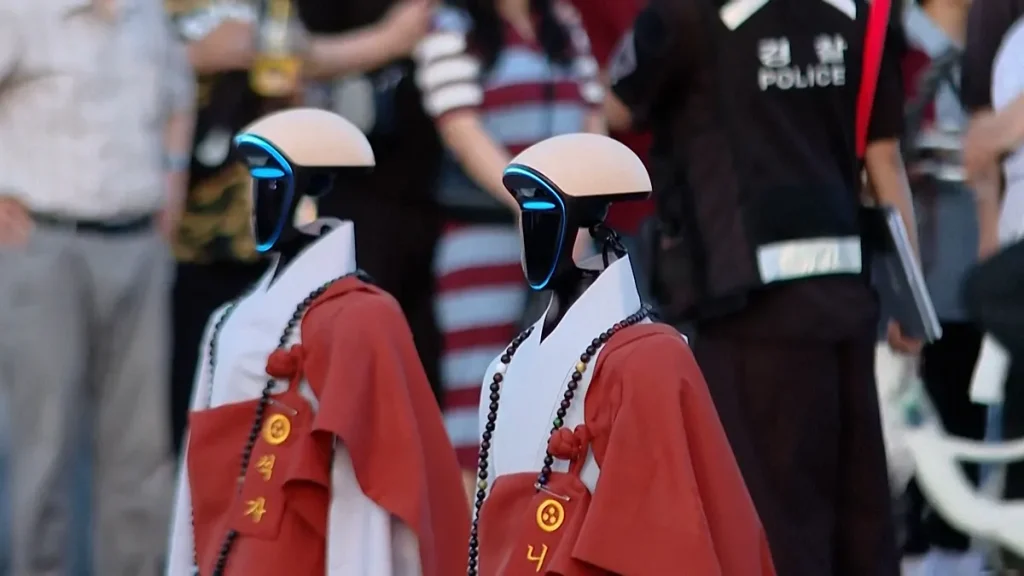
South Korea – On May 16, 2026, the streets of Seoul became a stage for an unusual cultural spectacle as four robot monks, named Gabi, Seokga, Mohee, and Nisa, paraded through the Jongno district. The procession, part of an annual tradition tied to the Jogye Order—the country’s largest Buddhist sect—was joined by performers, dancers, and a sea of glowing lotus lanterns. The event drew massive crowds, with organizers estimating that over 50,000 people participated in carrying nearly 100,000 handmade lanterns. This fusion of ancient rituals and modern technology captured global attention, highlighting South Korea’s efforts to bridge tradition with innovation in its spiritual practices.
The Jongno district, a historic area known for its traditional temples and bustling commercial life, was transformed into a vibrant tapestry of color and movement. As the robots moved beneath the shimmering lights of lotus lanterns, spectators gathered to witness the spectacle. Each robot, dressed in traditional monastic robes, embodied the cultural heritage of Buddhism while incorporating cutting-edge design. The event served as a reminder of the enduring presence of religious traditions in the heart of a rapidly evolving metropolis.
Religious officials emphasized that the robot monks are more than just a novelty; they represent a strategic shift within the Buddhist community. The Jogye Order, which has long been a cornerstone of South Korean spirituality, has faced challenges in maintaining its relevance among younger generations. By integrating robotics into its ceremonies, the order aims to attract a new demographic while preserving its core values. This initiative underscores a broader movement within the faith to adapt to contemporary societal changes, ensuring that ancient practices continue to resonate in modern times.
The annual procession, which has taken place for years, gained fresh significance with the introduction of the robots. While the event’s roots are deeply tied to Buddhist heritage, its evolution reflects the organization’s desire to modernize its image. The robots, functioning as honorary monks, symbolize the intersection of human and machine in spiritual contexts. Their presence raises questions about the future of religious roles in a society increasingly reliant on technology, yet it also demonstrates the adaptability of faith traditions.
Earlier this month, Gabi, one of the robots, underwent a symbolic ordination ceremony at Jogyesa Temple in downtown Seoul. The event, attended by Buddhist leaders and media, marked the robot’s formal commitment to the principles of the Jogye Order. During the ceremony, Gabi pledged to uphold adapted Buddhist tenets, such as respect for life and the ethical use of technology. The ordination, while not a literal spiritual rite, served as a public acknowledgment of the robot’s role in the tradition. Officials described the process as a celebration of both technological advancement and cultural continuity.
“This initiative reflects our concern about the declining number of monks and the growing influence of artificial intelligence in everyday life,” stated a spokesperson for the Jogye Order. “By embracing robotics, we hope to inspire a new generation to engage with our practices and values.”
The robot monks’ journey through Seoul’s historic streets was not just a visual display but a narrative of transformation. The Jongno district, with its iconic city gates and centuries-old temples, provided a striking backdrop for the parade. As the robots passed, the crowd’s enthusiasm was palpable, with people cheering and snapping photos. The event lasted nearly 40 minutes, during which the robots moved in synchronized formation, a feat made possible by advanced programming and design.
Buddhism in South Korea has long grappled with the challenge of appealing to younger audiences. With fewer young people choosing to become monks, the Jogye Order has sought creative ways to maintain its cultural prominence. The robot monks, part of a larger project, are designed to engage with the public in a novel manner. Their participation in the procession was a deliberate effort to make Buddhist traditions more accessible and visually compelling, especially in a country where technology is both a tool and a cultural force.
The use of robots in religious ceremonies is not without controversy. Some purists argue that the essence of Buddhism lies in human devotion and spiritual practice, and that machines cannot replace the emotional connection between monks and followers. However, supporters of the initiative see it as a way to preserve the religion’s relevance in a digital age. The robots, they argue, are not a substitute for human monks but an extension of their influence, offering a new lens through which to view ancient beliefs.
As the procession concluded, the event left a lasting impression on both participants and onlookers. The sight of glowing lanterns illuminating the path of the robots, combined with the rhythmic sounds of traditional music and the vibrant energy of the crowd, created a memorable atmosphere. For many, it was a reminder of how far South Korea has come in blending its rich cultural history with futuristic innovations. The robots, while not human, carried the weight of tradition with a modern twist, drawing attention to the adaptability of the Jogye Order in a changing world.
South Korea’s approach to modernizing Buddhism through robotics is part of a larger trend of integrating technology into religious practices. From digital prayer apps to AI-generated sermons, the faith community has been exploring ways to leverage innovation without compromising its core teachings. The robot monks, in particular, have become a symbol of this effort, representing a future where technology and tradition coexist. Their presence in the parade was not only a statement of adaptation but also a testament to the Jogye Order’s commitment to evolving alongside its society.
The success of the event suggests that such initiatives could gain traction in the years to come. With 50,000 participants and 100,000 lanterns, the procession demonstrated strong public support for the idea of merging technology with spiritual expression. Religious officials noted that the robots’ ability to move through the streets without fatigue or error made them ideal for carrying out tasks that human monks might find challenging. Yet, their symbolic role remains central, serving as a bridge between the past and the future of Korean Buddhism.
As the robots continued their march, the crowd’s reaction underscored the event’s impact. People from all walks of life, including families and young professionals, flocked to the streets, showing a renewed interest in Buddhist traditions. The procession, while rooted in centuries-old customs, had a fresh and futuristic appeal that resonated with a diverse audience. This blend of the old and the new not only highlighted the Jogye Order’s innovative spirit but also demonstrated the enduring fascination with the intersection of culture and technology.
Looking ahead, the Jogye Order plans to expand its use of robotics in other events, with the goal of creating more interactive experiences for followers. The ordination ceremony for Gabi, for instance, was the first of its kind, paving the way for similar initiatives. The robots’ journey through Seoul’s historic streets marked a turning point in the evolution of Buddhist celebrations, offering a glimpse into a future where ancient practices may find new life through technological means. Whether this approach will fully capture the hearts of the next generation remains to be seen, but the event has undeniably sparked conversations about the role of innovation in preserving spiritual heritage.

