‘Swept away’: Hundreds missing in Nepal after deadly flash floods

Daftar Isi
Nepal’s Bhote Koshi River Devastation Leaves Hundreds Missing, Dozens of Americans Among the Vanished
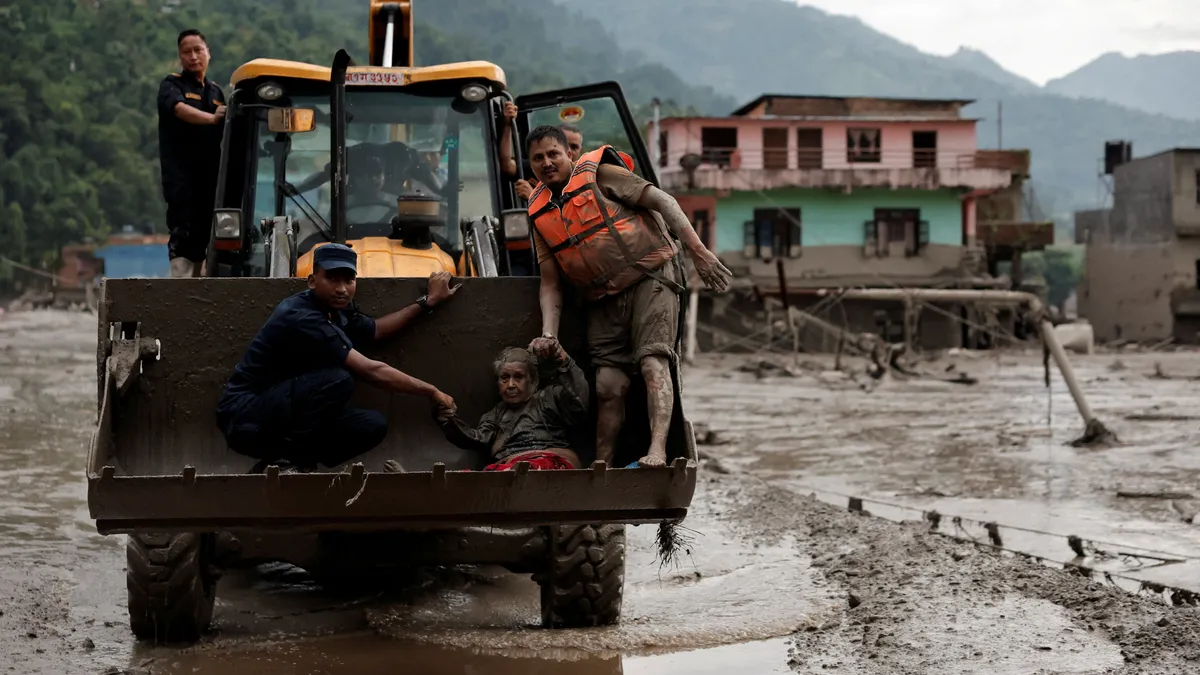
Cybersecarmor.com – A catastrophic flash flood tore through northern Nepal on the morning of August 26, killing at least 157 people and sweeping away hundreds of travelers and residents in one of the deadliest natural disasters to strike the Himalayan country in recent memory. The Bhote Koshi River, which carves its path through the Rasuwa district just south of the Tibetan plateau border, unleashed a wall of mud and water at approximately 8:30 a.m. local time, engulfing riverside villages and tourist infrastructure in minutes. Dozens of American visitors were among those unaccounted for in the immediate aftermath, according to figures released by Nepal’s tourism authorities.
The Moment of Impact
Surveillance recordings that spread rapidly across social platforms captured the terrifying seconds before and during the event: residents scrambling uphill as a towering mass of sediment and floodwater surged down the river corridor. Aerial drone imagery taken in the hours that followed revealed the full scope of destruction — entire settlements buried under layers of silt, bridges reduced to rubble, and roads severed, isolating communities from rescue crews. The Bhote Koshi, fed by glacial melt and monsoon rains, is known for sudden, violent surges during the summer season, but the scale of this particular episode caught even experienced locals off guard.
Local police tallied 157 confirmed fatalities linked to the disaster by the time of reporting. The Nepal Tourism Board, posting on social media, initially listed at least 384 travelers as missing, of whom 291 were foreign nationals. Among the foreign visitors unaccounted for were 47 Americans, 34 Australians, 33 British citizens, and 24 Canadians, according to Sunil Sharma, a spokesperson for the tourism board. Officials emphasized that they were still working to verify the nationalities of hundreds of additional missing tourists and to establish their safety status.
A Survivor’s Account
Keshav Prasad Baral, a 68-year-old resident receiving treatment at a hospital after the event, described the final moments before his wife was lost to the flood:
“It was a huge gush of mud coming straight towards us. As it got closer, it kept rising higher and higher. We saw it enter our home, and I tried to grab my wife’s hand and take her to the terrace. But she was swept away by the mud. Four or five hours later, a helicopter came to rescue me. My wife is still somewhere beneath the mud. She’s gone.”
His testimony, relayed through wire-service reporting, underscored the personal devastation behind the staggering casualty figures. For many families in Rasuwa and the neighboring Nuwakot district, the flood erased not only lives but homes, livelihoods, and generations of accumulated belongings in a single afternoon.
U.S. Government Response
A State Department official urged American citizens in the affected zones to follow instructions issued by local Nepali authorities and to register for the department’s emergency updates program so they could receive timely communications. Secretary of State Marco Rubio issued a statement on his official X account expressing solidarity with the Nepali people:
“We express our solidarity and are united in prayer for the Nepali people following the devastating floods. The department stands ready to support the Government of Nepal with needed humanitarian assistance.”
The statement signaled that Washington was prepared to coordinate logistical and material aid through bilateral channels, though no specific deployment of U.S. personnel had been announced at the time of reporting.
Humanitarian Operations Underway
The International Federation of Red Cross and Red Crescent Societies confirmed in written correspondence that many households across Rasuwa and Nuwakot had lost their homes entirely or sustained severe structural damage. Damage to bridges and road networks was making access to certain affected communities extremely difficult, slowing the pace of rescue and relief operations. Nepal Red Cross teams were being deployed to the hardest-hit zones and had begun distributing water, shelter materials, blankets, and first-aid supplies to displaced residents.
Nepal’s President Ram Chandra Paudell addressed the nation in a post on X, conveying grief and calling for coordinated action:
“The news of the loss of lives and property caused by the sudden flood in the Bhote Koshi River flowing through Rasuwa and Nuwakot has left me extremely saddened. I urge everyone to remain vigilant and actively engage in necessary coordination and cooperation in the lower coastal areas.”
Why Nepal Remains Exposed
Nepal’s geography makes it perennially vulnerable to flash flooding and landslides during the monsoon months of June through September. The country’s steep terrain, dense glacial coverage in the north, and limited infrastructure for early-warning dissemination compound the risk. Rasuwa district, a gateway to Everest trekking routes and a popular stop for international hikers, sits directly in the path of the Bhote Koshi’s seasonal surges. In recent years, climate-driven shifts in glacial melt patterns have intensified the frequency and severity of such events, prompting calls for upgraded river-monitoring systems and community evacuation planning that have yet to be fully realized across all affected valleys.
As rescue operations continued through the day of August 26, the missing-person count remained fluid, and families of foreign travelers awaited confirmation from authorities. The scale of the disaster — combining lethal mudflows, infrastructure collapse, and the presence of hundreds of international visitors — made it one of the most significant humanitarian emergencies in Nepal’s modern history, drawing immediate attention from governments, aid organizations, and the global trekking community.
Related Reading
Frequently Asked Questions
What is Swept away?
Swept away is the main topic of this guide. The article explains the context, practical details, and next steps readers should understand.
Why does Swept away matter?
Swept away matters because readers are looking for a useful answer, not just a short summary. Good content should match search intent and help them decide what to do next.