In this red state, cattle ranchers are fuming. They blame Trump.

Daftar Isi
Montana Ranchers See Their Livelihood Undermined by Sudden Foreign Beef Import Order
Cybersecarmor.com – In the small town of Power, Montana — a community of roughly 200 residents where cattle operations define daily life — ranchers are watching their auction prices collapse and pointing fingers squarely at the White House. The trigger: a last-minute executive proclamation signed on August 26 that opens the door to roughly 300,000 metric tons of imported beef, equivalent to more than 660 million pounds, to be sold domestically at a 25 percent discount below prevailing market rates. The measure is framed as a 90-day intervention meant to cool soaring consumer prices on hamburger and other staple cuts, but to the people who raise the animals, it reads as a direct assault on an industry already reeling from compounding pressures.
Auction-Barn Shock
Tim Brunner, who leads the Montana Cattlemen’s Association, walked into a local auction barn earlier this week expecting the usual seasonal softness. What he found instead was a sharper drop than anything he had seen in recent memory: quality cows changing hands several hundred dollars below their values from just weeks prior. For Brunner and the thousands of producers his organization represents across the Treasure State, the timing is almost cruel — the discount window lands precisely when the annual “fall run” begins flooding the market with cattle and pushing prices lower on its own.
“It’s absolutely idiotic,” Brunner said.
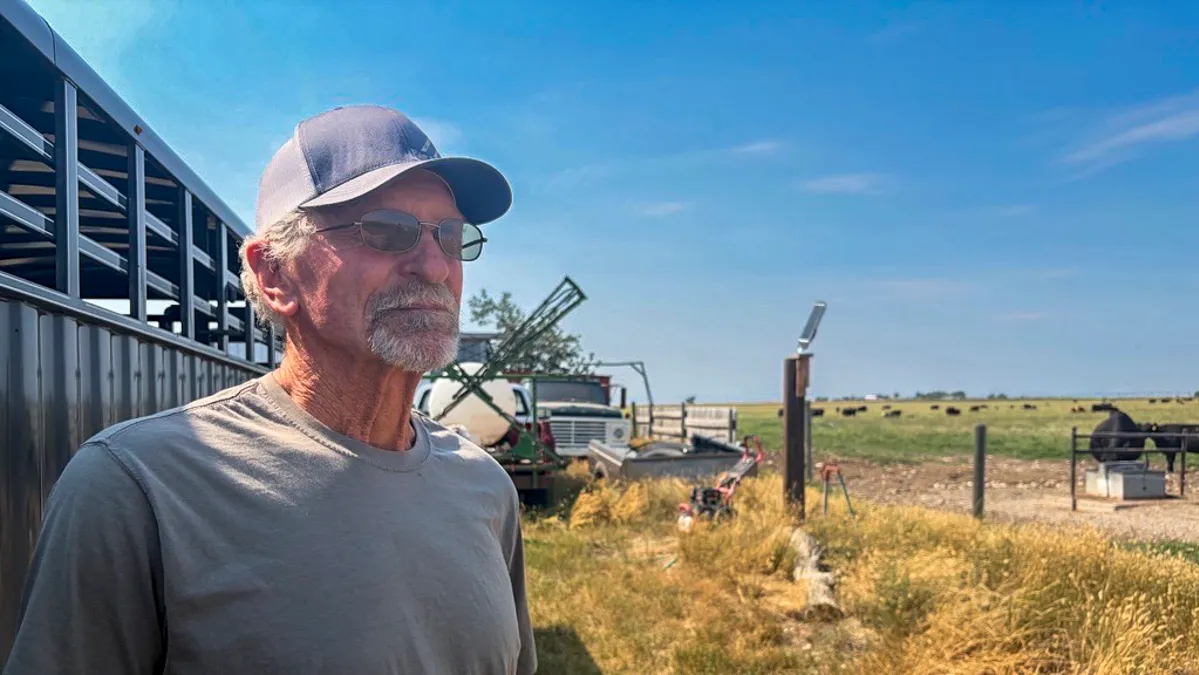
Standing on his own property outside Power, he described the anxiety of facing a market where the government has effectively guaranteed a cheaper substitute product will appear on shelves within days. Questions about which nations will supply the discounted meat, where it will be distributed, and how long the arrangement truly lasts remain unanswered. The Department of Agriculture declined to supply additional specifics, and the Office of the U.S. Trade Representative did not respond to requests for comment.
The Secretary’s Defense
Brooke Rollins, the secretary of agriculture, addressed the controversy in a Spectrum News interview, noting that she had not participated in certain internal conversations shaping the implementation details. She nonetheless defended the president’s calculus, telling reporters at the White House that a “temporary” corrective was warranted while a longer-term federal strategy tackles what she characterized as historic structural challenges in the sector.
“He is working to fill a gap, a pretty big gap, in the supply chain,” Rollins said, while also highlighting the administration’s broader regulatory-reduction agenda.
A Pattern Ranchers Recognize
The August move is not an isolated episode. In February of this year, the president signed an executive order lifting tariffs on 80,000 metric tons of Argentine beef. Within six months, he has again authorized record-scale imports into an industry where price signals are extraordinarily sensitive to perceived supply shifts. Analysts estimate the new 300,000-ton tranche represents roughly one week of total U.S. beef consumption — a fraction of the market, yet enough to rattle confidence and accelerate selling among domestic producers who fear the discount will anchor prices lower for weeks beyond the 90-day window.
The timing compounds the problem. The fall run, when ranchers traditionally move large numbers of cattle to market, peaks in October and November — squarely inside the 90-day clock. A rancher who might otherwise hold animals through a brief price dip now faces the prospect of being forced to liquidate at the bottom of the seasonal curve.
Compounding Pressures
Foreign beef imports are only one thread in what producers describe as a converging crisis. The administration’s escalating trade confrontation with Canada — Montana’s largest beef-export destination — has tightened the export pipeline. Simultaneously, the ongoing conflict with Iran has pushed fertilizer and fuel costs higher, squeezing margins on every acre of pasture and feedlot. Richard Liebert, a rancher and former president of the Montana Cattlemen’s Association, summed up the叠加 effect in blunt terms:
“It’s a triple whammy. This is like the perfect storm of crap.”
Gus Mundt, a fourth-generation Montana rancher and father of a three-year-old girl, had been riding a brief market improvement earlier in the year that allowed him to purchase a new tractor. Now he is recalculating his budget around the possibility of selling heifers at depressed prices.
“It just sucks,” Mundt said. “Now I’ve got to think about having to save again.”
Roots Going Back to 2020
High consumer beef prices have been a persistent complaint since the start of the president’s second term, but the underlying supply contraction began well before. The American Farm Bureau Federation, a major agriculture lobbying organization, traces the deterioration of pasture conditions to 2020. Pandemic-era economic disruptions followed, and severe multi-year drought across the western and central ranges further shrank the national herd. The result is a tighter supply base that makes every incremental addition of foreign product feel disproportionately destabilizing to domestic producers.
Political Fallout in Midterm Year
The decision has produced an unusually sharp chorus of dissent among Republican members of Congress — a notable departure in the final stretch of a critical midterm election cycle. Several lawmakers have framed the import order as part of a broader pattern of disregarding rural constituencies that delivered the party its recent electoral victories. For ranchers in ruby-red counties across Montana and neighboring states, the message is simple: the administration’s calculus on food prices has not accounted for the people who bear the cost of the correction.
The 90-day window includes a built-in brake: the proclamation allows the president to halt the program if beef prices do not fall quickly enough. Whether that trigger will activate, and whether the discount will in fact translate into lower grocery prices without permanently depressing domestic cattle values, remains the central question as autumn approaches and the fall run intensifies.
Related Reading
Frequently Asked Questions
What is In this red state cattle ranchers?
In this red state cattle ranchers is the main topic of this guide. The article explains the context, practical details, and next steps readers should understand.
Why does In this red state cattle ranchers matter?
In this red state cattle ranchers matters because readers are looking for a useful answer, not just a short summary. Good content should match search intent and help them decide what to do next.