Trump taps prosecutor Jay Clayton as intelligence director. What to know

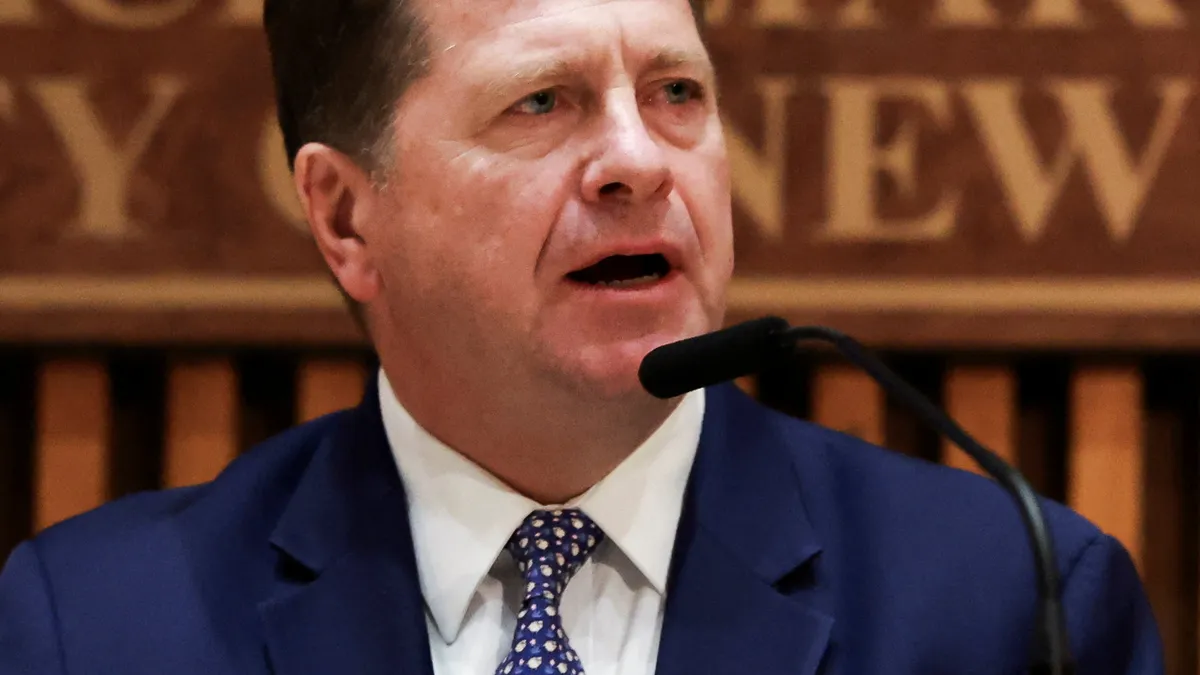
Trump Names Jay Clayton as National Intelligence Director Amid Controversy
Appointment of Prosecutor to Head Intelligence Agency Sparks Debate
Cybersecarmor.com – President Donald Trump has selected Jay Clayton, a seasoned prosecutor, to serve as the next director of national intelligence. The nomination, announced on June 11, is expected to require Senate confirmation to finalize his appointment. Clayton, 59, currently holds the position of United States Attorney for the Southern District of New York (SDNY), where he oversees one of the most prominent federal prosecutorial offices in the country. The decision to appoint Clayton to the intelligence role has drawn mixed reactions. While Trump praised his legal acumen and dedication to public service, some critics argue that his background in corporate law and prosecutorial work may lack the specialized expertise needed for national intelligence leadership. A notable endorsement came from Rep. Jim Himes of Connecticut, the ranking Democrat on the House Intelligence Committee, who stated, “Jay Clayton has been a respected figure in the legal community for decades. His intelligence, composure, and commitment to service position him as a strong candidate for the role.”
Clayton’s Legal Career and Key Positions
Clayton’s career has been marked by a blend of corporate law and federal prosecution. Prior to his current role, he served as chairman of the U.S. Securities and Exchange Commission (SEC) during Trump’s first administration, from May 2017 to December 2020. In that capacity, the commission launched over 2,300 enforcement actions, often in collaboration with the SDNY and other federal agencies. These efforts resulted in more than $10 billion in penalties and returned over $3 billion to investors affected by corporate misconduct. His tenure at the SEC was characterized by a focus on market integrity and financial regulations. Clayton also participated in the President’s Working Group on Financial Markets, contributing to discussions on economic policy and international financial ties. Despite these achievements, his time at the SEC saw a significant decline in the number of insider trading cases filed compared to previous decades, a fact highlighted by NPR in its analysis of data from the 1980s to 2019.
Transition to Prosecutorial Leadership
Before joining the SEC, Clayton held several high-profile roles in the legal field. He began his career as a law clerk for U.S. District Court Judge Marvin Katz in the Eastern District of Pennsylvania from 1993 to 1995. After earning a law degree from the University of Pennsylvania and completing degrees in economics from the University of Cambridge, he built a reputation as a formidable corporate lawyer. Clayton’s rise to prominence in the federal judiciary led to his appointment as head of the SDNY in 2017, a role he initially secured under Trump’s first administration. That nomination was delayed after Trump lost the presidential election in 2020, but he was later confirmed by the Senate. Under his leadership, the SDNY has handled major investigations, including cases tied to Trump’s inauguration committee and his associates.
Reactions to the Nomination
Trump’s choice for the intelligence director position has been met with both support and skepticism. On his Truth Social platform, the president emphasized Clayton’s standing in the legal community, declaring, “Few people anywhere in the Legal Community are respected at the level of Jay. I encourage the United States Senate to confirm Jay as soon as possible.” This sentiment reflects Trump’s broader strategy of appointing loyalists to key roles. However, the bipartisan opposition to Clayton’s nomination is notable. Critics, including some members of the Senate, argue that his lack of direct experience in intelligence operations could pose challenges. His predecessor as acting director, Bill Pulte, who took over on June 19, has already faced scrutiny for his limited background in the field. While Pulte’s tenure is expected to be temporary, Clayton’s confirmation would mark a shift in leadership for the intelligence community.
Clayton’s Current Responsibilities and Future Prospects
As U.S. Attorney for the Southern District of New York, Clayton manages a team of over 220 prosecutors who handle cases ranging from white-collar crime to cyber threats. His office has been instrumental in prosecuting high-profile defendants, including Alon, Oren, and Tal Alexander, who were convicted of federal sex offenses and conspiracy to commit sex trafficking. Clayton’s legal career has also extended to corporate advisory roles. After leaving the SEC, he chaired Apollo Global Management, a prominent investment firm, and returned to his former law firm, Sullivan & Cromwell LLP, as an “of counsel” attorney and senior policy advisor. He has also served on the board of American Express Company, further solidifying his influence in both legal and business circles.
Historical Context and Political Implications
Clayton’s nomination comes at a pivotal moment for the intelligence community, following the resignation of former DNI Tulsi Gabbard. Gabbard stepped down last month to care for her husband, who was diagnosed with cancer. Her departure opened the door for Trump to appoint a new leader, one who aligns with his administration’s priorities. Clayton’s appointment is seen by some as a strategic move to consolidate control over intelligence and law enforcement operations. His familiarity with federal prosecution and corporate regulatory frameworks could provide a unique perspective on national security challenges. However, his lack of direct experience in intelligence matters has raised questions about his readiness for the role.
Previous Contributions and Public Perception
During his time at the SEC, Clayton played a key role in shaping financial regulations and addressing corporate fraud. His office worked closely with the Justice Department to combat insider trading and other market abuses. According to the SEC’s biographical page, his leadership contributed to a record number of enforcement actions and significant financial recoveries for investors. Critics, however, have pointed to the decline in insider trading cases under his supervision. NPR’s analysis revealed that the SEC filed just 32 such cases in 2019, the lowest number since 1996. This has sparked debates about whether Clayton’s approach to enforcement prioritized political considerations over rigorous investigative standards.
Conclusion and Implications
The confirmation of Jay Clayton as director of national intelligence will likely hinge on his ability to balance his corporate law expertise with the demands of intelligence leadership. As the nation navigates complex security threats, his experience in high-stakes litigation may prove valuable. Yet, the intelligence community remains divided, with some praising his legal skills and others questioning his suitability for the role. With Senate confirmation pending, the appointment represents a significant step in Trump’s vision for the intelligence agency. The transition from acting director Bill Pulte to Clayton underscores the administration’s focus on appointing individuals with strong prosecutorial backgrounds. As the confirmation process unfolds, the public and political stakeholders will closely monitor how Clayton’s leadership shapes the direction of U.S. intelligence policy.
Clayton’s career trajectory highlights a blend of corporate and legal expertise, positioning him as a candidate who could bridge the gap between financial regulation and national security. His ability to navigate both realms may be crucial in addressing modern challenges such as cyber threats and international corruption. While his nomination is not without controversy, it reflects Trump’s preference for appointing figures with a proven track record in legal and economic matters.
The intelligence community, often a target of political scrutiny, will now look to Clayton to uphold its mandate. His leadership is expected to focus on strengthening ties between law enforcement and intelligence agencies, ensuring coordinated responses to emerging threats. As the confirmation process progresses, the Senate will weigh his qualifications against the concerns raised by critics, ultimately deciding the future of the agency’s direction.
Clayton’s appointment also signals a return to his role as a key player in federal prosecutions. His experience in handling complex cases, including those involving prominent figures and international actors, may bolster the intelligence community’s capacity to investigate and act on critical issues. However, the challenge lies in translating his prosecutorial success into effective intelligence strategy, a task that will require careful navigation in the coming months.
For now, the spotlight remains on Clayton as the next leader of the nation’s intelligence efforts. His ability to harmonize legal precision with strategic intelligence operations will be tested as he prepares to take on the role. With the Senate’s confirmation process underway, the outcome of his nomination will shape the trajectory of U.S. national security leadership for the foreseeable future.