Americans who say they drink alcohol remains at record low, survey finds

Daftar Isi
A Quiet Retreat From the Bottle: Why Americans Are Drinking Less Than Ever
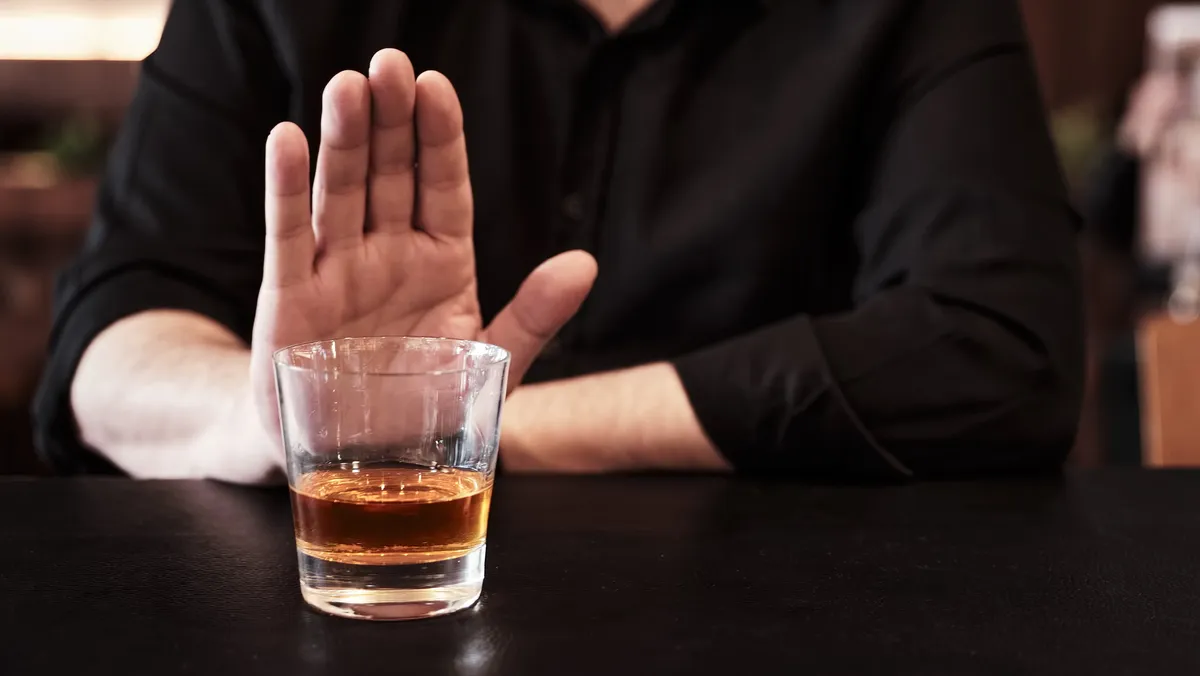
Cybersecarmor.com – The refrigerator door opens, the hand pauses, and the decision to skip the cold one has become more common than any point in modern American history. A Gallup poll released on August 20 reveals that just 54 percent of U.S. adults now identify themselves as drinkers — a figure that has held steady at its all-time low for two straight years. The shift is not a fleeting cultural whim; it is being propelled by a growing body of medical evidence that has seeped into everyday conversation, kitchen-table debates, and personal health routines.
Health Anxiety Reshapes the Drinking Norm
The survey’s most striking finding is not the raw percentage of people who pour a drink, but the reason behind the pour — or the deliberate choice not to. A majority of American adults, 51 percent, now consider consuming one or two alcoholic beverages daily to be harmful to their health. That number is virtually flat compared with last year’s record-high 53 percent, suggesting the belief has calcified into a stable cultural assumption rather than a passing trend.
“Fifty-one percent of U.S. adults now believe drinking one or two alcoholic beverages a day is bad for one’s health. The figure is essentially unchanged from last year’s record-high 53%.”
Contrast that with the early 2000s. In 2001, merely 27 percent of Americans held the same view about moderate drinking. Two decades of accumulating epidemiological data have compressed what was once a fringe concern into mainstream medical consensus.
The Research Pipeline Reaches the Public
Knowledge about alcohol’s long-term physiological toll has spread rapidly. Gallup found that 86 percent of respondents had heard at least something about recent studies examining how drinking affects health over time — a jump from 79 percent in 2024. That two-year leap of seven percentage points signals that the scientific literature is no longer confined to journal clubs; it is landing in news feeds, podcasts, and family group chats.
The research itself is unambiguous. A study published earlier this year in Cancer, the peer-reviewed journal of the American Cancer Society, quantified the risk in stark terms. Individuals whose average lifetime alcohol intake reached 14 or more drinks per week faced a 25 percent elevated probability of developing colorectal cancer and a 95 percent elevated probability of developing rectal cancer, relative to those averaging fewer than one drink weekly. For a population that once treated a nightly glass of wine as a harmless ritual, those figures carry real weight.
Overdrinking Collapses to Historic Lows
The survey also tracked self-reported excessive drinking, and the result marks another bottoming-out. Only 13 percent of Americans now say they sometimes drink too much — the lowest share Gallup has recorded. The historical backdrop makes the drop dramatic: before the year 2000, more than one in five adults routinely acknowledged overdrinking, and the peak reached a staggering 35 percent in 1989.
“Before 2000, more than 20% of Americans routinely reported overdrinking, including a record-high 35% in 1989.”
The collapse from a third of the population to barely one in eight over roughly two decades reflects not only changing norms but also the normalization of saying “no thanks” at a dinner table without social penalty.
The Nonalcoholic Shelf Grows
For the first time, Gallup probed whether Americans were substituting alcohol-free beverages. Seventeen percent reported having consumed nonalcoholic beer, wine, or spirits in place of a standard alcoholic drink during the preceding year. The figure is modest in absolute terms, yet it marks a category that barely existed in consumer retail a decade ago. Shelves in grocery stores now dedicate entire sections to zero-proof options, and breweries have responded with craft nonalcoholic lagers that compete on flavor rather than merely filling a gap.
Experts See a Structural Shift, Not a Blip
Medical professionals watching the data interpret the trajectory as durable. Dr. Jared Harp, an addiction psychiatrist at Cleveland Clinic, offered a pointed assessment to USA TODAY earlier in the year:
“I don’t think it’s a blip at this point. If anything, I think this trend is going to continue to strengthen.”
His reading aligns with the survey’s internal logic: when health perception, research awareness, and social norms all move in the same direction simultaneously, the resulting behavioral change tends to persist rather than oscillate. The 54 percent figure is unlikely to rebound sharply absent a major cultural counter-current.
Methodology and Scope
The findings rest on telephone and online interviews conducted in July with more than 1,000 U.S. adults aged 18 and older. Gallup’s long-running tracking of alcohol attitudes gives the numbers longitudinal depth, allowing year-over-year comparisons that isolate genuine trend from seasonal noise.
For readers navigating their own habits, the practical takeaway is straightforward: the medical community’s position on alcohol has moved from “moderation is fine” toward “less is measurably better,” and the American public is adjusting its behavior in step. The bar tab, the cocktail menu, and the nightly glass of wine are not disappearing, but they are increasingly optional — and the option to decline is no longer socially costly.
Related Reading
Frequently Asked Questions
What is Americans who say they drink alcohol?
Americans who say they drink alcohol is the main topic of this guide. The article explains the context, practical details, and next steps readers should understand.
Why does Americans who say they drink alcohol matter?
Americans who say they drink alcohol matters because readers are looking for a useful answer, not just a short summary. Good content should match search intent and help them decide what to do next.