Data centers are booming, and so is the controversy

Daftar Isi
The Fight Over America’s Data Centers Is Moving Into the Ballot Box
Cybersecarmor.com – As voters prepare to head to the polls this fall, a surprisingly contentious infrastructure question has taken center stage in town halls, county commissions, and congressional hearings alike: should new data centers be permitted in their neighborhoods? What began as a quiet expansion of server farms along interstate corridors has now become one of the most polarized local-issues debates in the country, with residents on both sides digging in for a prolonged political battle.
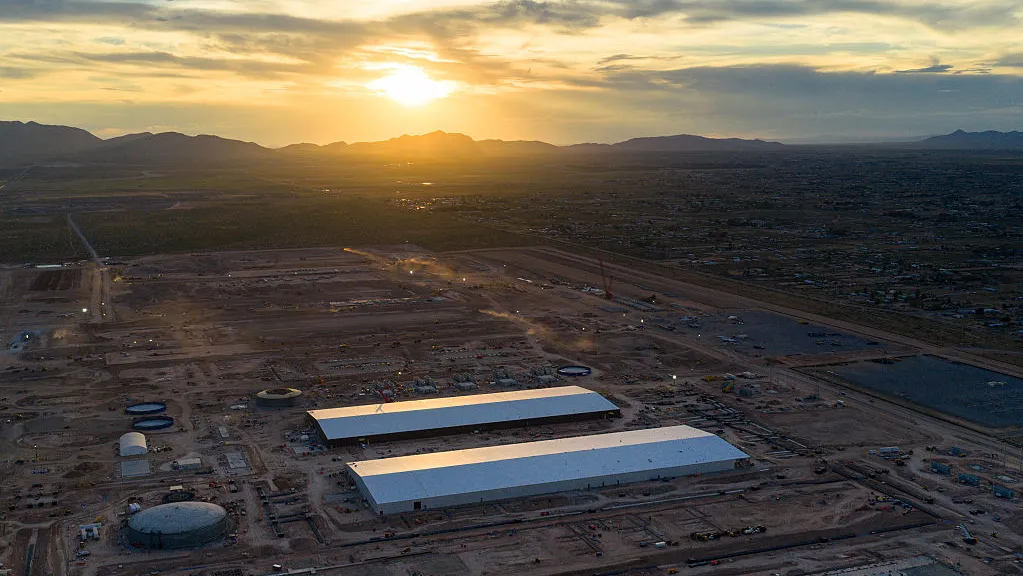
At their core, data centers are the physical buildings that house the servers, switches, and cooling systems powering everything from streaming platforms to large-scale artificial-intelligence workloads. Their footprint has grown at a pace that outstrips most municipal planning cycles, and the backlash has grown with them.
A Gallup poll released in May captured the mood: 70 percent of Americans said they oppose siting a new data center in their own community, and nearly half — 48 percent — described their opposition as strong.
The Scale of the Buildout
The numbers behind the controversy are staggering. As of August 19, the global directory Data Center Map counted more than 4,700 operating or planned facilities across the United States. Virginia, long dubbed the “data center capital of the world,” tops the list with over 600 active sites, while Texas trails closely behind at more than 500. The geographic concentration reflects cheap land, favorable tax codes, and proximity to fiber-optic backbones, but it also means that entire counties are absorbing the environmental and fiscal consequences of hyperscale computing.
For residents, the question is no longer abstract. On April 27, environmental advocate Erin Brockovich launched a public reporting platform called Brockovich AI Data Center Reporting, inviting neighbors to log noise complaints, water-use anomalies, and construction disruptions tied to nearby facilities. Within weeks of going live, the site’s interactive map had cataloged more than 9,000 AI-related data centers — operational, under construction, or merely proposed — giving communities a shared visual record of how saturated their landscape has become.
What Opponents Point To
Energy draw
The single most cited concern is electricity. In 2023, U.S. data centers consumed 176 terawatt-hours of power, representing more than four percent of the nation’s total electricity use that year, per figures from the Department of Energy’s Lawrence Berkeley National Laboratory. To put that figure in household terms, SolarTech, a solar-energy firm based in El Cajon, California, calculated that 176 terawatt-hours could keep roughly 16 million average American homes running for an entire year. As AI training runs grow longer and more compute-intensive, that share is projected to climb, and ratepayers in surrounding communities are already seeing utility bills spike.
Water consumption
Cooling is the other half of the equation. Large facilities can pull up to five million gallons of water in a single day, a figure cited by the Environmental and Energy Study Institute. That volume rivals the daily domestic use of a small town of 10,000 to 50,000 residents. The water itself may be drawn from rivers, aquifers, municipal mains, or treated reclaimed supplies. Roughly 80 percent evaporates during the cooling cycle; the remainder flows into municipal wastewater treatment plants, adding load to systems already strained in arid regions.
Noise and resident health
The acoustic signature of a data center — the low-frequency hum of chillers, the rumble of backup diesel generators, the constant whine of exhaust fans — can be detected hundreds of feet from the building wall, around the clock. Neighbors in several states have reported headaches, vertigo, nausea, disrupted sleep, ear pain, and elevated blood pressure, symptoms logged on the Environmental and Energy Study Institute’s public resource pages.
Electronic waste
Server hardware has a finite service life. When racks are retired, the old boards, power supplies, and storage drives become e-waste. The technology social enterprise Human-I-T estimates that only 22.3 percent of the world’s electronic waste is properly collected and recycled. What is not recycled can leach lead, mercury, arsenic, and flame-retardant chemicals into soil and groundwater, a hazard profile outlined by the Geneva Environment Network. For a community already wary of industrial encroachment, the prospect of periodic truckloads of decommissioned hardware heading to a landfill is a potent deterrent.
The Industry Case
Operators and trade groups push back with a different framing. They argue that data centers are as essential to the coming economy as highways were to the twentieth century — that they anchor technological innovation, generate high-wage construction and operations positions, and deliver meaningful property-tax revenue to the municipalities that host them. In states where a single hyperscale campus can account for a measurable share of local tax receipts, the fiscal argument carries real weight with county boards weighing permits.
Celebrity Enters the Arena
The debate has crossed into pop-culture territory. On August 18, former Philadelphia Eagles center Jason Kelce posted a music video promoting Garage Beer, the craft brand he co-owns with his brother Travis Kelce and Liquid Death. In the spot, Kelce deadpanned that the public should simply urinate on data centers to help offset their enormous water withdrawals. The clip went viral within hours, illustrating how quickly the issue has migrated from utility-board minutes into mainstream conversation.
What Comes Next
With the election cycle in full swing, expect data-center siting to appear on local ballots, in state legislative agendas, and in campaign-platform language. Several states have already moved to tighten environmental review, cap water withdrawals, or require community-benefit agreements before a shovel hits the ground. The central tension — between the economic gravity of AI infrastructure and the lived experience of the neighborhoods that must absorb its externalities — shows no sign of resolving quickly. For the communities caught in the middle, the next few months of campaigning will likely shape permitting rules for years to come.
Related Reading
Frequently Asked Questions
What is Data centers are booming and so is?
Data centers are booming and so is is the main topic of this guide. The article explains the context, practical details, and next steps readers should understand.
Why does Data centers are booming and so is matter?
Data centers are booming and so is matters because readers are looking for a useful answer, not just a short summary. Good content should match search intent and help them decide what to do next.