This surprising state could break all-time tornado record

Daftar Isi
Illinois Races Toward an All-Time National Tornado Record
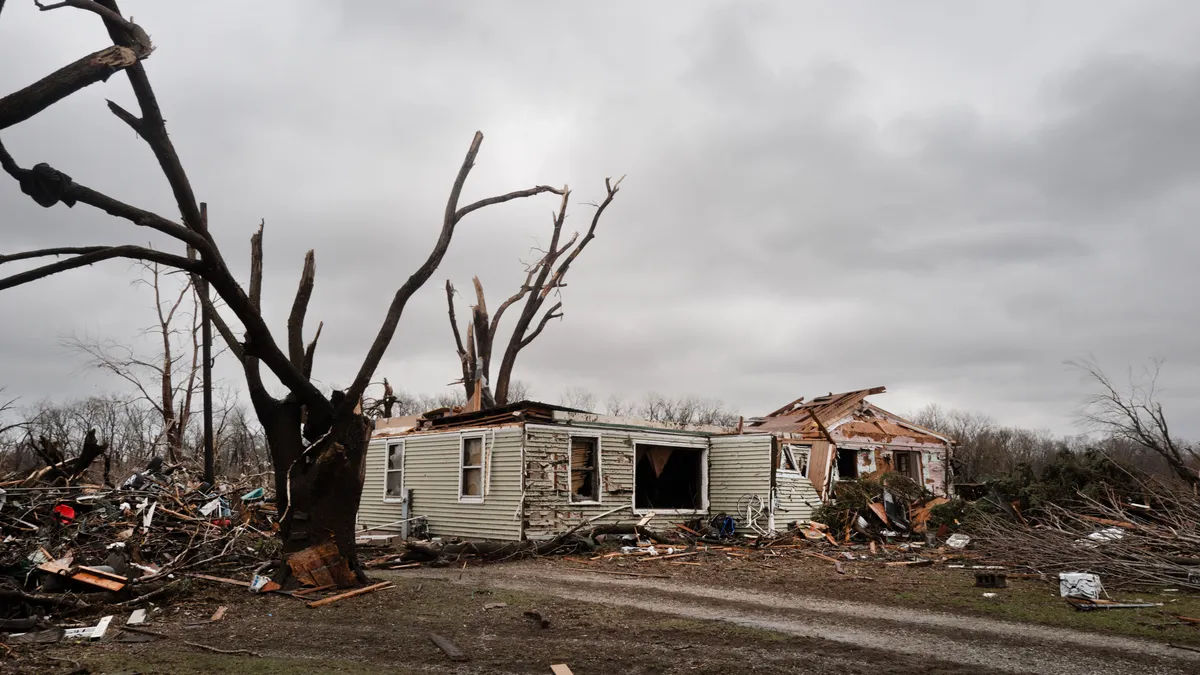
Cybersecarmor.com – For decades, the Prairie State’s identity has been stitched together from Lincoln memorials, basketball arenas, and blues-bar jukeboxes. In 2026, however, a far more violent signature has taken center stage: a relentless barrage of tornadoes that has pushed Illinois past its own state annual record and onto a collision course with the highest tornado total ever logged by any U.S. state.
As of mid-August, at least 207 confirmed tornadoes have touched down across the state, according to Victor Gensini, professor director of the Center for Interdisciplinary Research on Convective Storms at Northern Illinois University. That figure already exceeds three times the state’s current twenty-year average, per federal climatological data. More striking still is the preliminary year-to-date count of 241 reports, with roughly four and a half months of storm season remaining. If that number holds or climbs, Illinois would dethrone Texas, which set the all-time national state record in 2015 with a total that NOAA databases variously list as 241 or 245, depending on which archival system is consulted.
A Season That Never Slowed Down
The extraordinary run began on March 10, when a tornado dropped a 6.6-inch hailstone that is expected to be verified as a new Illinois state record. From that first event onward, the pace never eased.
“It really never slowed down after that,” Gensini said. “It’s been an amazing year for me as a severe weather researcher.”
The 2026 figures will remain provisional until the National Weather Service completes its final verification cycle in early 2027. Gensini noted, however, that preliminary tallies have historically tracked closely with finalized counts, making the current trajectory a reliable early indicator.
Why Illinois, Why Now?
No single meteorological culprit explains the surge. Gensini attributes much of it to what he calls “bad luck” — a confluence of atmospheric ingredients aligning repeatedly over the state.
“The ingredients that are required to produce these supercell storms have been very, very prevalent,” he explained. “We have been kind of underneath the location of the jet stream on several occasions this year, and that jet stream, of course, is one of those really fundamental ingredients that allow storms to rotate.”
Ample heat and moisture compounded the risk. On March 10 itself, suburban Chicago neighborhoods were already reading 80 degrees Fahrenheit — an anomalously warm temperature for early spring that primed the atmosphere for vigorous convection.
Harold Brooks, a research scientist at NOAA’s National Severe Storms Laboratory, confirmed that the broader corridor spanning Missouri, Indiana, and Illinois experienced an unusually active stretch.
“This has been a spectacularly active period for that area,” Brooks said.
A Shifting Tornado Landscape
The 2026 spike does not exist in isolation. Gensini and Brooks co-authored a 2018 study documenting a measurable eastward and southward drift in tornado frequency away from the traditional “tornado alley” corridor. Over the past two decades, the annual average number of reported tornadoes has climbed significantly across states stretching from Illinois down to Georgia, even after accounting for improvements in radar coverage, mobile reporting, and public alerting technology.
The shift is most dramatic in the Deep South. In Alabama and Kentucky, the annual average of reported tornadoes between 2000 and 2020 more than doubled compared with the preceding twenty-year baseline, according to an analysis of federal tornado archives. Illinois itself has seen its annual average balloon from 37.8 in 2020 to 63.1 by 2025 — a near-doubling in five years.
Illinois is not a statistical anomaly when it outpaces Texas. Over the past twenty-one years, the smaller state has logged more tornados than the much larger Lone Star State on six separate occasions. Per square mile, Gensini observes, Illinois routinely out-produces Texas, which covers roughly five times the area.
Record Tornadoes, Remarkably Few Deaths
Perhaps the most consequential takeaway from 2026 is the disconnect between tornado frequency and human cost. Despite the record-setting volume of events, fatalities have remained very low.
“It’s impossible to measure the number of lives” saved this year by the National Weather Service, Gensini said. Looking at the tornado numbers, “you’d never expect the fatalities to be as low as they are.”
He credits the Storm Prediction Center’s forecasts and the granular watches and warnings issued by the five NWS forecast offices covering Illinois. Through August 12, those five offices had issued 463 individual tornado-warning events — a total exceeding the combined output of all nineteen forecast offices based in Texas, Oklahoma, Kansas, and Nebraska (428). The density of alerts, delivered via wireless emergency alerts, NOAA Weather Radio, and mobile apps, has given residents in suburban Chicago, central Illinois, and downstate communities repeated, actionable warnings before each event.
For residents of a state whose annual tornado average has nearly doubled in five years, the lesson of 2026 is twofold: the frequency risk is real and rising, but the warning infrastructure has proven capable of keeping the human toll manageable even in an extreme year. As the final NWS verification arrives in early 2027, Illinois will know whether it has rewritten the national record — and whether the next season’s forecast offices must prepare for an even denser calendar of warnings.
Related Reading
Frequently Asked Questions
What is This surprising state could break all time?
This surprising state could break all time is the main topic of this guide. The article explains the context, practical details, and next steps readers should understand.
Why does This surprising state could break all time matter?
This surprising state could break all time matters because readers are looking for a useful answer, not just a short summary. Good content should match search intent and help them decide what to do next.