This US airport ranked first for domestic flight deals

Daftar Isi
Where to Find the Deepest Flight Discounts: New Rankings Reveal Top Hubs and Carriers
Cybersecarmor.com – Travelers hunting for below-market airfares now have a data-driven map showing which U.S. airports and airlines consistently deliver meaningful savings. Going, a flight-search platform, published its annual assessment of domestic and international deal frequency on August 17, 2026. The study examined over 45,000 routes departing from American airports across a full twelve-month window spanning July 1, 2025, through June 30, 2026, giving it a broad enough sample to separate genuine patterns from one-off anomalies.
The methodology behind the rankings goes beyond simply flagging the lowest ticket price ever observed. Instead, the analysis weighs three factors together: the average percentage saved on full-service carriers, the typical price level, and how frequently a below-average fare actually appears. This distinction matters because a single rock-bottom fare buried in a year of premium pricing offers little practical value to someone planning a trip next month.
“A single cheap fare doesn’t tell the whole story,” Willis Orlando, flight expert at Going, explained in a news release. “With most travel headlines featuring affordability right now, we built these rankings around what actually matters to travelers: not just the price of the ticket, but how deep the discount is and how often a good deal comes around. An airport that has one amazing fare a year isn’t as valuable to travelers as one that delivers solid deals every week.”
Domestic Airport Standings
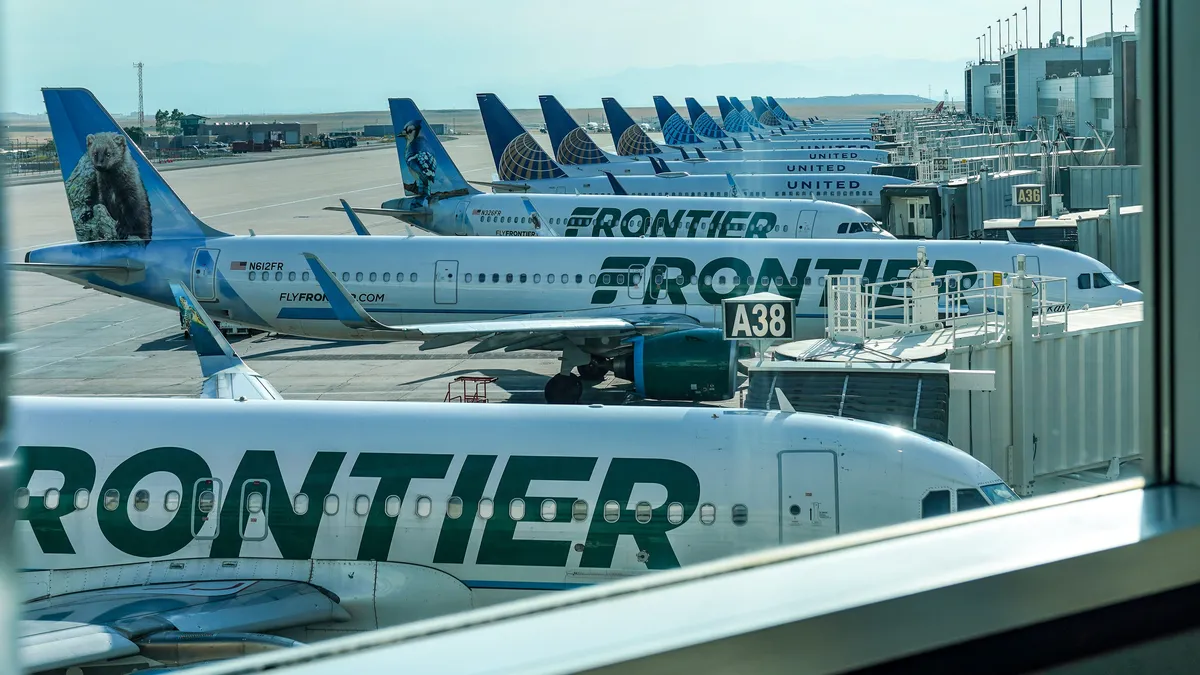
Denver International Airport (DEN) claimed the number-one position for domestic bargain frequency. Louis Armstrong New Orleans International Airport (MSY) placed second, and Orlando International Airport (MCO) rounded out the top three. Each of these hubs earns its spot through a distinct competitive dynamic rather than a single carrier’s pricing strategy.
“Denver, New Orleans and Orlando got there in different ways, but the throughline is the same in that more competition means lower fares,” Orlando noted. “In Denver, United and Southwest are locked in a fare war with Frontier. In New Orleans, Southwest and Breeze are doing the same, on top of rising leisure demand. And in Orlando, all those planes flying in for theme parks have to fly back out, so locals benefit from that extra capacity too.”
The Denver situation illustrates how a low-cost entrant can compress prices across an entire market. Frontier’s presence forces legacy carriers to defend share by trimming fares, and the result is a sustained pattern of below-average pricing rather than isolated promotions. New Orleans pairs a similar competitive pressure with surging leisure travel demand, creating a two-sided incentive for carriers to fill seats at discounted rates. Orlando’s advantage is more structural: the sheer volume of round-trip traffic feeding theme-park visitors means return legs carry excess capacity that local residents can exploit at reduced prices.
International Airport Standings
For transatlantic and transpacific bargain frequency, Boston Logan International Airport (BOS) led the list, followed by New York’s John F. Kennedy International Airport (JFK) in second and Newark Liberty International Airport (EWR) in third. These three airports collectively serve as the principal East Coast doorways to long-haul international routes, concentrating the most competitive long-range pricing in the country.
“The three airports are ‘the country’s primary East Coast gateways to international travel,'” Orlando observed.
The concentration of international carriers at these hubs means that multiple airlines compete for the same transatlantic and transpacific seats, keeping discount frequency elevated throughout the year rather than limiting bargains to a narrow seasonal window.
Airports with the Fewest Deals
At the opposite end of the spectrum, Honolulu’s Daniel K. Inouye International Airport (HNL), Maui’s Kahului Airport (OGG), and Ted Stevens Anchorage International Airport (ANC) recorded the lowest domestic deal frequency. For international routes, Kahului and Anchorage again appeared in the bottom three, joined this time by Oakland San Francisco Bay Airport (OAK). These locations typically operate with limited carrier overlap and thinner route networks, reducing the competitive pressure that drives sustained discounting.
Domestic Airline Rankings
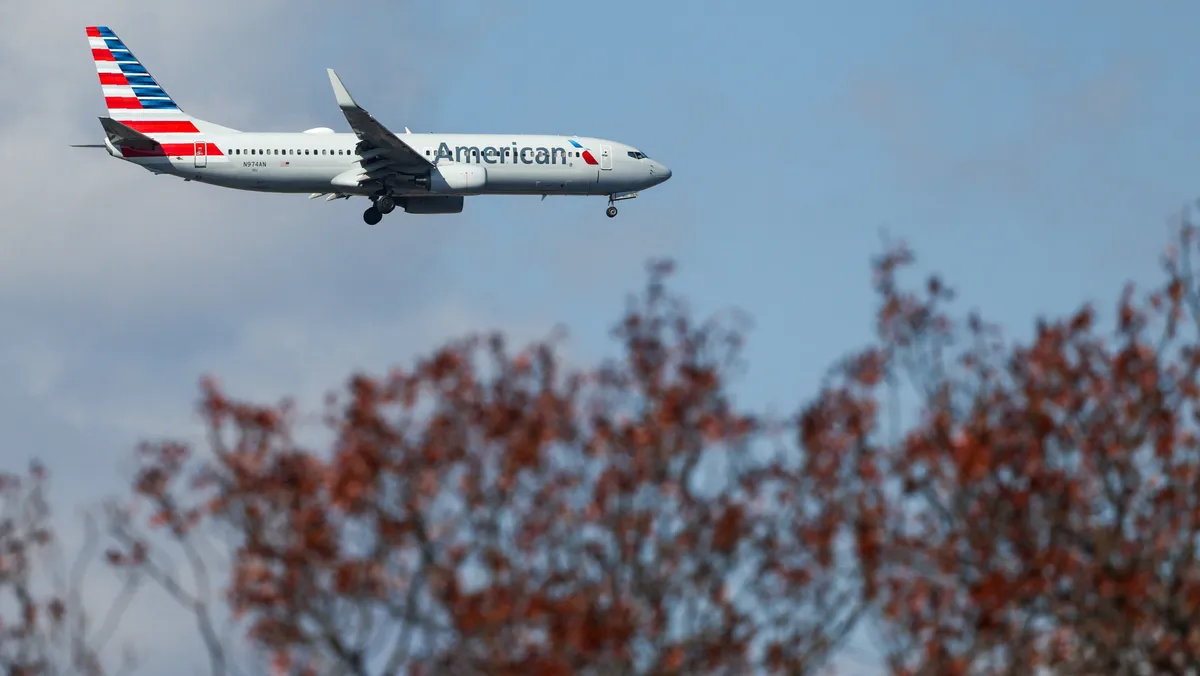
American Airlines topped the domestic deal-frequency list, with Delta Air Lines in second, Southwest Airlines in third, and United Airlines in fourth. Alaska Airlines and Hawaiian Airlines shared the fifth position; the two carriers merged in 2024, and the combined entity’s deal output was tallied as a single entry. JetBlue Airline placed sixth.
Going’s analysis included only full-service carriers, deliberately excluding ultra-low-cost operators such as Avelo Airlines and Breeze Airways. This scope decision means the rankings reflect the competitive dynamics among airlines that offer checked baggage, seat selection, and other standard inclusions, rather than the bare-metal pricing of budget brands.
“While American takes the cake for the most deals, it’s really the Big 3 plus Southwest all landing in the same ballpark,” Orlando said. “That’s steep competition and fare wars at work, and those are exactly what drive the best deals for travelers.”
The clustering of American, Delta, United, and Southwest near the top of the domestic list underscores a structural reality: when four major full-service carriers compete head-to-head on overlapping city pairs, fare dispersion widens and below-average pricing becomes a routine occurrence rather than a rare event. Travelers who time their bookings to coincide with promotional cycles at these carriers can expect meaningful savings on a weekly basis at the top-ranked airports.
International Airline Rankings
On the long-haul side, United Airlines, American Airlines, and Delta Air Lines occupied the top three positions for international deal frequency. Air Canada, British Airways, and JetBlue followed in fourth, fifth, and sixth respectively. The presence of two foreign flag carriers in the upper half of the list highlights how transatlantic competition extends beyond U.S. carriers, with Canadian and British airlines matching or undercutting American pricing on shared routes.
For travelers planning trips in the coming months, the practical takeaway is straightforward: airports where multiple full-service carriers contest the same routes generate a persistent undercurrent of discounted fares, while isolated or single-carrier hubs tend to sustain premium pricing. The rankings serve as a starting point for route selection, though individual itineraries, seasonality, and booking lead time will always modulate the actual price encountered at checkout.
Related Reading
Frequently Asked Questions
What is This US airport ranked first for domestic?
This US airport ranked first for domestic is the main topic of this guide. The article explains the context, practical details, and next steps readers should understand.
Why does This US airport ranked first for domestic matter?
This US airport ranked first for domestic matters because readers are looking for a useful answer, not just a short summary. Good content should match search intent and help them decide what to do next.