
French carrier group moves south of Suez ahead of conditional UK-French Hormuz mission
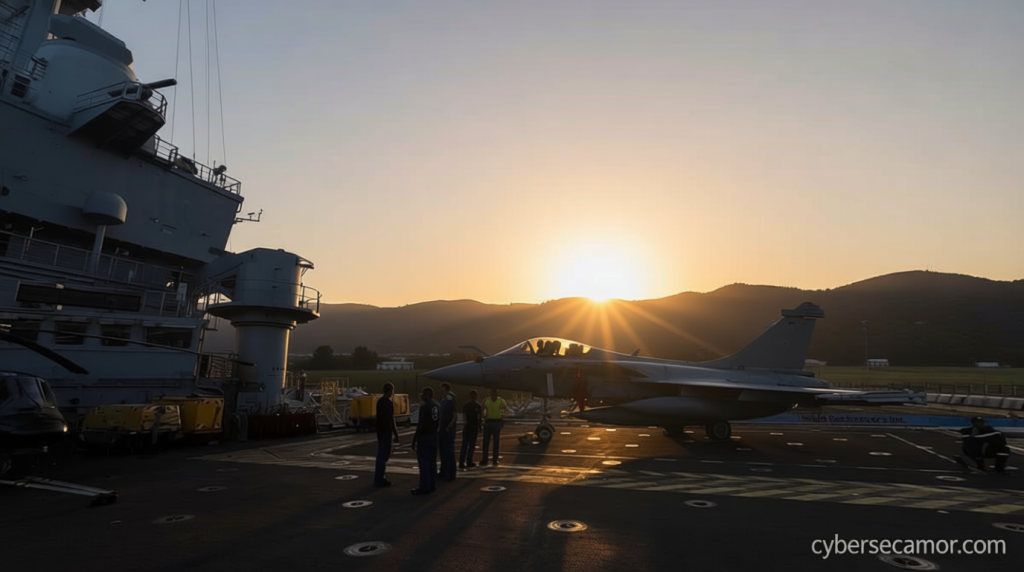
French Carrier Group Moves South of Suez Ahead of Hormuz Mission
French carrier group moves south of Suez as a UK-French mission prepares to secure the Strait of Hormuz. France has initiated the relocation of its nuclear-powered Charles de Gaulle carrier strike group to the southern Red Sea, enhancing its strategic position near the vital waterway. This maneuver, confirmed by French military officials, is part of a joint operation with the UK aimed at ensuring the free flow of commercial traffic. The move follows Iran’s closure of the strait, which has disrupted global oil shipments and heightened regional tensions. The repositioning marks a pivotal step in France’s ongoing military presence in the Middle East, initially outlined by President Emmanuel Macron during a March 3 address.
Strategic Positioning and Operational Readiness
The French carrier group’s repositioning to the south of Suez underscores its readiness to support maritime security efforts. By placing the Charles de Gaulle closer to the Persian Gulf, France aims to bolster its ability to respond swiftly to threats in the strait. The carrier, accompanied by eight frigates and two Mistral-class ships, forms a significant naval presence in the area. French military planners emphasize that this shift is a calculated response to Iran’s control of the strait, which has restricted commercial vessels from passing through without substantial risk.
“Moving the carrier group south of Suez is a key adjustment to our posture,” stated Colonel Guillaume Vernet, spokesperson for France’s armed forces chief of staff. “It enables us to project power more effectively in the Hormuz region while maintaining a defensive stance.”
The operation is conditional on two factors: the reduction of maritime threats and the safety of commercial ships. Vernet noted that the coalition will remain on standby until these conditions are met, highlighting the importance of international cooperation. The mission’s success also hinges on the approval of regional allies, reflecting France’s diplomatic approach to the crisis.
Regional Tensions and Insurance Impact
The closure of the Hormuz Strait by Iran has created a volatile environment for global trade, with insurance costs for ships skyrocketing. Industry reports indicate that premiums have risen four to five times their pre-conflict levels, deterring vessels from transiting the area. This economic strain has left nearly 2,000 ships stranded in the Gulf, amplifying the urgency for a coordinated response. France’s deployment is part of a broader strategy to alleviate these pressures and protect vital supply lines.
Iran’s blockade intensified after U.S.-led strikes on its military infrastructure, including a February 28 attack that targeted key assets. The death of Supreme Leader Ayatollah Ali Khamenei on March 4 further escalated tensions, prompting nations to reassess their military posture. The French-British mission, positioned as a defensive initiative, aims to counter Iran’s influence and stabilize the region, with France’s carrier group serving as a critical asset in this effort.
Coalition Coordination and Mission Objectives
France’s mission operates in tandem with the UK, though it differs from the U.S.-led “Project Freedom.” While the American operation involves direct engagement, the French-British effort focuses on escorting and safeguarding commercial vessels. This distinction is crucial, as it aligns with France’s emphasis on international law and deterrence. The two nations have held multiple discussions to harmonize their strategies, ensuring a unified approach to the Hormuz crisis.
French carrier group moves south of Suez as part of a multi-nation coalition that includes over 30 countries. Macron and UK Prime Minister Keir Starmer convened a summit in Paris on April 16, galvanizing support for the mission. Subsequent talks at a UK-hosted conference refined the operational plan, demonstrating the collaborative nature of the effort. The coalition’s goal is to mitigate Iran’s impact on global energy security while maintaining a balanced military presence.
Naval Assets and Air Support
The Charles de Gaulle was deployed from the Baltic Sea on March 3, marking France’s “unprecedented” mobilization. The carrier group’s repositioning allows for rapid air operations without directly entering the Gulf, where U.S. forces have enforced a blockade. French air assets, including Rafale fighters, are now stationed at Al Dhafra in the UAE, a strategic airbase under a defense pact with Abu Dhabi. This location provides a vantage point to monitor the strait and support maritime missions.
France’s efforts are part of a larger initiative to ensure the continuity of international trade routes. The carrier group’s southward shift aligns with the broader goal of maintaining stability in the region. As the situation evolves, the French-British mission will play a vital role in countering Iran’s dominance and reinforcing global energy security through coordinated naval and air operations.

