
Video. Cape Verde: three evacuated from MV Hondius over suspected hantavirus
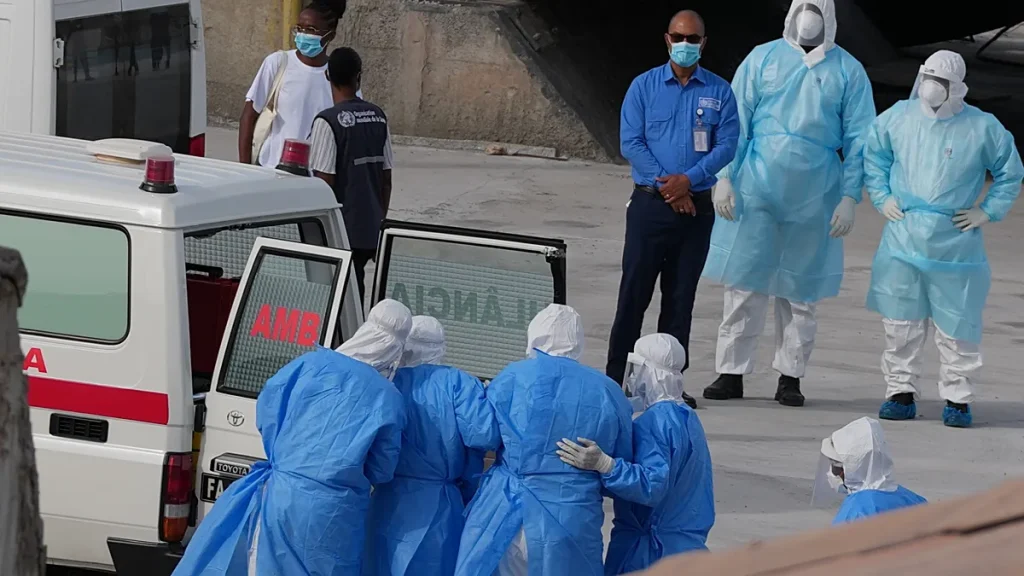
Video. Cape Verde: Three Evacuated from MV Hondius Over Suspected Hantavirus
Outbreak on Board the MV Hondius Sparks Evacuation
Cape Verde – On Wednesday, May 6, 2026, three individuals suspected of having hantavirus were removed from the MV Hondius cruise ship, which was anchored near Cape Verde. The evacuation followed reports of the virus among passengers and crew, prompting authorities to halt the vessel’s docking in Praia. The Dutch-flagged ship, accommodating 149 people—88 passengers and 61 crew members—remains offshore, awaiting transport to the Canary Islands of Spain. This action underscores growing concerns about managing infectious diseases in maritime environments, where close quarters can accelerate transmission.
Global Spread and Regional Impact
The MV Hondius had embarked on its journey from Argentina on April 1, 2026, traversing Antarctica and the South Atlantic before the outbreak was confirmed on May 2. Its route across multiple regions has complicated efforts to track the virus’s origin. While the majority of hantavirus cases are typically linked to rodent exposure, this incident has raised alarms due to the presence of the Andes orthohantavirus (ANDV), a strain known for its ability to spread between humans. At least three confirmed cases and three fatalities have been reported, with eight total cases identified by the World Health Organization.
The World Health Organization reported that a total of eight cases have emerged, with three confirmed and three fatalities. This highlights the severity of the situation and the potential for the virus to spread in confined spaces like cruise ships.
Evacuation and Medical Response
Among the evacuated passengers were individuals from the United Kingdom, the Netherlands, and Germany, who were transported to specialized medical facilities for further evaluation. This move has intensified scrutiny on the ship’s health protocols, particularly as contact tracing continues across several countries. Officials have emphasized that the overall public health risk remains low, but the incident has prompted stricter measures to prevent contagion. Passengers on board are currently isolating in their cabins, with teams monitoring interactions to identify potential sources of infection.
Understanding the Hantavirus Threat
Hantaviruses are a family of viruses primarily transmitted through contact with rodent droppings or urine, often affecting people in rural or wilderness areas. However, the Andes orthohantavirus stands out as an exception, capable of spreading through direct person-to-person contact or respiratory droplets. This characteristic makes it particularly dangerous in settings such as cruise ships, where large numbers of people gather in enclosed spaces. The current outbreak is linked to cases in South America, with one former passenger receiving treatment in Zurich and others hospitalized in South Africa.
The virus’s presence on the MV Hondius has raised questions about the preparedness of onboard medical teams to handle such outbreaks. While most hantavirus strains require rodent vectors for transmission, ANDV’s ability to bypass this limitation has made it a critical focus for health officials. The ship’s isolation from the mainland, coupled with its international passenger base, has created a unique challenge in containing the spread. Despite these concerns, authorities maintain that the risk to the general public is manageable, provided strict quarantine and hygiene protocols are enforced.
International Collaboration and Next Steps
As the situation unfolds, international cooperation is playing a key role in managing the crisis. Health agencies from multiple nations are working together to trace contacts and monitor the condition of affected individuals. The MV Hondius will likely remain in the Canary Islands for several days to ensure all patients receive adequate care and to assess the extent of the outbreak. Meanwhile, efforts are underway to determine whether the virus originated on board or was introduced during the ship’s earlier stops.
Experts are also analyzing the broader implications of the incident for global travel. Cruise ships, which often operate in remote waters, have become potential hotspots for infectious disease outbreaks. This case may lead to revised safety guidelines, including enhanced sanitation procedures and improved onboard medical response plans. The WHO has advised continued vigilance, especially in regions where ANDV is endemic, such as parts of South America.
The MV Hondius’s journey, which began in Argentina and included a passage through Antarctica, has exposed passengers to diverse environmental conditions that may have contributed to the virus’s spread. The ship’s captain and crew are now under investigation to determine if any lapses in health protocols occurred. Additionally, the timeline of the outbreak—reporting on May 2—suggests that the virus may have incubated undetected for several days before symptoms became apparent. This delay could have allowed for further transmission, emphasizing the need for rapid diagnostic testing in such settings.
Public Health Measures and Risk Assessment
Authorities have advised passengers to remain in their cabins and avoid close contact with others to reduce the likelihood of person-to-person transmission. Masks and hand sanitizers are being distributed, and air filtration systems are being checked for optimal performance. While the overall risk is deemed low, the possibility of ANDV spreading among the crew and passengers has heightened awareness of the virus’s potential to affect maritime travel. The WHO’s statement serves as a reminder of the importance of global health coordination in addressing such incidents.
As the ship prepares to dock in the Canary Islands, health officials are working to ensure that all affected individuals are monitored and that the vessel is decontaminated. This incident has also prompted discussions about the need for better communication between cruise operators and health authorities. The success of the evacuation and the subsequent management of cases will be crucial in determining the long-term impact on public health. For now, the focus remains on containing the outbreak and preventing further spread across the Atlantic.
The MV Hondius case exemplifies the challenges of managing infectious diseases in mobile environments. With its international itinerary and passenger base, the ship became a microcosm of global health dynamics. The evacuation highlights both the effectiveness of emergency protocols and the vulnerabilities inherent in long-haul travel. As the world watches the situation develop, the incident may serve as a catalyst for improved preparedness in the maritime industry, ensuring that such outbreaks are handled with greater efficiency in the future.

