
Spanish steel pipe maker Tubos Reunidos enters insolvency after 134 years
Spanish Steel Pipe Maker Tubos Reunidos Enters Insolvency After 134 Years
Bleak Outlook and Insolvency Declaration
Spanish steel pipe maker Tubos Reunidos – The fate of Tubos Reunidos, a long-standing Spanish steel pipe manufacturer, now hangs in the balance as the company moves toward insolvency. Based in Álava, the firm has informed the National Securities Market Commission and a court in Vitoria-Gasteiz that it cannot fulfill its upcoming financial obligations. With a debt burden exceeding €263 million, the company faces a critical juncture that could mark the end of its 134-year legacy. This development has sparked concern among stakeholders, including investors and employees, who have witnessed a dramatic decline in the company’s fortunes over recent months.
Historical Foundations and Operational Expansion
Tubos Reunidos traces its origins to 1892, when it was established as Tubos Forjados during the flourishing era of Basque industrialization. Over the decades, the company grew to become a key player in the production of seamless steel tubes, catering to industries such as energy and petrochemicals. In 1968, it merged with a U.S.-based multinational, which expanded its operations to include facilities in Vizcaya, Spain, and Houston, Texas. This strategic alliance aimed to bolster its global reach, but decades of evolving market dynamics have since challenged its stability. The firm now employs nearly 1,300 workers across these locations, a workforce that has become increasingly vocal about the company’s financial struggles.
Financial Decline and Structural Challenges
What was once a profitable entity in 2023 has now turned into a company grappling with substantial losses. In its most recent fiscal year, Tubos Reunidos reported a deficit of €82.5 million, a stark contrast to its earlier success. This downturn has been fueled by a combination of factors, including a sharp drop in revenue following the 2023 peak, soaring energy and labor costs in Europe, and the intensifying competition from cheaper Chinese imports. These pressures have compounded over time, leaving the company in a precarious position. Meanwhile, the U.S. steel and aluminum tariffs imposed by Donald Trump have further strained its operations, reducing demand and increasing production costs.
Employee Protests and Workforce Impact
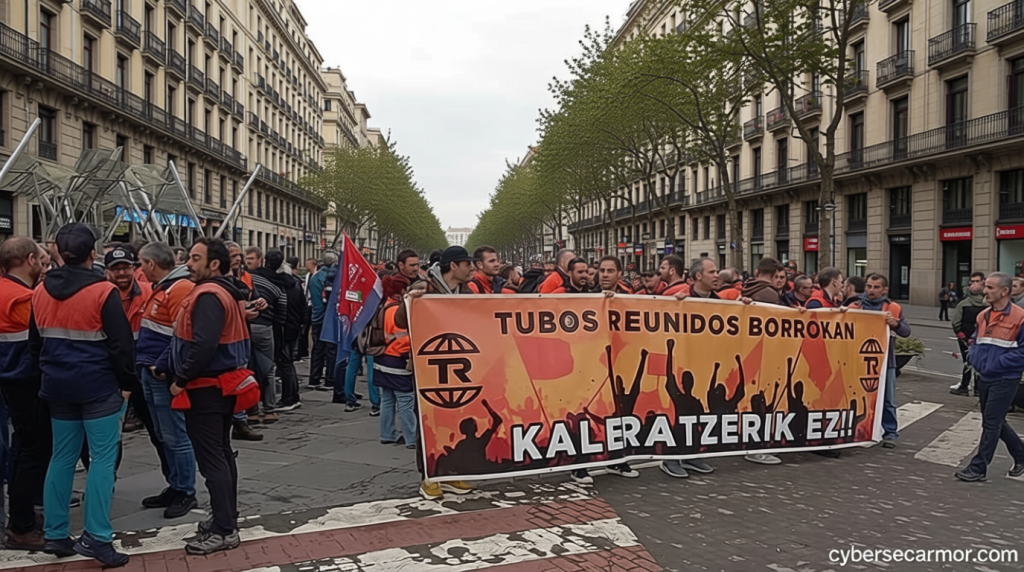
Amid the financial turmoil, the company’s employees have taken to the streets, organizing demonstrations in Orduña, Amurrio, and Bilbao. These protests reflect growing frustration with the company’s instability, as workers fear job cuts and reduced benefits. Tubos Reunidos had proposed a collective redundancy plan, affecting 242 employees, but this measure was met with resistance from four trade unions. The unions argued that the plan did not adequately address the root causes of the crisis, prompting further unrest within the Basque Country workforce. The company’s leadership has faced mounting pressure to find a solution that protects its employees while stabilizing its financial position.
Tariffs and Market Pressures
The steel industry has long been a target of protectionist policies, and Tubos Reunidos is no exception. Trump’s tariffs on steel and aluminum, introduced in 2018, have disrupted global supply chains and reduced demand for European exports. For Tubos Reunidos, these tariffs have acted as a catalyst for financial stress, exacerbating existing issues. While the company had already been battling structural challenges, the new trade barriers intensified its difficulties, particularly in the U.S. market. The firm’s ability to compete in this environment has been compromised, with lower-cost Chinese alternatives gaining ground. This shift has forced Tubos Reunidos to reassess its pricing strategies and operational efficiency, but the results have been disappointing.
Investor Confidence and Share Price Drop
Investor sentiment has soured in recent months, leading to a significant decline in Tubos Reunidos’ stock value. The share price has plummeted from 57 euro cents to 14 euro cents over the past year, signaling a loss of trust in the company’s management and future prospects. This sharp drop has resulted in the suspension of trading, leaving shareholders uncertain about their next steps. The financial instability has also raised questions about the company’s ability to attract new investment or secure emergency funding. Despite its long history, Tubos Reunidos now finds itself in a crisis that has eroded both its market position and investor confidence.
Judicial Scrutiny and Political Allegations
The insolvency filing has triggered a wave of judicial review, with Spanish courts now examining the company’s financial decisions under scrutiny. Allegations have emerged that Tubos Reunidos may have benefited from improper political connections, potentially influencing its access to critical support. A state-backed emergency loan from Spain’s SEPI (public industrial support fund) was granted during the height of the COVID-19 pandemic, providing temporary relief. However, the loan’s distribution has come under investigation, with officials probing whether political figures or intermediaries played a role in accelerating the process. These claims suggest a broader pattern of corruption involving several companies, though no definitive conclusions have been reached.
Ongoing Investigations and Accountability Measures
As the insolvency process unfolds, the company’s future remains uncertain. A court-appointed administrator will now oversee its operations, seeking to streamline its finances and determine the best path forward. This administrative intervention marks a pivotal moment in the company’s history, as it transitions from a thriving industrial enterprise to a business under judicial control. Meanwhile, the SEPI loan investigation continues, with prosecutors examining potential influence peddling and bribery allegations. The case highlights the intersection of economic challenges and political influence, raising questions about the transparency of state support in times of crisis. Spanish authorities are now tasked with uncovering the full extent of these dealings, ensuring accountability for any wrongdoing. For Tubos Reunidos, the path to recovery—or liquidation—will depend on the outcomes of these investigations and the company’s ability to adapt to an increasingly competitive global market.
Legacy and Future Implications
Tubos Reunidos’ journey from a Basque industrial pioneer to an insolvent entity underscores the challenges faced by traditional manufacturing firms in a rapidly changing economic landscape. Its 134-year history is a testament to resilience, but the current crisis reveals vulnerabilities that have gone unaddressed. The company’s decline has sparked broader discussions about the sustainability of European steel producers in the face of global competition and domestic policy influences. As the Basque Country grapples with the loss of a major employer, the situation also serves as a cautionary tale for other firms in the sector. The next steps in Tubos Reunidos’ insolvency process will not only determine its fate but also shape the broader narrative of industrial decline in Spain and beyond.

