
Sweden announces new spy agency in rethink prompted by war in Ukraine
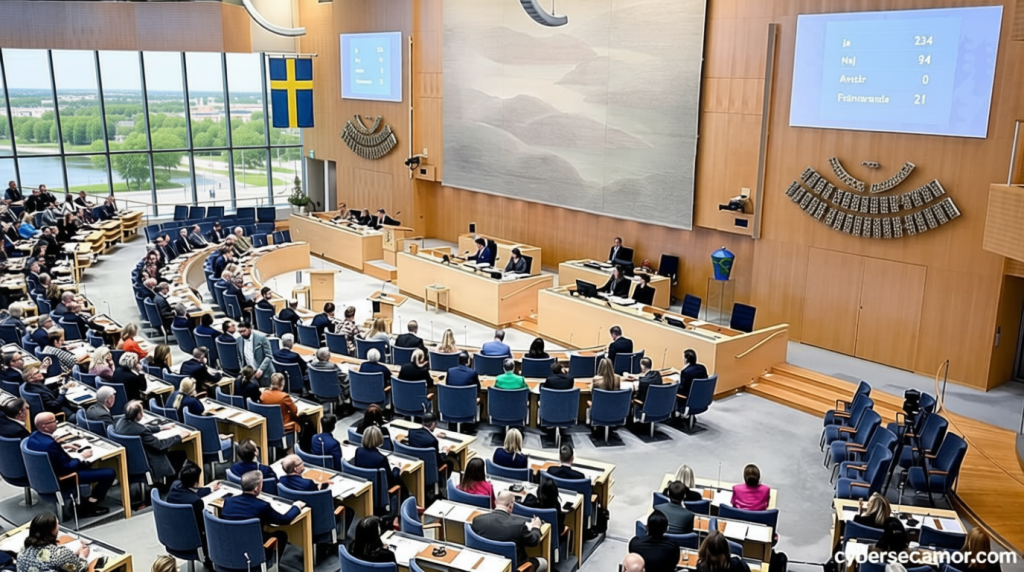
Sweden Announces New Spy Agency in Reassessment Triggered by War in Ukraine
Sweden announces new spy agency in rethink – On Tuesday, the Swedish government revealed its plan to establish a new intelligence agency, marking a significant shift in the nation’s approach to national security. This move, which aims to create a dedicated foreign intelligence service, is part of a broader reevaluation driven by the escalating conflict in Ukraine. The agency, to be named the Swedish Foreign Intelligence Service (UND), is set to begin operations in January 2027, according to Foreign Minister Maria Malmer Stenergard. Her remarks at a press conference underscored the growing recognition of the importance of intelligence capabilities in modern warfare.
“The war in Ukraine has shown us that having a strategic edge in information and the ability to swiftly adapt technological systems are as vital as possessing advanced weaponry,” Stenergard emphasized. She further noted that the new agency would mirror the structure and function of the UK’s MI6, highlighting Sweden’s desire to enhance its intelligence infrastructure.
The decision to form this new body comes as Sweden continues to refine its security framework. The country already maintains two existing intelligence organizations: the Military Intelligence and Security Service (MUST), which focuses on overseas threats, and the Swedish Security Service (SAPO), tasked with addressing domestic security risks. The creation of the UND signals a strategic realignment, with the aim of integrating these functions more effectively.
Stenergard highlighted that the UND would assume some of the responsibilities previously handled by MUST, while also collaborating closely with the Swedish Armed Forces, SAPO, and the National Defence Radio Establishment (FRA), which specializes in signal intelligence. This coordination is expected to streamline operations and improve Sweden’s capacity to monitor and respond to external threats. The minister also pointed out that the new agency would serve as a central hub for gathering, interpreting, and disseminating intelligence data, ensuring a more cohesive defense strategy.
Sweden’s shift toward a more proactive intelligence posture is closely tied to its NATO membership. In 2022, the nation abandoned its two-century-long policy of military neutrality, opting to apply for NATO accession following Russia’s full-scale invasion of Ukraine. This decision marked a pivotal moment in Swedish foreign policy, as the country aligned itself with Western alliances to bolster collective security. Stenergard noted that this alignment has introduced new expectations, particularly in terms of intelligence-sharing and operational coordination.
“As we develop our intelligence framework, we are ensuring it aligns with the structures and standards of NATO and our allies,” she explained. The minister emphasized that the UND’s creation would not only strengthen Sweden’s defense capabilities but also enhance its interoperability with international partners.
The new agency is designed to address the evolving nature of external threats, which have become more complex with the rise of cyber warfare, disinformation campaigns, and hybrid conflicts. Stenergard stated that the UND’s mission would involve identifying and neutralizing these risks, particularly those originating from regions like Eastern Europe and the Middle East. This includes monitoring geopolitical shifts, tracking potential adversaries, and supporting decision-making at both the national and international levels.
Sweden’s intelligence landscape has seen substantial growth in recent years, particularly since the Ukraine war intensified. The country has expanded its surveillance capabilities and increased funding for defense research. The UND is expected to build on these efforts by integrating advanced technologies and expanding the scope of intelligence collection. This includes leveraging satellite imagery, cyber analytics, and human intelligence networks to stay ahead of emerging challenges.
Stenergard also mentioned that the new agency would work in tandem with existing structures to create a more robust intelligence network. This collaboration would involve close partnerships with the Armed Forces and SAPO, as well as the FRA, which plays a critical role in intercepting and analyzing communications. By combining these resources, Sweden aims to achieve a comprehensive approach to intelligence, covering both military and civilian domains.
The legislative process for the UND’s formation is currently underway. A bill outlining the agency’s establishment and operational guidelines has been prepared and will be submitted to the Council on Legislation for review. Once scrutinized, the proposal is set to be presented to the Swedish Parliament in June. This step is crucial for ensuring the agency’s legitimacy and securing the necessary funding and authority to function effectively.
Sweden’s move reflects a broader trend among European nations to modernize their intelligence capabilities in response to global security dynamics. With NATO’s expansion and the increasing sophistication of threats, the UND is positioned to play a key role in safeguarding the country’s interests. The agency’s focus on external threats aligns with Sweden’s growing involvement in collective defense initiatives, particularly in light of the Ukraine conflict.
Historically, Sweden’s military neutrality allowed it to remain a bridge between East and West, fostering diplomatic relations with both Russia and NATO. However, the war in Ukraine has forced a reevaluation of this balance. Stenergard acknowledged that Sweden’s strategic priorities have shifted, necessitating a more integrated and responsive intelligence system. The new agency represents a commitment to adapting to this new reality, ensuring the nation is prepared for future challenges.
The creation of the UND is also seen as a step toward greater autonomy in intelligence operations. While Sweden has traditionally relied on alliances for security, the agency will enable the country to develop its own capabilities, reducing dependence on external partners. This is particularly important as the war in Ukraine has demonstrated the vulnerabilities of relying solely on alliances for defense.
Stenergard’s comments highlight the evolving nature of intelligence in the 21st century. She noted that the ability to rapidly adapt and analyze information is now as critical as traditional military strength. This perspective underscores the need for a dedicated agency to handle the complexities of modern threats, which often require cross-border collaboration and technological innovation.
The UND is expected to operate under the Ministry of Foreign Affairs, ensuring close coordination with diplomatic efforts. This integration will allow intelligence activities to support Sweden’s foreign policy objectives, such as strengthening ties with NATO allies and addressing global security concerns. The agency’s formation also signals a more proactive stance in intelligence matters, with a focus on preemptive action rather than reactive measures.
Sweden’s intelligence reorganization is part of a larger effort to modernize its defense sector. The country has invested heavily in technology and training, with the goal of creating a more agile and effective security apparatus. The UND will be a key component of this strategy, enabling Sweden to respond to threats with greater speed and precision. As Stenergard stated, the agency’s establishment is a reflection of the changing security landscape and the need for continuous adaptation.
In conclusion, Sweden’s decision to create the UND represents a significant milestone in its national security strategy. The agency’s focus on external threats, combined with its integration into existing intelligence frameworks, is expected to enhance Sweden’s ability to navigate the complexities of contemporary geopolitics. With NATO membership and the war in Ukraine as catalysts, the UND is poised to play a central role in safeguarding the country’s interests in an increasingly uncertain world.

