
Made in China, engineered in Germany: Inside Xiaomi’s EV push ahead of planned 2027 Europe entry
China’s Tech Giant Unveils European Ambitions with High-Performance EVs
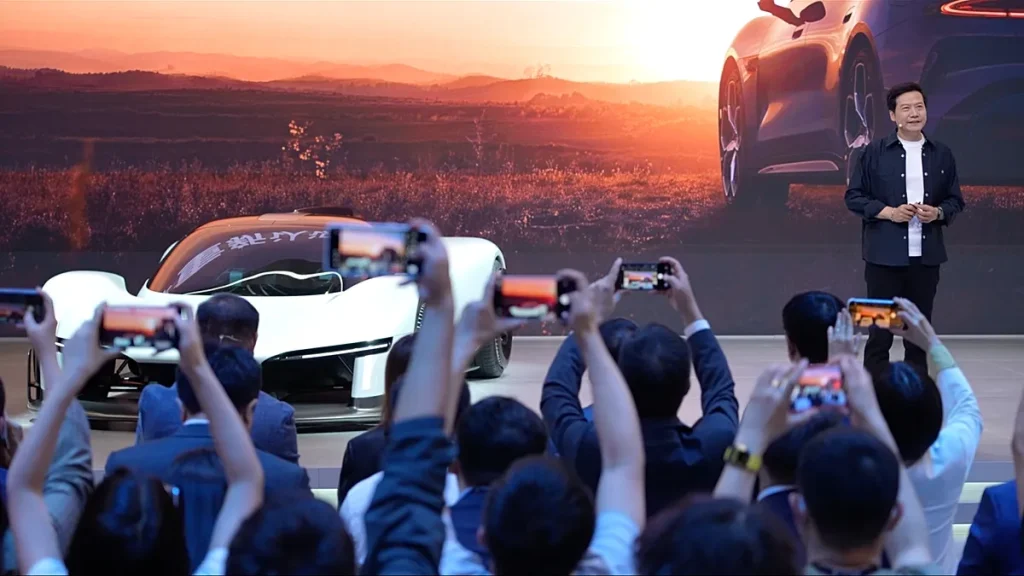
Made in China engineered in Germany – At the Auto China 2026 motor show in Beijing, Xiaomi’s booth became a focal point of the event, drawing large crowds eager to see the company’s founder and CEO, Lei Jun, in person. Known for his celebrity-like status in China, Jun’s presence commanded attention, highlighting Xiaomi’s growing influence in the automotive industry. Earlier in April, the company had already sparked significant buzz with a high-profile endurance test, during which Jun personally drove a Xiaomi SU7 Pro from Beijing to Shanghai—a distance of approximately 1,300 kilometers—stopping only once for charging. The journey, streamed live on social media, captivated online audiences and served as a real-world showcase of the vehicle’s capabilities.
From Concept to Reality: Xiaomi’s EV Strategy
At Auto China 2026, Jun unveiled the Vision Gran Turismo concept for the first time in China, following its global debut at the Mobile World Congress 2026. This latest project emphasizes Xiaomi’s commitment to pushing the boundaries of electric vehicle (EV) innovation. Alongside the concept reveal, he shared updates on the performance of the new SU7 models and outlined plans for the upcoming YU7 GT. These announcements underscore Xiaomi’s rapid acceleration in the EV sector, which has seen the company evolve from a consumer electronics brand to a formidable player in automotive manufacturing.
Since its 2024 market entry with the SU7, Xiaomi has demonstrated an aggressive expansion strategy. The SU7’s success—alongside the YU7’s 200,000 pre-orders within minutes of its launch—signals strong consumer demand. Now, the company is preparing to release the YU7 GT, its first model co-developed with European engineers. This collaboration is part of Xiaomi’s broader effort to tailor its vehicles to international markets, particularly Europe. The YU7 GT is set to debut in China in late May, combining cutting-edge performance, comfort, and dynamic handling to appeal to a diverse range of drivers.
Behind the Scenes: Xiaomi’s EV Factory
Inside Xiaomi’s EV factory in Beijing, the pace of production mirrors the company’s ambitious goals. A new vehicle exits the assembly line roughly every 76 seconds, reflecting a highly efficient manufacturing process. The facility integrates production, research, testing, and customer experience into a single, streamlined operation, showcasing Xiaomi’s push for vertical integration. This approach allows the company to maintain tight control over quality and innovation, from design to delivery.
Automation plays a critical role in this process. Over 700 robots are involved in key manufacturing stages, with automation rates exceeding 90% in certain workshops. Advanced AI-driven inspection systems ensure near-perfect accuracy in detecting defects, reducing errors and enhancing reliability. Additionally, an on-site testing track allows for rigorous verification of each vehicle under real-world driving conditions before it reaches consumers. These measures highlight Xiaomi’s dedication to meeting global standards while maintaining its signature efficiency and precision.
Smart Integration: The Human x Car x Home Vision
While performance remains a cornerstone of Xiaomi’s EV strategy, the company is also betting heavily on integration. Its “Human x Car x Home” initiative aims to connect vehicles with personal devices and smart home systems via the HyperOS operating system. This ecosystem enables drivers to manage daily tasks—from booking reservations to adjusting home environments—while the system learns and adapts to user behavior. For instance, lighting and music settings can automatically adjust based on stress levels or personal preferences, creating a seamless blend of mobility and domestic life.
Such integration is part of a growing trend among Chinese automakers, who are increasingly merging hardware with software and AI-driven features. This strategy not only enhances user experience but also positions Xiaomi as a pioneer in connected technology. By embedding smart functionality into its vehicles, the company is redefining the boundaries of what an EV can achieve. According to industry analysts, this approach could set a new standard for automotive innovation, particularly in markets where technology adoption is widespread.
“Xiaomi is a classic example of where the product is going to go next. Smart home, smart devices are a large part of our home life. The car becomes another product within our home life, our work life, our leisure life. That’s the model that is going to develop, and I think everybody needs to follow,” said James Pearson, founder and CEO of Lionheart, an automotive branding and advertising agency.
Xiaomi’s rapid domestic growth has now shifted its focus to international markets. The company has announced plans to launch its global expansion in 2027, with Germany as its initial overseas destination. To prepare for this move, Xiaomi established an EV R&D and Design Center in Munich in 2025, a hub renowned for its automotive engineering expertise. The center, led by former BMW executive Rudolf Dittrich, is tasked with adapting Xiaomi’s vehicles to European standards, including regulatory requirements, infrastructure compatibility, and customer expectations.
Dittrich emphasized the methodical approach Xiaomi is taking in its European market entry. “Xiaomi is approaching that very methodologically, looking at data. We’re trying to get customer insights as much as we can,” he stated at Auto China 2026. This data-driven strategy is crucial for navigating the complexities of the European market, where consumer preferences and regulations can vary significantly. By leveraging local expertise, Xiaomi aims to ensure its products resonate with European buyers while maintaining the brand’s core identity.
Preparing for the European Market: Challenges and Opportunities
Xiaomi’s entry into Europe coincides with a period of slowing EV market growth. According to the European Automobile Manufacturers’ Association (ACEA), battery-electric vehicles accounted for 17.4% of new car registrations in 2025, a slight increase from 13.6% the previous year. While this growth is moderate, it presents opportunities for brands like Xiaomi to differentiate themselves through innovation and affordability.
Early signs indicate that Xiaomi’s vehicles are already generating interest in Europe. Last year, test drives attracted attention even at charging stations, with passersby pausing to observe the cars. This curiosity suggests that Xiaomi’s designs and technology are resonating with European consumers, despite the competitive landscape. As the company prepares for its 2027 debut, it is working to refine its offerings to meet regional demands, whether through improved battery technology, localized features, or enhanced connectivity.
The combination of Xiaomi’s domestic expertise and European collaboration positions it to address key challenges in the global EV market. By leveraging its strong supply chain and manufacturing capabilities while incorporating European engineering insights, the company is poised to create vehicles that balance performance with practicality. This dual approach not only strengthens its competitive edge but also signals a strategic shift toward becoming a truly global automaker.
As Xiaomi continues to expand its EV lineup and refine its international strategy, the brand is setting the stage for a significant presence in Europe. With the YU7 GT as a flagship model and a robust manufacturing base, the company is ready to challenge established automakers. The journey from China to Germany represents more than just a geographical shift—it marks a pivotal moment in the evolution of a tech giant into a leader of the next automotive revolution.

