
China hawks are gaining ground in the Commission. Will EU countries follow?
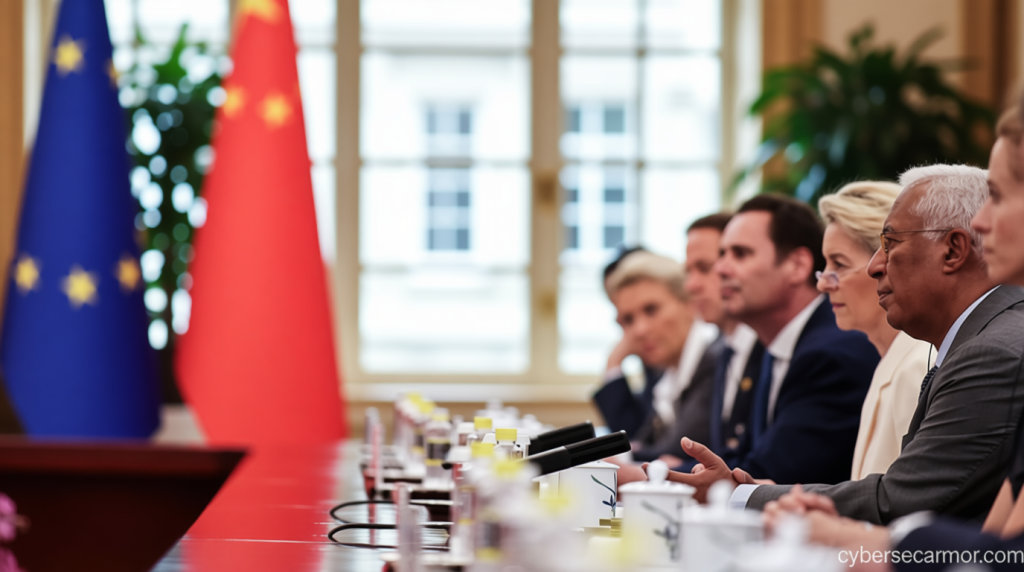
China Hawks Steal Momentum in EU Commission: A New Trade Strategy Looms
China hawks are gaining ground – Brussels is witnessing a shift in power as the European Commission adopts a more assertive approach toward China. The growing influence of China critics within the bloc has led to a reevaluation of trade policies, with leaders like Ursula von der Leyen prioritizing actions that challenge Beijing’s economic dominance. Reports from Euronews indicate that the Directorate-General for Trade, a key body within the Commission, is now dominated by hardliners who advocate for stricter measures to counter perceived unfair trade practices. These figures, along with von der Leyen’s inner circle, are pushing for a more aggressive stance, signaling a potential realignment in EU-China relations.
Rising Tensions in EU-China Relations
The situation has escalated recently after China’s Ministry of Commerce issued warnings of retaliation against the EU. This comes in response to the bloc’s introduction of the Made in Europe legislation, which imposes strict conditions on foreign direct investment. The move has stirred unease, as it aims to protect domestic industries from what the EU views as competitive disadvantage. A senior official within the Commission remarked, “The strategy is about recognizing there is a problem and that urgent action is required.” This statement underscores the growing urgency to address China’s role in shaping European markets.
German Trade Deficit Marks a Turning Point
Germany’s trade deficit figures, released before Christmas, have become a pivotal moment for the Commission. The data, published by the German Trade & Invest (GTAI) agency, revealed a staggering €87 billion shortfall in trade with China. This has forced Berlin to shift its focus from securing market access to defending its domestic manufacturing sector. The Bundestag, Germany’s parliament, has since formed a specialized committee to tackle the issue, while the Commission’s German president has been actively engaging with Berlin to align on new economic strategies.
US Tariffs and the Cost of Competition
Pressure on the EU to act intensified last year after the United States imposed steep tariffs on Chinese goods. This move effectively closed off a major market for Beijing, prompting the country to redirect its surplus production in sectors like steel and chemicals toward Europe. The impact of this realignment is now evident, as the EU grapples with the consequences of its own economic vulnerabilities. A recent analysis from the French High Commission for Strategy and Planning warned that “the cost gaps in production, as measured by European industry leaders, have reached levels that threaten long-term competitiveness.” In certain sectors such as industrial robotics and mechanical components, the disparity exceeds 60%, according to the report.
Trade Defense Tools and the Need for Speed
While the EU has access to traditional trade defense mechanisms like anti-dumping and anti-subsidy duties, these tools require at least 18 months to implement after a complaint is filed. Sources confirm that the Commission is developing new instruments to expedite responses to China’s economic pressures. However, the timeline may not be sufficient to prevent long-term damage. One insider noted, “We are still in the early stages of testing these new tools, and time is not on our side.”
China’s Strategic Dilemma: Can It Diversify?
Chinese electric vehicles, which were targeted by EU tariffs in October 2024, exemplify the dilemma faced by Beijing. Prior to Donald Trump’s return to the White House in 2025, China relied equally on the U.S. and EU markets for nearly all its exports. Now, the EU’s stance has made it harder for China to find alternative markets, as noted by a source: “China cannot easily shift its EV production to Africa or Southeast Asia without the necessary infrastructure in place.”
The Anti-Coercion Instrument: A Weapon Ready to Deploy
Amid these challenges, the Commission is exploring the use of the Anti-Coercion Instrument (ACI), a powerful tool designed to counter economic pressure from third countries. Described as a “trade bazooka,” the ACI allows the EU to implement a range of measures, including tariffs, restrictions on public procurement, and intellectual property controls. Although the instrument was established in 2023, it has not been activated yet. That changed in October 2025, when China weaponized rare earth exports during its trade standoff with the U.S., prompting the EU to consider its use.
The recent truce between Washington and Beijing, which also involved Europe, temporarily eased the situation. However, this agreement expires in October 2026, leaving the EU in a precarious position. The Commission is working to ensure the ACI is fully prepared for potential activation, but the window for decisive action is narrowing. “The stakes are high, and we need to be ready to strike hard if tensions flare again,” one official said.
European Reliance on Chinese Imports
Despite the EU’s efforts to balance its trade relationship, the bloc remains heavily dependent on Chinese imports in several critical sectors. This mutual reliance creates a complex dynamic, where European companies rely on Chinese supply chains for goods like solar panels, laptops, and medical devices. A source highlighted the dilemma: “Closing our market to Chinese lithium batteries may not be feasible overnight, given the scale of the dependency.” This interdependence suggests that any drastic measures against China could have ripple effects on both sides of the trade equation.
Looking Ahead: A Delicate Balance
As the EU prepares for its China strategy debate on May 29, the focus is on whether the bloc can maintain its competitive edge without alienating China. While engagement with Beijing through multiple channels remains a priority, the growing chorus of hardliners is pushing for a more confrontational approach. The challenge lies in finding a balance between protecting European industries and preserving trade relationships that are essential for economic stability. The next few months will be critical in determining whether this shift toward a tougher stance will lead to a lasting realignment in EU-China trade relations.
Uncertainty and the Road to Resolution
The uncertainty surrounding the expiration of the U.S.-China truce in 2026 adds another layer of complexity. Without a renewed agreement, the EU may face renewed pressure from Beijing to adjust its policies. “We are watching closely to see if China will take advantage of the vacuum,” said one Commission official. The debate in Brussels is not just about economic strategy—it’s about the future of the EU’s global trade position and its ability to withstand the pressures of a rising economic power.

