Iranians flock to Tehran for slain leader Khamenei funeral

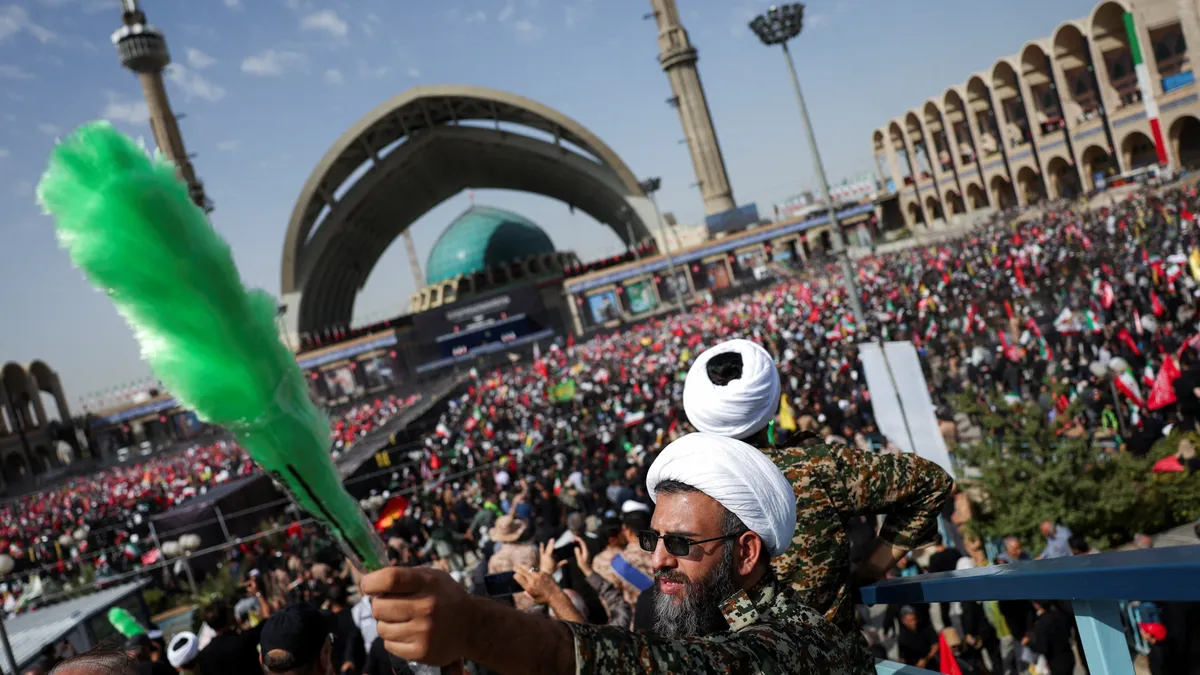
Iranians Gather in Tehran for Mourning of Supreme Leader Khamenei
Cybersecarmor.com – On Saturday, July 4, Tehran became the epicenter of national sorrow as thousands of citizens flocked to the sprawling Imam Khomeini Grand Mosalla, a central religious site, to pay tribute to Ayatollah Ali Khamenei. The funeral rites, which span a week, commenced with a solemn recitation of the national anthem, followed by heartfelt religious speeches and verses from the Koran, underscoring the deep spiritual significance of the event. This gathering marked the beginning of a nationwide mourning period, blending public reverence for the Islamic Republic with fervent expressions of revolutionary solidarity.
Khamenei’s 37-year tenure as Iran’s Supreme Leader came to an abrupt end in February when he was killed by an airstrike orchestrated by the United States and Israel. His death has sparked an outpouring of grief, with mourners across the country rallying to honor his legacy. The funeral processions, a symbol of theocratic governance and collective mourning, are designed to reinforce the Islamic Republic’s ideological foundations and rally support for its leadership structure.
At the heart of the ceremonies, Khamenei’s coffin was displayed in a dramatic setting, draped with the Iranian flag and adorned with his signature black turban. Alongside his body rested four additional coffins, each containing a member of his family who perished in the attack. The arrangement of the coffins on a large black platform evoked imagery of the Kaaba, the sacred cube in Mecca, symbolizing both the gravity of the occasion and the religious symbolism embedded in the event. The platform, positioned in the vast courtyard of the Mosalla, was a focal point for thousands of mourners, many of whom waved flags and carried portraits of the late leader.
Religious chants filled the air as mourners voiced their collective anguish. State broadcaster Seda va Sima reported that attendees chanted, “Death to America” in unison, reflecting the sentiment of “Mr. Martyr” during his farewell. On social media, additional footage captured mourners echoing the same fervor, declaring, “Our slogan is one word: Revenge, revenge,” and “We will kill, we will kill he who killed our Imam.” These slogans highlight the emotional and political weight of Khamenei’s death, framing it as a rallying cry for retribution against perceived adversaries.
To combat the sweltering summer heat, authorities deployed water cannons from rooftops, misting the crowd to provide relief. The coffin, a central figure in the ceremonies, remained on display in the Mosalla until Sunday evening, allowing mourners to witness the final resting place of a man who shaped Iran’s religious and political landscape for decades. The event also served as a tribute to the country’s foundational figure, Ayatollah Ruhollah Khomeini, with the great prayer hall named in his honor hosting the body for the first day of the funeral rites.
As the mourning period unfolds, Iranian officials have announced plans to mobilize millions of people for elaborate processions over the coming days. Transportation, meals, and accommodations are being provided to ensure maximum participation, with the goal of demonstrating the nation’s unwavering loyalty to its leadership. The final stage of the ceremonies will see Khamenei’s body transported to Qom, Najaf, and Kerbala—key Shiite religious hubs in Iran and Iraq—before its final resting place is set in Mashhad, home to the country’s holiest shrine. This itinerary reflects the traditional path of reverence for religious leaders, emphasizing their spiritual and political importance.
The unveiling of Khamenei’s body on Thursday drew a sea of weeping supporters, who gathered in rhythmic mourning as a sorrowful lament was sung. Flowers were tossed onto the bier, creating a cascade of petals that symbolized both grief and devotion. The emotional intensity of the moment was palpable, with mourners swaying and striking their heads in unison, a gesture that has long been associated with Shiite rituals of mourning. This display of unity underscores the deep connection between the Iranian people and their leaders, particularly in times of crisis.
Khamenei’s son, Mojtaba, who was injured in the same airstrike that claimed his father’s life, has yet to appear in public. His absence has left a void in the leadership transition, with the new supreme leader now navigating the challenges of a nation in turmoil. The continuation of the funeral processions, despite the personal loss of the Khamenei family, signals a determination to maintain the symbolic and political momentum of the event.
Analysts note that the funeral is not merely a personal tribute but a strategic move to consolidate power and unify the population under a shared narrative of loss and resistance. The rituals, blending religious symbolism with nationalistic fervor, are intended to reinforce the Islamic Republic’s identity and galvanize support for its theocratic governance. As the week progresses, the ceremonies will likely draw even larger crowds, with each day offering new opportunities for expression of devotion and solidarity.
The role of state media in amplifying the event’s impact cannot be overstated. Video posts from various channels have captured the public’s emotional response, ensuring the message of mourning and retribution reaches both domestic and international audiences. The chants and slogans, paired with imagery of the coffin and mourners, serve as powerful tools to shape perception and maintain the leader’s legacy in the collective consciousness.
With the funeral rites underway, Iran’s political landscape is poised for transformation. The interplay between religious symbolism and national identity, a hallmark of the Islamic Republic, will remain central to the mourning process. As Khamenei’s body travels to the sacred sites of Shiite Islam, the event will continue to serve as a reminder of the enduring influence of his leadership and the unity of the Iranian people in their shared grief.
“Death to America” echoed through Tehran’s Mosalla on the day of the farewell to “Mr. Martyr,” according to state broadcaster Seda va Sima.
Meanwhile, the global community watches as Iran channels its sorrow into a display of national resilience. The funeral processions, with their blend of tradition and modernity, reflect the country’s ability to adapt its rituals to contemporary political challenges. This event is not only a tribute to a fallen leader but also a reaffirmation of the Islamic Republic’s principles and the resolve of its citizens to uphold them.
As the week-long ceremonies continue, the focus remains on both the spiritual and political dimensions of Khamenei’s death. The nation’s response to this tragedy will shape its trajectory in the months ahead, with each step of the funeral process serving as a testament to the enduring bond between the Iranian people and their leadership.