
Inside Woven City: Japan’s real-life sci-fi town where robots share the streets with humans
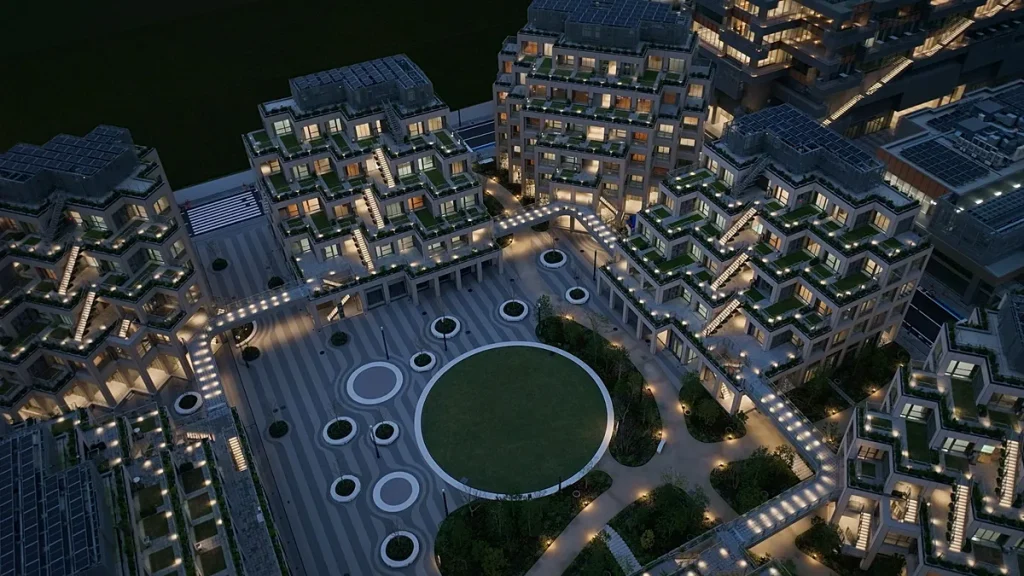
Inside Woven City: Japan’s Sci-Fi Urban Experiment with Robots
Inside Woven City, a cutting-edge experimental settlement near Mount Fuji, Japan is redefining urban living by merging advanced robotics with human-centric design. This groundbreaking project, part of Toyota’s broader vision, aims to create a living laboratory where autonomous vehicles, delivery bots, and smart systems coexist with residents in a simulated futuristic city. Covering an initial area of 47,000 square meters, the town is still in its early stages but already showcases innovative solutions for mobility, sustainability, and urban connectivity. The name Woven City reflects Toyota’s historical expertise in textile manufacturing, symbolizing the seamless integration of technology into everyday life.
A Hub for Intelligent Urban Innovation
At the heart of Woven City is its ambition to test and refine technologies that could reshape modern cities. Daisuke Toyoda, senior vice president of Woven by Toyota, emphasized during a recent tour that the project goes beyond showcasing futuristic concepts—it actively engages residents to evaluate how these systems function in real-world settings. “By combining human-related data with insights into pedestrian behavior, we can create safer, more efficient transportation networks that serve both drivers and pedestrians,” he explained. The initiative includes AI-powered safety mechanisms, automated logistics, and even simulated flying taxis, all designed to demonstrate how robotics can enhance urban ecosystems.
The community’s early adopters, dubbed “weavers,” are central to the experiment. Around 100 residents live in the town’s pilot phase, interacting with prototype robots and navigating a network of subterranean pathways that connect automated services. According to Shinya Yamamoto, an automotive analyst, this hands-on approach allows residents to act as real-time test subjects, providing direct feedback on the usability and societal impact of emerging technologies. “Inside Woven City, people aren’t just observers—they’re participants in shaping the future of urban living,” Yamamoto noted, highlighting the town’s unique blend of human and machine interaction.
Modular Design for Future-Proof Adaptability
Woven City’s infrastructure is built with modular components, enabling rapid adjustments and scalability. Lightweight, recyclable materials are used in construction, while flexible layouts allow for continuous innovation. This adaptability ensures that the town can evolve with new technologies and societal needs. Toyoda stressed that data-driven decision-making is key to the project’s success. “Inside Woven City, we analyze movement patterns and interactions to design solutions that are more responsive and user-focused,” he said. The ability to modify systems in real time makes it a dynamic environment for experimentation, distinguishing it from traditional urban planning models.
Japan’s regulatory environment poses specific challenges for autonomous technologies, which require extensive safety validation before public deployment. Woven City serves as a controlled yet realistic testbed to address these hurdles. By simulating urban conditions within its enclosed boundaries, the project can gather evidence to support regulatory changes. “Inside Woven City, we’re able to demonstrate the practicality of these systems without the unpredictability of real-world variables,” Toyoda explained. The town’s scale also allows for comprehensive testing, ensuring that innovations can be refined before broader implementation.
As Woven City grows, its scope will expand significantly. The final phase is projected to cover 294,000 square meters, welcoming up to 2,000 residents and incorporating advanced energy systems, AI-driven public services, and seamless human-machine collaboration. This expansion is backed by an estimated $10 billion investment, underscoring Japan’s commitment to pushing urban innovation. Toyoda envisions a society where technology enhances quality of life without replacing human elements. “Inside Woven City, we want to create a balanced ecosystem where people and machines work in harmony,” he said, reflecting the project’s goal of sustainable, intelligent urban development.

