
Europe is hungry for AI data centres — but its energy grid cannot feed them
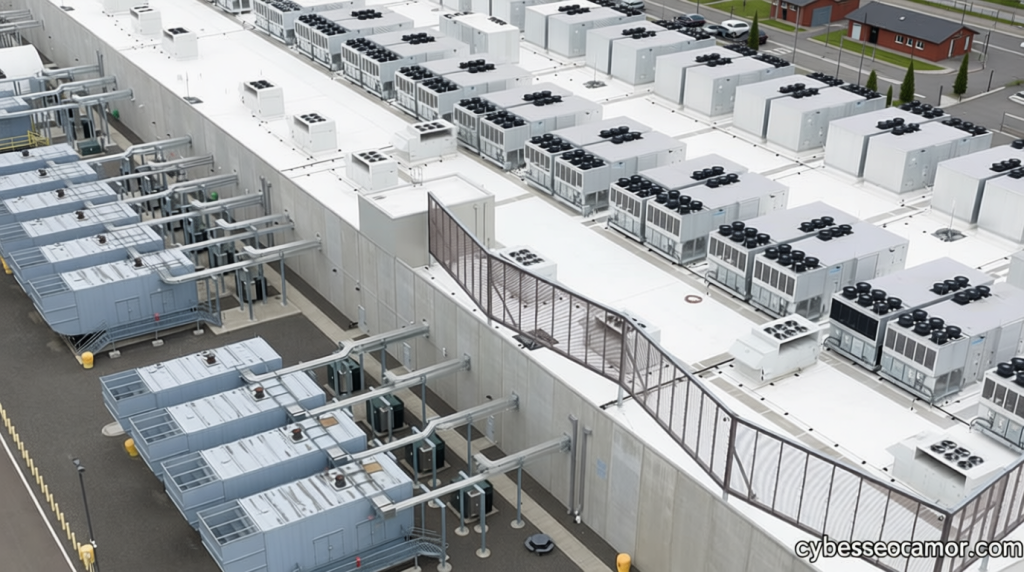
Europe is hungry for AI data centres — but its energy grid cannot feed them
Europe is hungry for AI data – Every query to an AI chatbot triggers a chain reaction of energy consumption across continents. Behind the scenes, massive warehouses of computing hardware work tirelessly to deliver instant responses, drawing power at an alarming rate. These data centres, the physical hubs of modern AI infrastructure, are essential to the continent’s digital transformation. Yet, their escalating energy demands are creating a growing challenge for Europe’s power systems, which may struggle to keep up with the pace of AI-driven growth.
According to recent analysis, the U.S. leads the global data centre landscape, hosting about 5,400 facilities versus Europe’s roughly 3,400. Cloudscene data reveals this disparity, highlighting Europe’s urgent need to bridge the gap. However, the path to expansion is blocked by an energy crisis. The continent’s grid, designed for conventional needs, is now being tested by the power-hungry nature of AI clusters. With AI models requiring exponentially more electricity, the strain on the grid is becoming unsustainable.
A new report from Interface, a European energy and digital policy think tank, underscores the critical tension between AI development and power infrastructure. The study warns that without swift action, Europe’s AI ambitions could lead to stranded assets—facilities that consume vast amounts of energy but fail to justify the investment in the long run. “Multi-hundred-megawatt facilities that underutilize their contracted capacity will strain energy systems and climate goals,” the report emphasized, calling for reforms to prevent economic and environmental fallout.
The Energy Crunch in AI Expansion
Consider the scale: a single European household uses approximately 3,600 kilowatt-hours annually, or around 10 kilowatt-hours daily. In contrast, the data centre powering your AI assistant could consume the equivalent of tens of thousands of homes in a single day. The report notes that the power demand of leading AI clusters has surged from about 13 megawatts in 2019 to an estimated 280–300 megawatts for xAI’s Colossus by 2025. This level of consumption rivals the energy needs of 250,000 households, illustrating the magnitude of the challenge.
Europe’s grid, a sprawling network of power lines, substations, and transmission systems, was not built for AI’s intensive demands. As the report explains, traditional server farms were designed to handle flexible power loads, but AI clusters operate with specialized chips that run at maximum capacity for extended periods. This behavior resembles that of industrial plants, which place heavy stress on constrained energy systems. “Grid connection capacity, lead times, local congestion, and energy prices have become binding constraints,” Interface states, causing delays in AI projects despite initial interest.
One of the most telling examples is the FLAP-D cities—Frankfurt, London, Amsterdam, Paris, and Dublin—where demand for data centre development has spiked. These locations are now the epicenters of AI infrastructure, yet the grid connection process is painfully slow. The report highlights that new facilities in these cities face average wait times of 7 to 10 years, extending to 13 years in the most congested areas. Ireland has even imposed a de facto moratorium on new data centres in Dublin until 2028, while the Netherlands and Frankfurt have effectively banned new connections until at least 2030. These delays threaten to stifle Europe’s progress in AI.
AI’s Appetite for Power
Training cutting-edge AI models has already proven to be an energy-intensive endeavor. For instance, ChatGPT-4 reportedly consumed around 46 gigawatt-hours during its development, equivalent to a steady 20-megawatt draw over three months. That amount of energy could power the entire Brussels Capital Region for over four days. The International Energy Agency projects that global data centre electricity use will more than double by 2030, driven largely by AI workloads. This trend raises concerns about Europe’s ability to meet future demand, especially with its current grid infrastructure.
The strain on energy systems is not just a technical issue—it’s a strategic one. As the report explains, AI clusters behave like “electro-intensive industrial plants connected to constrained grids,” requiring specialized power solutions that existing infrastructure cannot provide. This has forced companies to rethink their expansion plans. OpenAI, for example, has paused its UK and Norway investments due to soaring electricity costs, signaling that even the most financially secure AI firms are facing hurdles in Europe. The situation highlights a broader dilemma: how to sustain AI growth while ensuring the energy grid remains resilient.
To address this, Europe must modernize its energy infrastructure. The report calls for urgent reforms to expand grid capacity, streamline connection processes, and integrate renewable energy sources. Without these changes, the continent risks falling behind in the global AI race. The energy grid, which has historically supported industrial and residential needs, is now at a crossroads. If AI data centres are to thrive, they will need not only financial backing but also a robust energy framework capable of handling their unique demands.
As the demand for AI continues to rise, the energy grid’s limitations are becoming more apparent. While the U.S. has the infrastructure to support its data centre growth, Europe’s progress is being held back by a combination of aging systems, regulatory bottlenecks, and rising costs. The report’s warnings are clear: the continent must act swiftly to avoid the risk of AI becoming a drain on its energy resources. If Europe cannot feed its data centres, its digital ambitions may remain unfulfilled, leaving it in a precarious position in the global race for artificial intelligence.

