Supreme Court rules asylum seekers can be turned back at US border

Supreme Court Rules Asylum Seekers Can Be Turned Back at U.S. Border
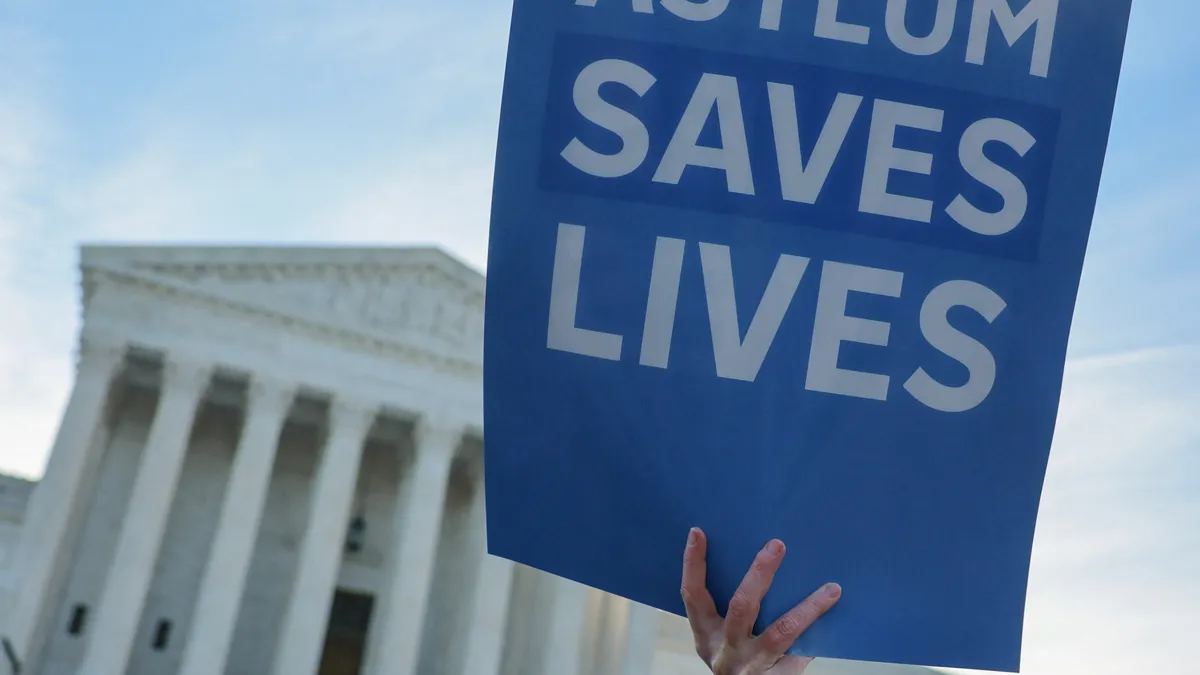
Cybersecarmor.com – The U.S. Supreme Court issued a landmark decision on June 25, affirming the federal government’s authority to send asylum seekers back to Mexico before they officially enter the country. This ruling allows the Trump administration to revive a policy known as “metering,” which had been temporarily suspended under the Biden presidency. The decision, split along ideological lines, has sparked debate over the treatment of migrants and the interpretation of asylum laws.
Majority Opinion: A New Definition of “Arrival”
In a 6-3 majority decision, Justice Samuel Alito argued that the phrase “arrives in” should not be interpreted to mean a migrant must physically cross into the United States to qualify for asylum. Alito’s reasoning drew from everyday language, stating that people commonly use the word “arrive” to describe reaching a destination even if they haven’t fully entered it. For instance, a football player does not “arrive in” the end zone until they cross the goal line, and a guest is not considered “in” a house until they step through the front door.
“The concept of ‘arriving in’ a place is understood as reaching its boundaries, not necessarily stepping inside,” Alito asserted. “This interpretation aligns with how the term is used in common speech and legal contexts.”
The majority opinion emphasized that the law does not mandate the government to process asylum claims at ports of entry, allowing officials to turn back individuals who arrive at the border but are not yet on U.S. soil. This approach, according to Alito, provides flexibility in managing the flow of migrants, particularly during periods of high influx.
Dissent: A Flawed Interpretation of Asylum Rules
Justice Sonia Sotomayor, joined by the other two liberal justices, countered that the majority’s interpretation of “arrives in” undermines the core purpose of asylum. She argued that the policy creates a dangerous precedent, leaving vulnerable individuals without the protections they deserve. Sotomayor likened the situation to a movie theater rule that requires people to be “in” the theater before they can purchase tickets, suggesting that the current framework fails to account for those waiting at the entrance.
“If a person approaches a ticket booth just outside the theater, it would be unreasonable to deny them entry because they haven’t yet crossed the threshold,” Sotomayor wrote. “The phrase ‘arrives in’ is ambiguous, and the policy’s clarity is questionable.”
Sotomayor warned that the ruling could lead to increased fatalities among asylum seekers, as those turned back might face perilous conditions in Mexico. She also highlighted that the policy, while seemingly straightforward, relies on interpretations that could be challenged in future legal battles.
Policy History: From Trump to Biden
The metering policy, which limits the number of asylum seekers processed daily, has been a recurring tool in U.S. immigration management. While it was initially implemented by the Trump administration as part of its broader border control strategy, it was later used by both Democratic and Republican leaders prior to its termination under Biden. The Supreme Court’s decision now reinstates this policy as a valid option for the current administration.
Alito noted that metering was not exclusive to the Trump era, pointing out its historical use as a method to manage border surges. The policy, he argued, is essential for maintaining operational efficiency and preventing overcrowding at ports of entry. However, critics contend that it has been employed to deter asylum seekers from making their claims altogether.
Reactions and Concerns
White House adviser Stephen Miller praised the ruling, calling asylum applications at the border “fake” and asserting that they lack the legitimacy of claims processed through formal procedures. Miller emphasized that the decision reinforces the idea that the U.S. border is closed to those seeking asylum, a stance he argued is necessary to protect national interests.
Meanwhile, immigration advocates have raised alarms. Erika Pinheiro, executive director of the Al Otro Lado advocacy group, stated that the ruling contradicts international law and the intent of Congress. “This decision erodes the U.S. role as a global leader in refugee protection and sets a dangerous example for other nations to follow,” she said.
The case, Mullin v. Al Otro Lado, was initially filed in 2017 by 13 asylum seekers and the organization. Their lawyers highlighted the risks faced by migrants when turned back at the border, including exposure to violence, kidnapping, and even death. They argued that the government’s restriction on asylum claims was unjustified, given the availability of resources to handle the influx.
Broader Implications
According to a 2020 report by the Homeland Security Department’s internal watchdog, border patrol agents at some crossings routinely informed migrants they couldn’t be processed, regardless of the port’s capacity. This practice, critics claim, has been used to push back asylum seekers before they can present their cases, effectively denying them access to the U.S. legal system.
The Supreme Court’s decision has significant implications for future immigration policies. By upholding metering, the ruling grants the administration greater flexibility to control asylum admissions, potentially leading to the expansion of border restrictions. Advocates fear this could create a system where asylum seekers are judged based on their ability to cross the border, rather than the validity of their claims.
As the debate continues, the ruling has reignited discussions about the balance between national security and humanitarian obligations. With the majority-Catholic composition of the court, some observers have questioned whether religious perspectives influence the interpretation of asylum rights. Nonetheless, the decision stands as a pivotal moment in U.S. immigration law, reshaping how asylum seekers are treated at the border.