New World Screwworm continues to spread in Texas as US hits 15 cases

New World Screwworm Spreads in Texas as 15 Cases Confirmed in U.S.
Cybersecarmor.com – More than two weeks into the resurgence of the New World screwworm, the parasite continues to pose a growing challenge for Texas farmers and ranchers. The first U.S. detection of the invasive fly was reported in early June, and the situation has since escalated, prompting heightened vigilance across the state. As of June 22, the U.S. Department of Agriculture (USDA) has confirmed a total of 15 cases, with 12 currently active and three classified as inactive. This marks a significant development in the ongoing battle to contain the infestation, which has re-emerged after decades of being eradicated from the country.
Recent Outbreaks in Livestock
Over the weekend, the USDA released updated data highlighting three new instances of the parasitic fly, all linked to livestock. Two of these cases occurred in Edwards County, where cattle were found infected, while the third involved a sheep in Crockett County. These discoveries add to the existing tally, which now stands at 15 confirmed cases. The spread of the New World screwworm, known for its ability to lay eggs on open wounds, has raised concerns about the health of both domesticated and wild animals.
According to the USDA, the parasite is not easily transmissible between animals. Instead, infestations occur when a female fly deposits eggs in a wound or body opening. Once hatched, the larvae burrow into the tissue, feeding on it for several days before detaching to pupate in the soil. The life cycle of the screwworm, which spans seven to 54 days, complicates containment efforts. While the risk to humans remains minimal, the USDA has emphasized that the fly can affect pets, wildlife, and even birds, though such occurrences are less frequent.
Case Classification and Inactive Status
USDA officials explain that cases are categorized as inactive when the infected animal has fully recovered or when appropriate steps have been taken to prevent the spread of the New World screwworm (NWS). These measures include the proper disposal of dead infested animals or the implementation of quarantine protocols to limit movement of livestock. The distinction between active and inactive cases is critical for tracking the parasite’s progress and determining the necessity of continued surveillance.
“Inactive cases are identified when the animal has either healed completely or when the risk of further transmission is mitigated through intervention,” the USDA clarified in a recent statement. “This classification helps us allocate resources effectively and monitor the outbreak’s trajectory.”
Historical Context and Current Status
Texas has become the sole state in the U.S. reporting active cases of the New World screwworm since the parasite was last detected in the 1950s. At that time, a coordinated eradication campaign successfully eliminated the species from the country, but its recent return suggests a persistent threat. The USDA has since declared the situation under control, though the emergence of new cases in multiple counties has prompted urgent action to prevent a broader outbreak.
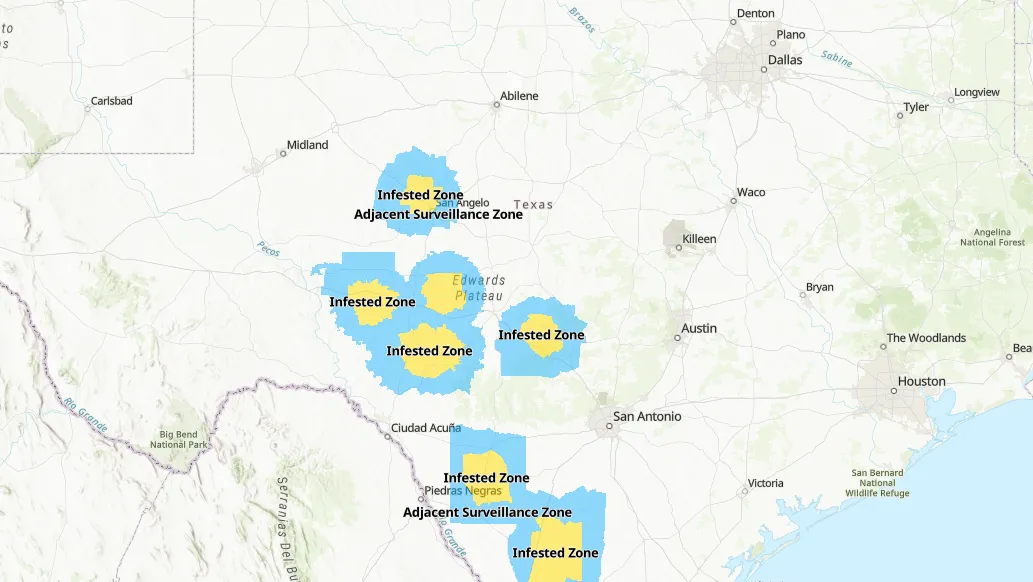
Experts attribute the re-emergence to factors such as increased animal movement and climate conditions that favor the fly’s survival. The Texas Animal Health Commission has been instrumental in managing the crisis, grouping 14 counties across West, South, and Central Texas under quarantine to curb the spread of the infestation. This strategy aims to isolate affected areas and reduce the likelihood of the parasite spreading to uninfected regions.
Quarantine Measures and Regional Impact
The decision to place counties under quarantine is based on the severity of reported cases and the potential for cross-contamination. The affected areas include Edwards County, where two cattle cases were confirmed, and Crockett County, which reported a sheep infection. Additionally, a dog in New Mexico was identified as a case, though the USDA classifies it as belonging to Lea County because the animal resides there. This case, first reported on June 7 by a veterinarian in Andrews County, Texas, underscores the possibility of the parasite affecting companion animals.
Quarantine protocols involve restricting the movement of livestock and implementing strict sanitation measures. These steps are designed to prevent the transfer of infected animals to other regions, thereby slowing the spread of the disease. The USDA has stated that the current risk to animals and people remains low, but the situation is being closely monitored to ensure rapid response to any new developments.
Geographic Distribution of Cases
A detailed breakdown of the New World screwworm’s presence in the U.S. reveals a concentration of cases in Texas, with 14 counties under active surveillance. This includes regions such as the Panhandle and Hill Country, where the parasite has been most prevalent. The USDA’s interactive map provides real-time updates on case locations, helping stakeholders track the infestation’s spread. In contrast, New Mexico’s single confirmed case in a dog represents a smaller but notable presence outside Texas.
The geographic pattern of the infestation highlights the importance of localized containment efforts. While Texas continues to report the majority of cases, the USDA remains cautious about potential spread to neighboring states. The commission’s decision to group counties under quarantine is a proactive measure to ensure that animals are not transported from infected areas, reducing the chance of the parasite establishing new populations.
Understanding the Life Cycle of the New World Screwworm
The New World screwworm’s life cycle is both complex and resilient. Female flies lay eggs on the skin of animals, which hatch into larvae within 24 hours. These larvae then burrow into the wound, feeding on tissue for about seven days before dropping to the ground to pupate. The pupal stage, which lasts between seven and 54 days, is a critical phase for the fly’s development. During this time, the parasite is less active but still capable of spreading if the pupae are transported to new environments.
Unlike the Old World screwworm, which can survive in soil for extended periods, the New World screwworm has a shorter pupal stage. This means that the parasite can reproduce quickly under favorable conditions, increasing the challenge of eradication. The USDA has emphasized that early detection and swift intervention are key to preventing large-scale outbreaks. Veterinarians and agricultural inspectors are now playing a vital role in identifying and reporting new cases, ensuring that the parasite’s spread is contained as much as possible.
Monitoring and Future Outlook
The USDA’s ongoing efforts to monitor the New World screwworm include regular updates to its public dashboard, which provides a transparent view of the outbreak’s progression. The commission has also increased its testing capacity, particularly in high-risk areas. While the current number of cases is manageable, officials warn that the parasite’s adaptability and rapid reproduction could lead to more widespread infestations if containment measures are not maintained.
As the situation evolves, the USDA and Texas Animal Health Commission are working to balance the need for vigilance with the economic impact on farmers. Quarantine zones may be adjusted based on the latest data, and public education campaigns are being launched to inform ranchers about the signs of infestation and the steps they can take to protect their herds. The goal remains to prevent the parasite from becoming a major threat to U.S. agriculture and animal health.
Mateo Rosiles, a Texas Connect reporter for USA TODAY and its regional publications, has been tracking the developments closely. His coverage highlights the challenges faced by Texas’s agricultural community and the collaborative efforts between government agencies and local stakeholders. For updates or news tips, readers can contact Rosiles directly at mrosiles@usatodayco.com.