Lindsey Graham: ‘Obliterate’ Iran if there’s Strait of Hormuz resistance

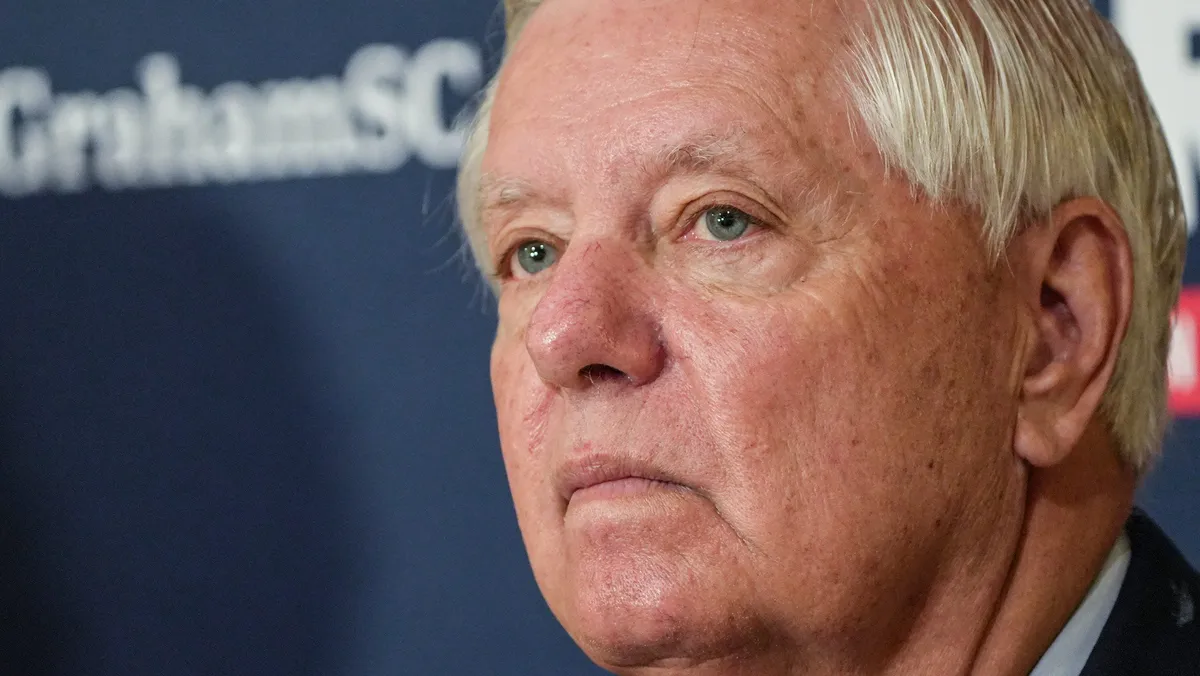
Lindsey Graham: ‘Obliterate’ Iran if there’s Strait of Hormuz resistance
Cybersecarmor.com – South Carolina Senator Lindsey Graham, a prominent Republican figure, made bold statements during an appearance on CBS’ “Face the Nation” with host Margaret Brennan. The discussion centered on the U.S. administration’s approach to its ongoing negotiations with Iran, as President Donald Trump’s team seeks to wrap up its involvement in the Middle East. Graham emphasized the importance of diplomacy, though he hinted at the possibility of more aggressive measures if talks do not yield results.
Key Concerns Over Funding
Graham addressed concerns raised by fellow senators, including Texas’ Ted Cruz and John Cornyn, as well as Louisiana’s Bill Cassidy, who have questioned the Trump administration’s decision to allocate U.S. funds to Iran. While he acknowledged their reservations, he argued that financial support alone is not the solution to Iran’s geopolitical ambitions. “The money Iran gets is not going to change the future of Iran,” Graham said in a direct quote, stressing that funds are insufficient to reshape the country’s trajectory. He added, “Let’s try a diplomatic solution. I think it’s going to fail,” underscoring his belief that dialogue is a necessary but likely unsuccessful step.
“The financial aid Iran receives won’t alter its trajectory. It’s insufficient to rebuild the nation. Let’s pursue a diplomatic approach. I believe it will ultimately collapse,” Graham asserted.
The closure of the Strait of Hormuz, a vital international waterway, has intensified scrutiny of Iran’s actions and the administration’s response. This strategic move, which disrupted global oil shipments, has been cited by Iran as retaliation for perceived violations of a ceasefire agreement with Israel. The closure highlights the country’s ability to leverage its geographical position and economic influence in the region, raising questions about the stability of the current diplomatic framework.
Strategic Moves and Consequences
Graham’s remarks were bolstered by his recent four-hour meeting with President Trump on June 19, during which he expressed confidence that the administration would not hesitate to use force if diplomatic efforts falter. According to Graham, Trump has made it clear that the United States will assert control over the Strait of Hormuz, a critical chokepoint for maritime trade, and impose tolls on all vessels passing through it. This strategy would not only solidify U.S. dominance in the region but also expand the Abraham Accords, a series of bilateral agreements aimed at strengthening ties with Arab nations, by requiring Saudi Arabia to join the framework.
“If Iran contests control of the Strait of Hormuz by the United States, we will dismantle it entirely,” Graham declared. “Therefore, anyone monitoring the situation should recognize that Trump is prepared to take the Strait of Hormuz if negotiations fail.”
The Strait of Hormuz closure has dealt a blow to the fragile ceasefire negotiated under Trump’s leadership. This agreement, which sought to reduce hostilities between Iran and Israel, was jeopardized by Iran’s actions, which the country claims were a direct response to Israeli military strikes in Lebanon. State media reports from June 20 confirmed that Iran had previously closed the waterway after accusing Israel of breaching the ceasefire. Graham noted that the U.S. has yet to curb Israel’s actions, leaving the administration in a precarious position as it balances diplomatic outreach with military readiness.
Geopolitical Leverage and Regional Implications
Iran’s control over the Strait of Hormuz remains a pivotal element of its geopolitical strategy. By restricting passage through the waterway, the country can exert pressure on global energy markets and force the U.S. to confront its economic and military interests in the region. Graham pointed out that such leverage underscores Iran’s intent to assert dominance, even as the Trump administration pushes for a diplomatic resolution. “This closure demonstrates Iran’s ability to use its position to disrupt international commerce and challenge U.S. influence,” he stated, emphasizing the need for decisive action.
While Graham advocated for continued diplomacy, he acknowledged the limitations of such efforts. “Diplomatic talks are essential, but they are not a panacea,” he said. “If Iran persists in its resistance, the U.S. must be prepared to escalate tensions.” His comments reflect a broader sentiment among Trump’s advisors that Iran’s willingness to use force—whether through military strikes or economic blockades—demands a firm response. This perspective aligns with the administration’s focus on securing the Strait of Hormuz as a strategic asset, even at the cost of prolonged conflict.
The Path Forward: Force or Diplomacy?
Graham’s remarks signal a shift in the administration’s strategy, moving from cautious diplomacy to a readiness for military intervention. He argued that the U.S. must take the initiative to control the Strait of Hormuz, stating, “We will control the waterway and charge a fee for all who pass through.” This approach would not only safeguard U.S. interests but also reinforce the Abraham Accords by integrating Saudi Arabia into the regional alliance. However, it raises concerns about the potential for wider regional instability, particularly if Iran retaliates with military strikes.
The administration’s plan to close the Strait of Hormuz and assert control reflects a calculated risk. By leveraging economic sanctions and military capability, the U.S. aims to pressure Iran into compliance while maintaining its foothold in the Middle East. Graham emphasized that this move is part of a broader effort to restructure the region’s power dynamics, positioning the U.S. as a dominant force in the face of Iran’s resistance. “This is about ensuring that the U.S. can dictate terms in the region, not just negotiate,” he explained, highlighting the strategic significance of the waterway.
Despite the administration’s push for diplomacy, the threat of military action looms large. Graham’s confidence in Trump’s resolve suggests that the U.S. is prepared to take bold steps if needed. The closure of the Strait of Hormuz has already disrupted global oil flows, and its repeated use could serve as a warning to other nations in the region. As the talks with Iran continue, the stakes remain high, with the potential for both political breakthroughs and renewed conflict. Graham’s statements underscore the administration’s commitment to ending its Middle East war, but also its readiness to escalate tensions if diplomatic avenues prove unfruitful.
Legacy of the Abraham Accords and Future Prospects
The Abraham Accords, which have already strengthened ties between the U.S. and several Arab states, are poised for expansion under Trump’s leadership. Graham described this as a critical step in reshaping the region’s alliances and reducing reliance on Iran. “Expanding the accords will create a unified front against Iran’s aggression,” he said, adding that Saudi Arabia’s participation is essential to this vision. However, the success of this initiative depends on Iran’s willingness to engage in dialogue, a factor that remains uncertain.
As the situation evolves, the Trump administration faces the challenge of maintaining a delicate balance between diplomacy and military readiness. Graham’s emphasis on force highlights the administration’s willingness to prioritize strategic objectives over the potential for prolonged negotiations. The closure of the Strait of Hormuz serves as both a symbol of Iran’s defiance and a catalyst for the U.S. to solidify its position in the region. With the talks ongoing and the threat of escalation looming, the path forward will determine the future of U.S.-Iran relations and the stability of the Middle East.