Fatal ICE shootings: Why aren’t agents wearing body cams?

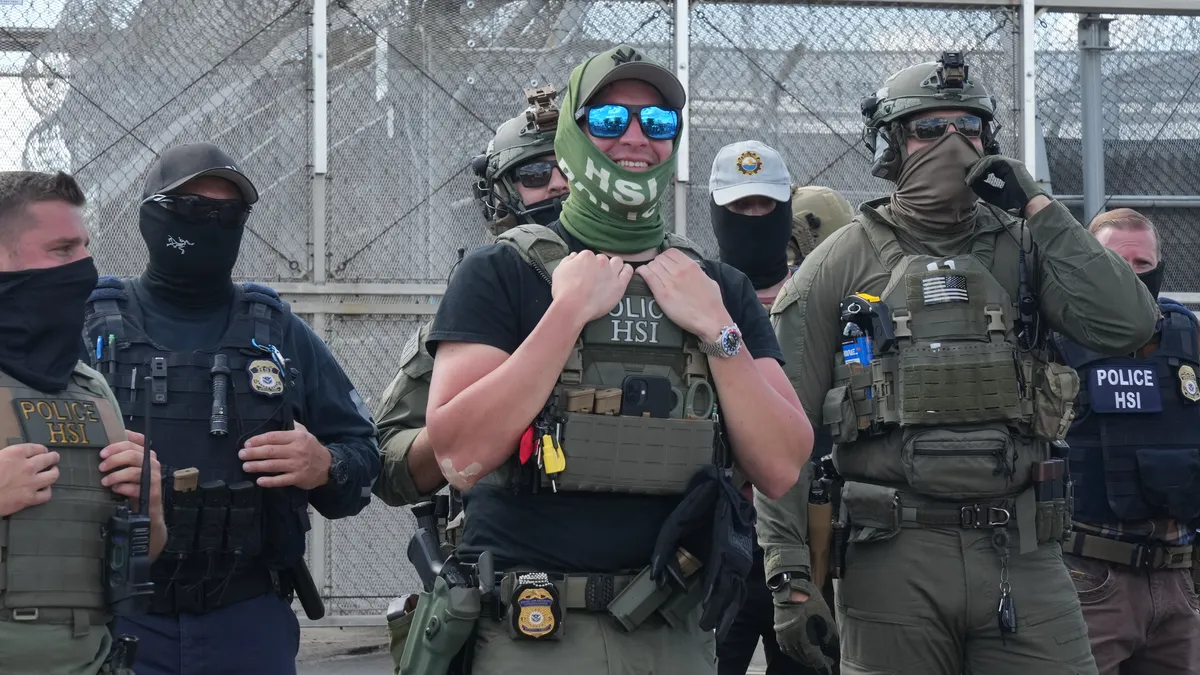
Body Cameras and ICE: Examining the Delayed Rollout Amid Fatal Shootings
Cybersecarmor.com – Despite making public commitments to implement body-worn cameras, U.S. Immigration and Customs Enforcement continues to function with minimal camera coverage. This gap persists even though the agency received $20 million specifically for the technology and faces growing scrutiny following a series of deadly encounters during intensified enforcement operations.
Within a seven-day span, ICE personnel were involved in two separate fatal shootings. The first victim was a 52-year-old construction worker near Houston, Texas. The second was a 26-year-old man in Biddeford, Maine. In each incident, responding officers maintained that their use of force was warranted, asserting that both individuals presented threats. Complicating matters, authorities later acknowledged that both men had been incorrectly identified as immigrants subject to deportation orders.
The Houston Incident
On the early morning of July 7, ICE officers attempted to stop Lorenzo Salgado Araujo, a Mexican national working in construction and raising three children who are U.S. citizens. According to the agency’s official account, Araujo disregarded commands from officers and then used his vehicle as a weapon, attempting to strike an agent. The officer responded with gunfire, resulting in Araujo’s death.
However, witnesses riding in the vehicle with Araujo disputed this version of events. Their attorney stated that the ICE narrative was “simply false.” The agency subsequently clarified that officers had mistaken Araujo for another individual when initiating the traffic stop.
The Maine Shooting
Six days after the Houston incident, on July 13, an ICE officer fatally shot Joan Sebastian Guerrero in Biddeford, Maine. According to ICE, officers observed Guerrero leaving the residence of someone who already had a removal order and attempted to pull him over.
Homeland Security Secretary Markwayne Mullin initially claimed that Guerrero “weaponized” his vehicle, according to statements relayed by Sen. Angus King, a Maine independent. In a subsequent clarification to USA TODAY, ICE explained that the officer fired after Guerrero tried to escape the scene, citing concerns for “public safety.”
Political Reactions and Blame
In both cases, the officers involved were not wearing body cameras—equipment that has become essential for transparency in modern law enforcement and can either validate or challenge officer accounts of incidents.
DHS officials attributed the absence of cameras to “back-to-back Democrat shutdowns” that postponed the deployment of the devices. Sen. Susan Collins, a Republican from Maine, echoed this sentiment in a July 14 statement, calling it “extremely unfortunate” that the Maine officer lacked a body camera and placing responsibility on Democrats for the delay.
Meanwhile, Rep. Sylvia Garcia, a Democrat representing the Houston district, dismissed the shutdown explanation as “ludicrous.” She reminded reporters that ICE had been allocated $20 million specifically for body cameras and noted that then-DHS Secretary Kristi Noem had pledged in February to procure and distribute them to field officers.
Expert Criticism
David Hernandez, an immigration enforcement researcher at Mount Holyoke College in Massachusetts, rejected the shutdown argument entirely. “That’s a total lie because they were the agency that kept functioning during the shutdown,” Hernandez stated, pointing out that Congress had already committed $75 billion to ICE prior to the shutdown. He suggested the explanation serves to shield the agency from criticism regarding what he described as “reckless and disproportionate violence” against migrants.
The timing of these incidents is particularly significant. ICE issued a policy on February 19 requiring body camera usage during immigration enforcement activities—just five months before the recent shootings. Additionally, in February, Noem had promised that “DHS law enforcement across the country” would begin wearing body cameras following the January deaths of Renee Good and Alex Pretti, two U.S. citizens killed by federal officers in Minneapolis. While DHS characterized both victims as “domestic terrorists,” video evidence and witness testimony contradicted those assertions.
“They were given $20 million just for this purpose,” Garcia told reporters at a news conference following the shooting of Salgado Araujo. “Kristi Noem pledged in February this year that she was procuring them and sending them to the field.”
“That’s a total lie because they were the agency that kept functioning during the shutdown,” said Hernandez, noting that Congress had already allocated $75 billion to ICE before the shutdown. “It’s to protect themselves from the reckless and disproportionate violence that they use on migrants … They do not have the capacity to apprehend someone without violence.”
The Trump administration responded to the mounting controversy by issuing an order on July 14 aimed at restricting ICE’s traffic stop authority, according to Reuters, which cited two sources familiar with the directive. DHS has yet to provide detailed responses regarding how government shutdowns specifically impacted the body camera rollout when the agency remained operational throughout the period.