Death toll in Venezuela earthquakes passes 5,000 as searching continues

Over Five Thousand Perish as Venezuela Battles Aftermath of Twin Earthquakes
Rescue Operations Continue Three Weeks After Catastrophic Seismic Events
Cybersecarmor.com – More than three weeks have passed since Venezuela experienced one of its most devastating natural disasters, yet the human toll continues to climb. According to official government announcements, the number of confirmed fatalities from the twin earthquakes has now exceeded five thousand people. Search and recovery teams remain active across multiple affected regions, working tirelessly to locate survivors and recover victims trapped beneath collapsed structures.
The catastrophic seismic activity began on June 24, when two powerful earthquakes struck in rapid succession. Occurring less than sixty seconds apart, both tremors hit just after six o’clock in the evening local time. The first earthquake registered a magnitude of 7.2, followed shortly by a stronger 7.5 magnitude event. These powerful shocks originated approximately fourteen miles southeast of the town of Yumare, situated roughly 173 miles west of Venezuela’s capital city, Caracas.
The force of these earthquakes proved devastating for the region. Numerous buildings collapsed entirely, while countless others suffered severe structural damage. Critical infrastructure, including roads and bridges, sustained significant harm, complicating rescue efforts and hampering the delivery of essential supplies to affected communities. Nearly eighteen thousand residents were forced to abandon their homes, seeking shelter in temporary accommodations or with relatives in less affected areas.
Official Updates Reveal Growing Casualty Figures
Venezuelan lawmaker Jorge Rodriguez provided a comprehensive update on July 17, presenting the latest official figures regarding the disaster’s impact. According to Rodriguez’s statement, the confirmed death count reached 5,069 individuals. Additionally, the lawmaker reported that 16,740 people had sustained injuries of varying severity, ranging from minor wounds to life-threatening conditions requiring hospitalization.
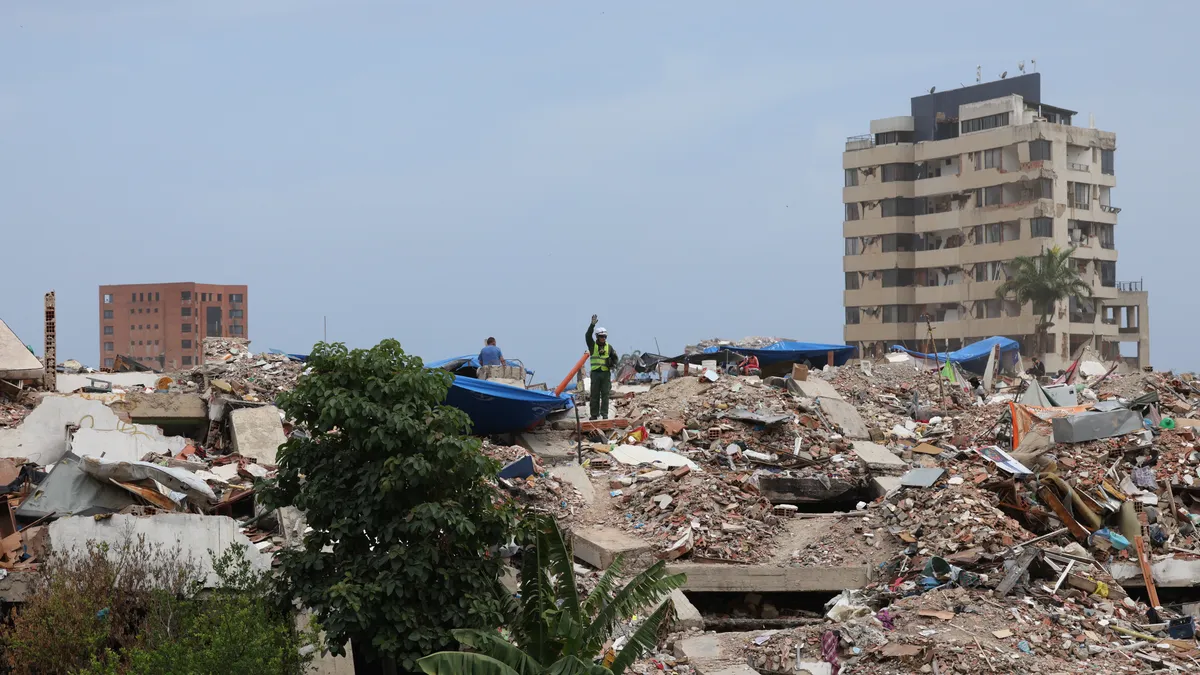
The La Guaira state emerged as the region hardest hit by the seismic events. Aerial photographs and ground-level images captured on July 18 depicted the extensive destruction visible throughout the area. Rescuers, military personnel, and local community members worked together in coordinated efforts to search through rubble and debris, hoping to find more survivors or recover the remains of loved ones. These images showed ongoing operations twenty-four days after the initial earthquakes struck.
Rodriguez also highlighted the scale of rescue operations conducted during the immediate aftermath. More than 6,400 individuals were successfully extracted from collapsed buildings and debris fields, many of whom had been trapped for hours or even days. The rescue efforts involved specialized teams equipped with cutting tools, heavy machinery, and search dogs trained to detect human presence beneath rubble.
Structural Damage and Geological Context
The building damage statistics paint a picture of widespread destruction. Rodriguez reported that 190 structures collapsed completely, rendering them uninhabitable and requiring demolition. An additional 856 buildings experienced varying degrees of damage, from cracked foundations to partially collapsed walls. Many of these damaged structures were deemed unsafe for occupancy, forcing residents to seek alternative housing arrangements.
While Venezuela is situated within a seismically active zone where the Caribbean Plate converges with the South American Plate, earthquakes of such considerable magnitude remain relatively uncommon for this particular region of the country. The geological complexity of the area creates conditions where powerful seismic events can occur, though they do not happen frequently enough to be considered routine.
The second earthquake, classified as the mainshock, holds particular historical significance. According to data compiled by the U.S. Geological Survey, this 7.5 magnitude event represented the most powerful earthquake recorded in the region since 1900. That previous major seismic event, measuring 7.7 in magnitude, occurred near Caracas and caused substantial damage throughout the capital and surrounding areas. The comparison underscores the exceptional nature of the June 24 earthquakes and their potential for widespread destruction.
As search operations continue, authorities have emphasized that the final casualty figures may still rise as recovery teams access previously unreachable areas and medical facilities confirm additional deaths among the injured. The international community has responded with offers of assistance, and humanitarian organizations have begun mobilizing resources to support the ongoing relief efforts in Venezuela.