Cuban ‘Amazons’ deliver ‘absolutely essential’ food during crisis

Cuban ‘Amazons’ deliver ‘absolutely essential’ food during crisis
Cybersecarmor.com – When Carmen Deulofeu pressed a few buttons on her laptop in Louisville, Kentucky, the consequences rippled 1,000 miles to Havana, where her sister found a lifeline. For the first time in years, her family could access basic necessities like kidney beans, chicken legs, powdered milk, and eggs — items often missing from Cuban grocery stores or unaffordable for locals. This ease came through Supermarket23, one of several online delivery platforms now critical to sustaining families amid the nation’s worsening economic conditions.
The Cuban government has long struggled to meet the needs of its citizens, but the current crisis has pushed the country to its breaking point. Despite proposed reforms, the United States continues to tighten economic sanctions and maintain an oil embargo, exacerbating shortages and inflation. For many Cubans, the only way to secure essential goods is through these “Cuban Amazons,” as they are now called, which connect people abroad with their loved ones on the island.
These services — including Supermarket23, Cuballama, Mercatoria, and Katapulk — have become vital lifelines. By leveraging mobile apps, Cubans in the U.S. can send everything from food to solar lanterns to relatives still living in Havana. The apps operate like e-commerce platforms, streamlining the process of ordering items and arranging delivery. For Deulofeu, the convenience of this system has transformed how her family supports her sister, who now relies on them to survive daily.
“The use of ‘jámazon’ is absolutely essential right now,” Deulofeu said, describing the blend of Cuban slang for eating and the name of Amazon. The term reflects the growing dependence on these platforms, which have become a symbol of resilience against systemic shortages. Even as the Cuban government struggles to allocate resources, these private companies fill gaps, enabling families to access goods that are otherwise scarce. However, this reliance has not gone unnoticed by U.S. authorities, who have increasingly scrutinized these services as part of their broader economic strategy.
Scarcity has become a way of life in Cuba. Deulofeu’s sister, a retired optometrist, recently expressed frustration over missing household staples like shampoo, soap, and detergent. “She’s out of everything,” Deulofeu said, highlighting the severity of the situation. The family’s ability to survive depends on regular shipments from abroad, a necessity that has grown as the economic crisis deepens. For those still on the island, the apps represent more than just a delivery service — they are a lifeline to stability in an otherwise unpredictable environment.
The crisis has also driven a quiet expansion of trade between Cuba and the United States. In 2025, exports specifically directed to Cuba’s private small and medium enterprises reached $173.6 million, according to an analysis by Columbia University’s School of Law. This growth underscores how Cubans abroad are increasingly using U.S.-based platforms to support their families. “Even as Cuba faces its toughest challenges, there’s this kind of steady expansion,” said Ted Henken, a professor of Cuban studies at Baruch College and co-author of *Cuba’s Digital Revolution: Citizen Innovation and State Policy*. “The private sector and cross-border trade are adapting in ways that keep people afloat.”
Henken noted that the introduction of smartphone internet access in 2025 was a turning point. Before that, Cubans relied on public Wi-Fi or limited data plans, making app-based services difficult to access. Now, with more connectivity, platforms like Cuballama and Katapulk have flourished. As over 2.6 million Cubans fled the island since 2020, they brought their need for these services with them. Exiled communities in the U.S. have turned to online platforms to send vital supplies to those remaining behind, creating a unique network of support.
Alejandro de Lucia, a 62-year-old Cuban resident in Long Island, exemplifies this trend. Each month, he uses the Supermarket23 app to order meats, rice, and other essentials for his elderly in-laws in Cojimar. He also sends fans and batteries via Cuballama, ensuring their homes stay comfortable and functional. While the items are more expensive than those found in local stores like Target or Costco, de Lucia insists they’re worth the cost. “The situation has gotten so bad, these deliveries are no longer a convenience — they’re a necessity,” he said.
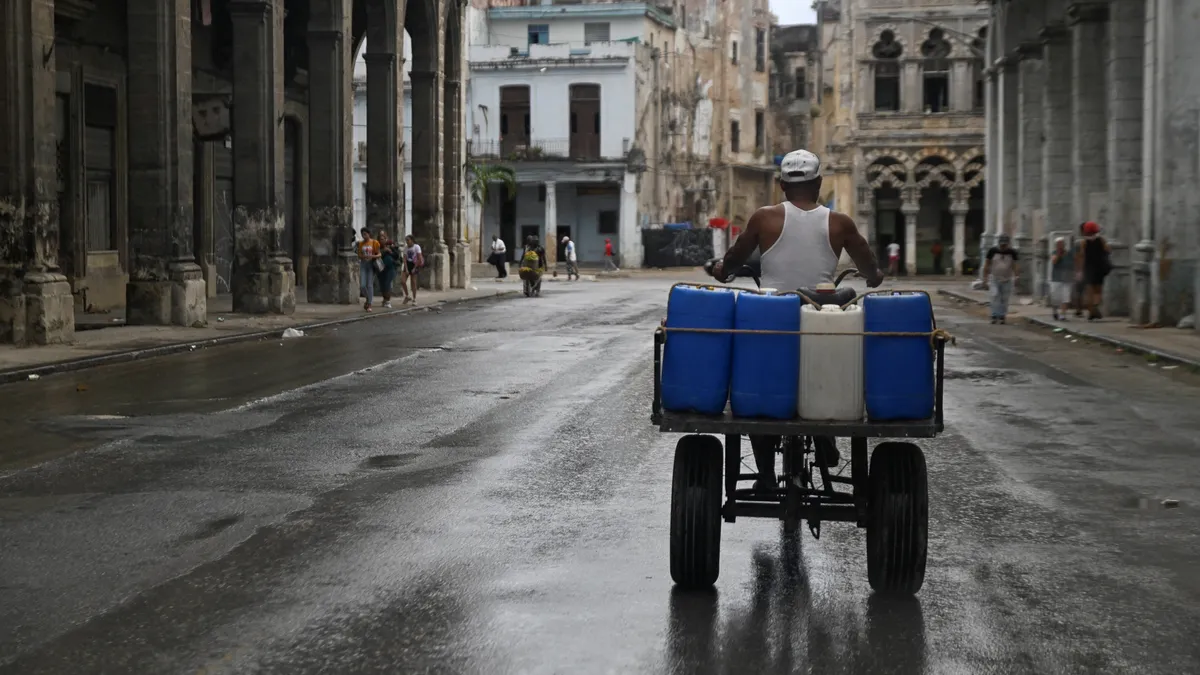
For $35 plus $8 in shipping fees, a family in Florida can send four pounds of smoked pork, a liter of cooking oil, and a carton of 30 eggs to Havana. These items, once commonplace, are now hard to find in Cuban markets. The process is swift: an iPhone app in Austin, Texas, handles the order, payment is processed through a U.S. credit card, and within 24 hours, a delivery arrives. The last time this happened, a white electric tricycle carrying a cart of goods stopped at the Habana Vieja residence of Jorge Luis del Valle, a father of a four-year-old daughter. The driver confirmed the contents before leaving, ensuring the family received what they needed.
The system’s efficiency has become a testament to the adaptability of Cuban communities. Deulofeu’s sister, who once had the means to provide for her family, now relies on her sibling’s assistance. “She worked her whole life,” Deulofeu said, “and now has to depend on us to keep going.” This shift highlights the economic strain on everyday Cubans, many of whom have had to adjust to living with fewer resources. The apps not only deliver food but also carry a sense of hope, allowing families to reconnect in meaningful ways despite the challenges.
USA TODAY Opinion: Cubans, caught in fear and desperate hunger, ask: Will the U.S. help? The growing use of these platforms raises questions about how far the American government is willing to go in supporting the Cuban people. While sanctions have tightened, the services they enable continue to bridge the gap between the island’s needs and its access to goods. For those on the receiving end, the impact is clear: a system that, though imperfect, ensures survival in an increasingly uncertain world.
As the crisis deepens, the role of these “Amazons” is only growing. They offer a way to bypass the limitations of the Cuban economy and deliver what’s essential, even if it costs more than the average monthly salary. The contrast between the ease of digital transactions and the hardships of daily life is stark, yet the platforms persist. For now, they remain a crucial tool in a nation where the struggle for basic needs has become a daily reality.