
Ukraine reburies remains of divisive nationalist World War II leader
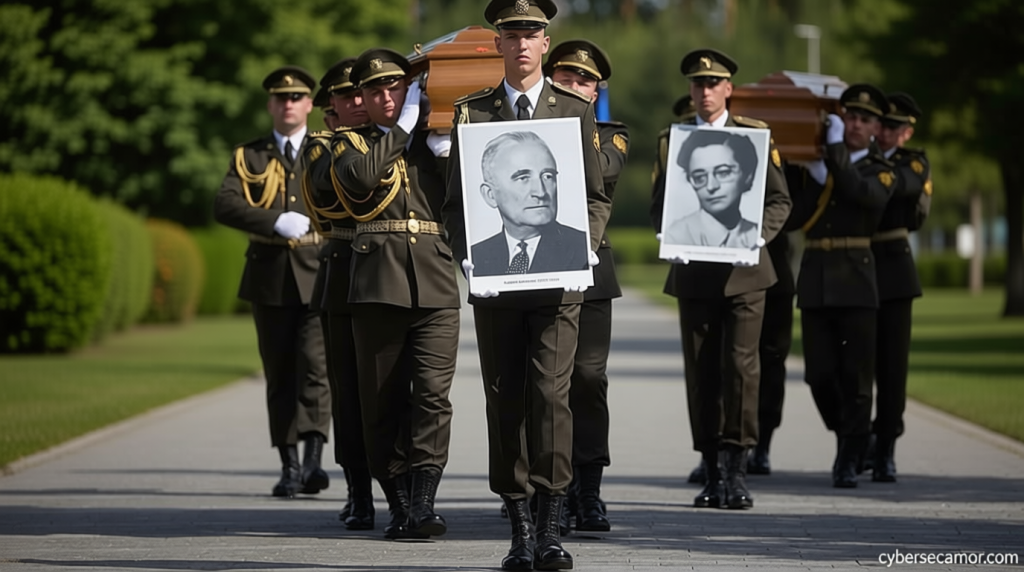
Ukraine Reburies Remains of Controversial Nationalist WWII Leader
Ukraine reburies remains of divisive nationalist – On Monday, the remains of Andrii Melnyk, a 20th-century Ukrainian military figure, along with those of his wife Sofiia Fedak-Melnyk, were ceremonially reinterred at the National Military Memorial Cemetery near Kyiv. The event, attended by President Volodymyr Zelenskyy and various Ukrainian officials, marked a poignant moment in the nation’s history, symbolizing both reconciliation and remembrance. The ashes of the couple, who had been resting in Luxembourg since 1964, were exhumed last week and transported across the country to honor their legacy.
The Legacy of a Divisive Figure
Andrii Melnyk, once a central figure in the Organisation of Ukrainian Nationalists (OUN), played a pivotal role in shaping Ukraine’s nationalist movement during World War II. His leadership, however, remains a subject of debate, as his actions and alliances during the conflict have been scrutinized over the decades. The OUN, a political and military organization founded in 1929, aimed to achieve Ukrainian independence from both Poland and the Soviet Union. Melnyk’s faction, OUN-M, emerged after the assassination of Yevhen Konovalets, a charismatic leader and military commander, by the Soviet secret police NKVD in 1938. This event fractured the OUN into two groups: Melnyk’s more moderate OUN-M and the radical OUN-B, led by Stepan Bandera.
“Today we all see that the Ukrainian idea can overcome what once seemed absolutely insurmountable,” said Zelenskyy at the ceremony. “Now, when we are on Ukrainian soil, under our Ukrainian flag, to the sound of the Ukrainian national anthem, paying due tribute to our Ukrainian heroes, we feel in our hearts everything that Ukrainians were forced to go through, everything our people had to endure.”
Despite their shared goals, the two factions diverged in strategy and ideology. Melnyk’s OUN-M initially sought cooperation with Nazi Germany to achieve independence, while Bandera’s OUN-B pursued more aggressive methods. This collaboration with the Third Reich, however, cast a long shadow over Melnyk’s legacy. During the war, the OUN-M engaged in armed resistance against Soviet forces, often aligning with German interests in exchange for autonomy. These actions, though strategically motivated, have been criticized for their pragmatic approach and perceived compromises with authoritarian regimes.
The reburial of Melnyk and his wife was not merely a historical gesture but a reflection of Ukraine’s evolving narrative. While the OUN-M and OUN-B remain divided in memory, the ceremony underscored the nation’s effort to reconcile past struggles with present aspirations. Melnyk, who was born in 1890, had been a colonel in the Army of the Ukrainian People’s Republic, a predecessor to the modern Ukrainian state. His close relationship with Konovalets, who was assassinated in 1938, cemented his role as a key nationalist leader. Yet, his path after that pivotal moment led to a complex legacy, marked by both heroism and controversy.
The Journey of Remains
The remains of Melnyk and Fedak-Melnyk were exhumed from their resting place in Luxembourg, a country that had become a symbol of their exile. The process of repatriation involved a careful journey through Zakarpattia and across half of Ukraine to reach Kyiv, the capital that now stands as a beacon of independence. Zelenskyy highlighted this path during a speech on X, emphasizing its significance. “As we were bringing Colonel Andrii Melnyk and his wife Sofiia back to Ukraine — through Zakarpattia and then across half the country to our free capital, Kyiv — this path was not marked by the discord that had so often knocked us, and Ukraine, off our feet in the past,” he stated.
The reburial took place at the National Military Memorial Cemetery, an Arlington-style site established last year to commemorate soldiers who lost their lives in Russia’s invasions of Ukraine. This location, chosen for its symbolic alignment with national pride and sacrifice, represents a new chapter in the nation’s commemorative practices. The event was a blend of solemnity and triumph, honoring the past while reinforcing Ukraine’s current identity as a united and sovereign state.
Controversy and Collaboration
Despite their efforts to secure independence, Melnyk and his OUN-M faction faced criticism for their collaboration with Nazi Germany. The OUN’s wartime activities, which included working alongside the Third Reich, have been a point of contention in Ukrainian historiography. While some view this alliance as a necessary step in the fight against Soviet domination, others argue it compromised Ukraine’s moral standing. Melnyk, who was initially subjected to house arrest by the Soviets, was later deported to the Sachsenhausen concentration camp. He survived the ordeal and died in Germany in 1964, before being laid to rest in Luxembourg.
“There were no doubts about who Ukraine’s true enemy is, and who its friends, partners, and brothers are,” Zelenskyy added in his social media post. The ceremony served as a reminder of the stark contrasts between Ukraine’s adversaries and its allies. It also highlighted the enduring impact of Melnyk’s leadership, which, while divisive, contributed to the nation’s struggle for self-determination. The OUN-M’s decision to collaborate with Nazi Germany was driven by a desire to dismantle Soviet control, a goal that resonates with contemporary Ukrainian aspirations.
The National Military Memorial Cemetery, where the reburial occurred, has become a focal point for honoring Ukraine’s wartime sacrifices. Opened recently, the site is designed to reflect the country’s resilience and the collective memory of its military history. The presence of Melnyk’s remains there signifies a broader effort to integrate the nation’s past into its present identity. While his actions during World War II remain controversial, the act of reburial suggests a recognition of his role in the fight for Ukrainian sovereignty, even as his legacy is weighed against the moral complexities of his choices.
Ukraine’s decision to reinter Melnyk’s remains is part of a larger movement to reassess historical figures and their contributions to the nation’s independence. The ceremony, with its emphasis on national unity and pride, reflects the current government’s narrative of resilience and determination. By placing Melnyk and Fedak-Melnyk under the Ukrainian flag and at the sound of the national anthem, Zelenskyy and other officials sought to bridge the gap between different factions of the OUN and the broader Ukrainian populace. This gesture, however, also invites continued reflection on the costs of independence and the sacrifices made along the way.
As Ukraine continues to navigate its complex history, the reburial of Melnyk’s remains serves as a powerful reminder of the nation’s enduring spirit. His journey from the streets of Kyiv to the concentration camps of Germany and finally back to Ukrainian soil encapsulates the trials and triumphs of the Ukrainian people. The event not only pays tribute to a leader whose actions were both bold and controversial but also reaffirms Ukraine’s commitment to honoring its past while building a stronger future. The National Military Memorial Cemetery, with its solemn ambiance and strategic location, stands as a testament to this dual focus on remembrance and progress.

