
Kubilius pushes Europen Defence Union but critics brand it a distraction
EU Defence Commissioner’s Vision
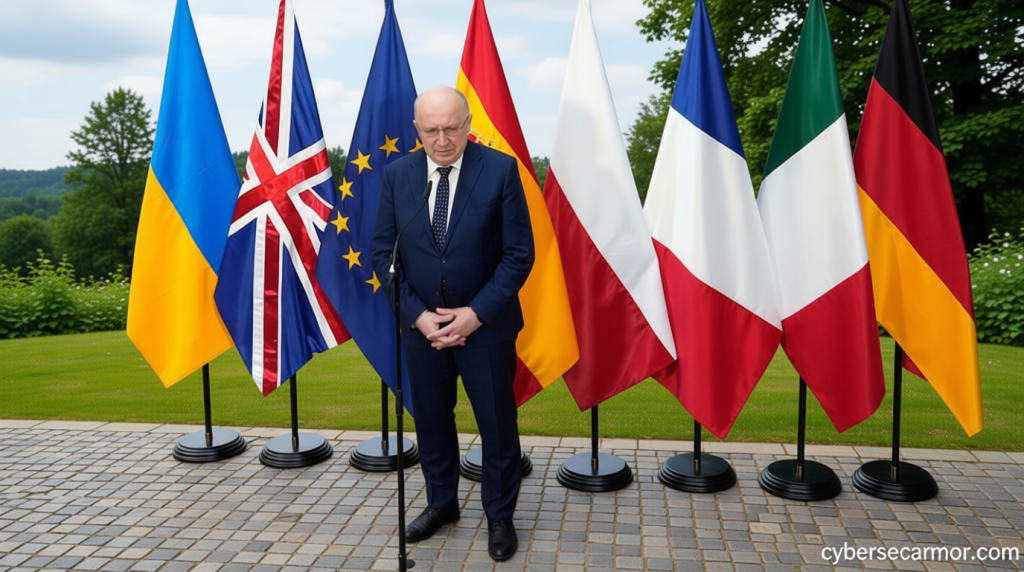
Kubilius pushes Europen Defence Union but critics – EU Defence Commissioner Andrius Kubilius has unveiled a bold geopolitical initiative: a treaty-backed European Defence Union. This concept envisions a unified defense framework encompassing the EU, along with Britain, Norway, and Ukraine. In a recent address in Poland, Kubilius emphasized the urgency of European self-reliance, stating that the bloc must prepare to safeguard its interests regardless of U.S. support. “There is no time to waste,” he remarked, underscoring the need for immediate action. According to Kubilius, a strategic shift toward integrated defense structures is essential. “Not seeking such integration would be a significant error,” he argued, highlighting the limitations of current NATO and EU arrangements.
A New Instrument for Defense
Kubilius pointed out that Ukraine’s NATO membership remains uncertain, while EU expansion into defense capabilities faces bureaucratic hurdles. “Full EU membership is a complex process, which may not ensure rapid consolidation of military resources,” he explained. This has led him to propose a distinct mechanism focused solely on European defense coordination. The idea is to create a streamlined system that enhances efficiency, particularly in infrastructure projects like satellite networks and advanced rear defenses. Such initiatives, he suggested, could reduce reliance on U.S. backing, which has become a contentious issue in recent years.
Commission President Ursula von der Leyen has aligned with Kubilius’s vision, accelerating the EU’s military ambitions through a €150 billion defense loan program and prioritizing mobility in armed forces. Her efforts come amid growing pressure from U.S. leaders, including Donald Trump, who has criticized European defense spending and hinted at potential withdrawal from NATO. Trump’s rhetoric, coupled with his Secretary of War Pete Hegseth’s earlier remarks about Europe’s “pathetic…freeloading” in defense, has prompted European officials to rethink their strategies.
Support for the Initiative
Guntram Wolff, a prominent Brussels-based analyst at Bruegel, has endorsed the European Defence Union as a viable solution. He argued that a unified bloc would enable more effective allocation of funds for critical projects without U.S. intervention. “Pooling resources among willing partners is achievable,” Wolff stated. He warned that U.S. influence in European defense is waning, suggesting that the EU should not delay action. “We are at a crossroads where the U.S. may no longer be a reliable ally,” he added, citing the risk of geopolitical fragmentation.
Wolff noted that the proposal has gained traction among EU officials since Ursula von der Leyen first proposed it in late 2024. “European citizens increasingly demand a stronger, more coordinated approach,” he explained. This sentiment is reflected in Eurobarometer surveys, which reveal that over two-thirds of Europeans (68%) perceive their nation as vulnerable to external threats. Additionally, 20% of respondents believe increased defense funding is necessary. These figures underscore a growing appetite for collective security measures.
Critics’ Concerns
Despite its appeal, the European Defence Union has drawn skepticism from some quarters. EU foreign policy chief Kaja Kallas has expressed reservations about creating a separate European army, fearing it might complicate command structures during crises. “National forces remain vital, but smaller states may struggle to act independently,” she acknowledged. Estonian MEP Riho Terras echoed these concerns, calling the proposal a “philosophical discussion” that risks muddling decision-making in times of conflict. “Who will hold the reins? Who will lead this effort?” Terras questioned, stressing the need for clarity in roles and responsibilities.
French President Emmanuel Macron has also highlighted the shifting global landscape, noting that Russia, Iran, China, and even the U.S. are opposed to European unity in defense. “The entire bloc is under threat,” he stated during a recent speech in Greece. This assessment aligns with the argument that a European Defense Union could serve as a counterbalance to external pressures. However, critics like Terras argue that the proposal might divert attention from immediate priorities. “We need more investment in defense manufacturing, not additional layers of bureaucracy,” he insisted, pointing to the need for tangible resources before overhauling existing systems.
Challenges and Questions
Analysts like Maria Martisiute of the European Policy Centre have raised questions about the proposal’s institutional viability. “What does this mean for governance? Who will wield authority?” she asked, highlighting the uncertainty surrounding political and military decision-making. Martisiute suggested that the EU’s existing structures might limit the initiative’s effectiveness unless allies delegate significant power to supranational bodies. “The challenge lies in translating this vision into actionable authority,” she noted, emphasizing the need for clear protocols.
The European Defence Union faces another hurdle: the question of broad support within the EU Parliament. Terras expressed doubt about the proposal’s acceptance, stating, “There are many dreamers in this chamber, but I don’t see widespread backing.” This skepticism reflects broader debates about the feasibility of a unified defense strategy. While some see it as a necessary step toward strategic independence, others argue it could become a political distraction. “The risk is that we’ll delay critical decisions until a crisis forces our hand,” Martisiute warned, referencing the potential for inertia in the face of looming threats.
The Path Forward
Kubilius’s vision comes at a time when the EU is rapidly modernizing its military capabilities to counter Moscow’s aggression. However, analysts like Martisiute caution that progress remains slow. “We’re still sleepwalking through this process,” she said, stressing the urgency of accelerating defense reforms. She called for decisive action rather than theoretical frameworks, arguing that the EU must avoid overcomplicating its response to security challenges.
As the debate intensifies, the European Defence Union stands as a symbol of the bloc’s evolving priorities. With the U.S. increasingly focused on domestic issues and allies like Trump questioning Europe’s commitment, the EU seeks to assert its independence. Yet, the proposal’s success hinges on overcoming internal divisions and demonstrating practical benefits. Whether it will become a cornerstone of European defense or a fleeting idea remains to be seen. For now, the discussion continues, fueled by a mix of idealism, pragmatism, and the need to secure the continent’s future.
“Getting a coalition of the willing is quite realistic,” said Wolff. “We are at a point where you have to understand that the U.S. is on its way out of Europe.”
“If we do it together, we can cover a bigger area,” Kallas explained, using air defenses and drones as examples. “But we need to ensure this doesn’t overshadow national efforts.”
“There are lots of dreamers here, but I cannot see broad support for this idea,” Terras remarked, questioning the proposal’s momentum. “We need to invest in manufacturing, not create new structures.”
“I fear we will keep dragging our feet until a casualty event forces action,” Martisiute warned, highlighting the urgency of concrete steps in defense readiness.
The European Defence Union represents a pivotal moment in the bloc’s history, blending ambition with caution. While some see it as a necessary evolution in security strategy, others remain wary of its potential complexities. As Europe grapples with rising threats and shifting alliances, the path to a unified defense system remains both promising and precarious.

