
King Charles III lauds ‘indispensable’ US-UK alliance at White House state dinner
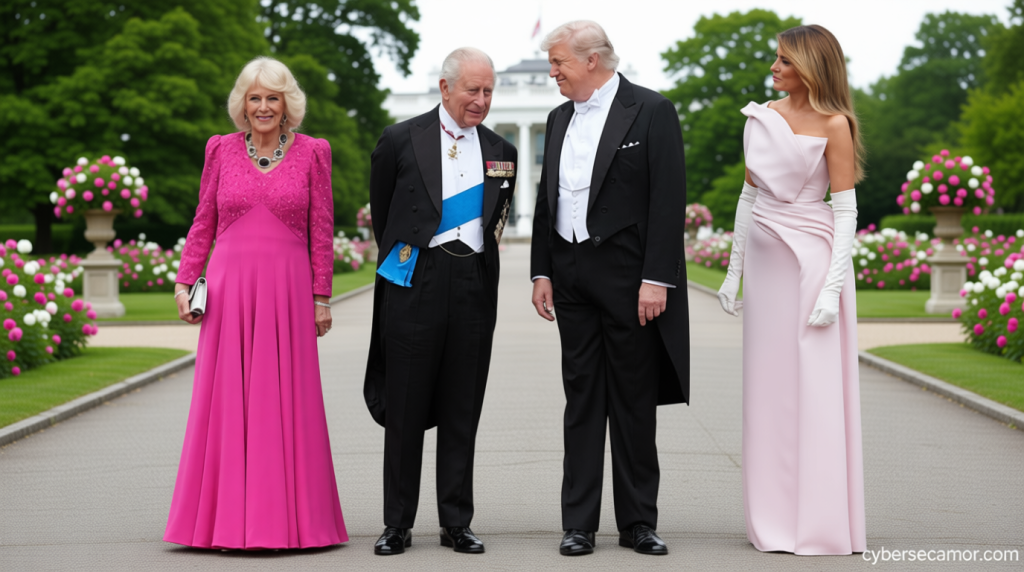
King Charles III lauds ‘indispensable’ US-UK alliance at White House state dinner
King Charles III lauds indispensable US UK – During a recent four-day visit to the United States, King Charles III of Britain participated in a grand state dinner at the White House, marking the 250th anniversary of American independence. The occasion allowed the monarch to reflect on the deep-rooted partnership between his nation and the U.S., underscoring its significance as a cornerstone of shared prosperity and security. In a speech that blended historical reverence with contemporary relevance, Charles emphasized the enduring nature of the alliance, calling it “one of the most consequential partnerships in human history.” This sentiment echoed his previous remarks to Congress, where he had similarly praised the foundational connections between the two countries.
Historical Ties and Global Responsibilities
The British monarch highlighted the cultural and historical bonds that have shaped the relationship, from the shared democratic ideals to the legacy of the Magna Carta, which has influenced over 160 Supreme Court cases in the U.S. His address was framed as a call for unity, urging leaders to remain engaged in international affairs despite growing tensions. “We must not allow the clarion calls for inward-looking policies to weaken our collective resolve,” Charles stated, addressing the challenges posed by the Iran war. His remarks aimed to reinforce the importance of global cooperation, particularly in supporting Ukraine amid Russia’s ongoing invasion.
“Together, we can meet the challenges of an increasingly complex and contested world,” he added, emphasizing the role of alliances like NATO in maintaining stability.
Despite the outwardly optimistic tone, Charles subtly critiqued the current administration’s stance on certain issues, particularly its skepticism toward international partnerships. The visit coincided with a pivotal moment in U.S.-UK relations, as President Donald Trump had recently criticized the UK for its position on Iran and other policies. Trump’s remarks, which targeted British Prime Minister Keir Starmer, were a stark contrast to Charles’s reaffirmation of the alliance’s value. While the monarch expressed admiration for the U.S. commitment to global leadership, he also noted the need for continued collaboration, especially in light of the ongoing conflict in the Middle East.
Witty Remarks and Symbolic Nods
Charles’s speech included lighthearted exchanges with Trump, blending humor with diplomacy. He jokingly referenced the president’s earlier claim that European allies would be speaking German without U.S. support in World War II, quipping, “Dare I say that, if it wasn’t for us, you’d be speaking French.” The comment was a playful acknowledgment of the UK’s historical role in shaping the U.S. while also hinting at the cultural distinctions between the two nations. Trump, in turn, responded with his own brand of wit, joking about his Scottish-born mother having “a crush on Charles” and making a lighthearted remark about the British weather.
“He got the Democrats to stand, I’ve never been able to do that,” the U.S. president said, praising Charles’s address.
Charles also drew a humorous comparison between the state dinner and the Boston Tea Party of 1773, when American colonists protested British taxation by dumping tea into the harbor. “This dinner is a very considerable improvement on the Boston Tea Party,” he remarked, suggesting that modern diplomatic gatherings are more harmonious than historical acts of rebellion. The reference underscored the irony of the situation, as the alliance that now stands strong was once a source of conflict.
Renovations and Historical Echoes
During the event, Charles made a pointed observation about the recent renovations to the White House East Wing, which President Trump had transformed into a $400 million ballroom. “I am sorry to say that we British, of course, made our own attempt at real estate redevelopment of the White House in 1814,” he said, recalling the burning of the building by British soldiers during the War of 1812. The quip highlighted the cyclical nature of U.S.-UK relations, from conflict to collaboration, and served as a reminder of the historical backdrop against which the current partnership is built.
While the monarch’s jokes lightened the atmosphere, his speech also carried a serious undertone, emphasizing the need for both nations to maintain a forward-looking approach. Trump’s criticism of the UK’s stance on Iran, which has been a recurring theme, did not deter Charles from reaffirming the alliance’s resilience. “This relationship, though tested by recent events, remains indispensable,” he asserted, pointing to the mutual benefits derived from decades of cooperation. His words were a clear message to U.S. leaders, urging them to uphold the principles of collective action that have defined the partnership over centuries.
The state dinner, held in a setting that symbolized the enduring connection between the two nations, provided a platform for both leaders to showcase their camaraderie. Yet, the underlying dynamics of their relationship were evident in the interplay of praise and critique. Charles’s speech to Congress earlier in the week had already set the stage for this event, reinforcing the idea that the alliance is not just a historical artifact but a living, evolving force. As the U.S. and UK navigate contemporary challenges, their shared legacy continues to shape the future of their partnership.
Trump’s jovial demeanor during the dinner contrasted with the gravity of the topics discussed, but his remarks reflected an appreciation for the monarchy’s symbolic role. By lauding Charles’s “fantastic” speech, the president acknowledged the importance of diplomatic engagement, even as he maintained his own perspective on global issues. The evening’s exchanges, though laced with humor, underscored the delicate balance of mutual respect and differing priorities in the bilateral relationship.
As the monarch left the White House, his remarks served as a reminder that the US-UK alliance, though occasionally strained, remains a vital pillar of international stability. The 250th anniversary of American independence provided a fitting backdrop for this reflection, highlighting the shared history and the ongoing need for cooperation in a rapidly changing world. Whether through formal agreements or informal banter, the relationship between the two nations continues to evolve, shaped by the values and challenges of the present era.

