
Exclusive: EU vows to fight ‘tooth and nail’ for European industry as China threatens retaliation
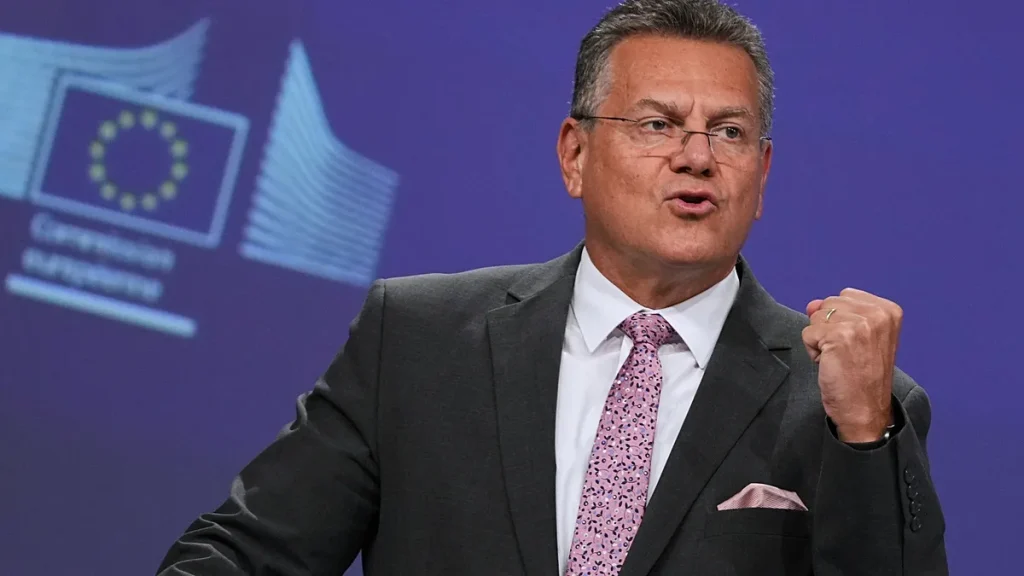
EU Stands Firm Against Chinese Retaliation as Trade Tensions Escalate
Exclusive – In a recent exclusive interview with Euronews, EU Trade Commissioner Maroš Šefčovič underscored the bloc’s determination to protect its industries from external pressures. The commissioner highlighted that the European Union is prepared to take decisive action to safeguard its economic interests, especially as China has hinted at potential countermeasures in response to Brussels’ initiatives aimed at strengthening European manufacturing. This comes amid growing concerns about the balance of power in global trade, with the EU positioning itself as a staunch defender of its sovereignty and fair competition.
China’s Escalating Pressure on the EU
China has intensified its diplomatic pressure on the European Union in recent weeks, warning of retaliatory measures if the bloc persists with its plans to fortify its industrial foundation. The focus of this confrontation centers on two key areas: the EU’s “Made in Europe” strategy and its Cybersecurity Act. These measures, designed to limit the influence of foreign companies in the European market, could restrict Chinese telecommunications firms from operating freely across the continent. Šefčovič, speaking during the interview, reiterated the EU’s resolve to shield its domestic industries from unfair practices.
“We will fight tooth and nail for every European job, for every European company, for every open sector, if we see they are treated unfairly,” Šefčovič declared, emphasizing that the EU’s actions are both necessary and justified.
Relations between the EU and China have grown increasingly strained over the past year, driven by China’s tightening grip on critical resources and technologies. Export controls on rare earth elements, essential for Europe’s clean energy and defense sectors, have raised alarm among European policymakers. Simultaneously, restrictions on semiconductors—key components for the automotive industry—have further complicated the bloc’s supply chains. These measures have not only impacted trade but also signaled China’s broader economic strategy to assert dominance in global markets.
EU’s Legislative Push and China’s Counterattack
In response to China’s export restrictions, the EU has accelerated its legislative agenda, targeting cybersecurity frameworks and single market regulations. These proposals aim to create a more level playing field for European businesses by ensuring foreign firms, including Chinese ones, adhere to stricter standards. However, China has accused the EU of overstepping, calling the measures “unfair” and “discriminatory.” A Chinese official noted that Beijing remains committed to its interests, warning that the EU should not underestimate the “firm resolve” of its trade partners.
“What we need is strategic patience and a great deal of courage,” Šefčovič added, reflecting on the challenges of navigating international trade disputes.
Despite these tensions, the EU Trade Commissioner dismissed the notion of an impending trade war, asserting that the bloc operates with confidence and clarity. “There are very strong industrial policies in China. You have the same in the US, in Canada, in Japan and in Korea. So, nobody should be surprised if the European Union responds in kind—especially when it comes to public money and public funds,” he explained. This statement underscores the EU’s belief that its measures are a natural extension of global trade practices rather than an aggressive stance.
The Trade Deficit and EU’s Strategic Moves
The EU’s trade deficit with China has reached unprecedented levels, surging to €359.3 billion in 2025—a figure Šefčovič described as “simply unsustainable.” This imbalance has sparked debates within the bloc about how to address the issue, with officials arguing that China’s dominance in export markets is contributing to economic instability. The commissioner highlighted that the EU’s legislative efforts are part of a broader strategy to correct this disparity and ensure that European producers are not disadvantaged by unfair trade practices.
“We never threaten our partners, and we certainly don’t do it through the media,” Šefčovič said, stressing that the EU’s actions are grounded in economic necessity rather than political posturing.
Brussels has also pointed to China’s overcapacity as a major concern, suggesting that the country’s ability to flood markets with cheap goods is a deliberate tactic. This has prompted the EU to adopt trade defense instruments, such as anti-dumping tariffs and subsidies investigations, to counter Chinese imports. At the same time, European officials are monitoring how Chinese firms might circumvent restrictions by relocating production to other regions, potentially softening the impact of their trade policies.
Collaboration and the Path Forward
While tensions are high, Šefčovič remains optimistic about the potential for constructive dialogue. “I invited the Chinese foreign minister to visit Brussels because I think we need a very thorough assessment of the current situation,” he said, advocating for a balanced approach that prioritizes mutual understanding. The commissioner emphasized that the EU seeks “constructive engagement” over confrontation, aiming to secure meaningful commitments from Beijing to address the trade imbalance.
“What I want is constructive engagement,” Šefčovič reiterated, framing the EU’s actions as a proactive effort to strengthen its industrial base.
The EU’s recent legislative proposals are part of a larger effort to reshape global trade dynamics, with a particular focus on ensuring that European companies receive equitable treatment. This includes reevaluating market access for foreign firms and reinforcing cybersecurity standards to protect critical infrastructure. While China has expressed concerns about these moves, the EU maintains that its policies are essential for long-term economic resilience and national security.
Broader Implications for Global Trade
The standoff between the EU and China reflects a wider shift in international trade relations, where protectionist policies are gaining momentum. Šefčovič acknowledged that China’s industrial strategies, such as state-backed subsidies and export controls, have created a challenging environment for European firms. However, he argued that the EU’s response is not only warranted but necessary to maintain its competitive edge in a rapidly evolving global economy.
“He also said policymakers, the European parliament and economic actors in the EU have delivered ‘a very strong economic and political reaction’ to tackle the trade deficit.”
As the EU continues to push for reforms, it is clear that the bloc is determined to assert its voice in global trade negotiations. This resolve is bolstered by the EU’s growing economic clout and its commitment to protecting jobs and industries. Meanwhile, China’s threats of retaliation highlight the delicate balance of power in international trade, with both sides vying for influence in a world where economic alliances are often tested by strategic interests.
The ongoing dialogue between the EU and China is shaping the future of trade relations, with each side seeking to secure its own priorities. While the EU emphasizes sovereignty and fairness, China underscores its need to protect its economic interests. This dynamic is likely to persist as both parties navigate a complex web of regulations, tariffs, and geopolitical considerations. The outcome of these negotiations will not only determine the fate of European industries but also set a precedent for how global trade disputes are resolved in the years to come.

