
Bouldering instead of praying: churches find new roles
Bouldering Instead of Praying: Churches Find New Roles
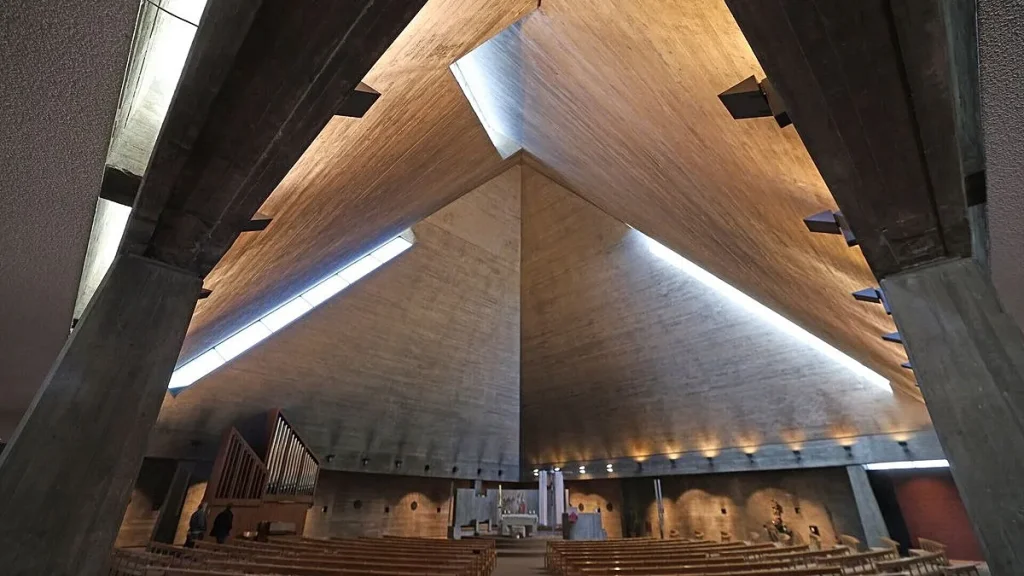
Bouldering instead of praying – In the heart of Würzburg, the parish church of St Andrew in the Sanderau district is undergoing a transformation that reflects a broader trend across Germany. With approximately 44,000 to 45,000 church buildings scattered throughout the country, many of these sacred spaces have long defined the architectural and cultural identity of local communities. Yet, as congregations dwindle and financial pressures mount, the future of these historic structures is increasingly uncertain. The decision to repurpose St Andrew’s church marks a significant shift, converting a once-devotional space into a modern sports facility. This change, set to begin in summer 2027, could make it Bavaria’s first “climbing church,” reimagining a place of worship as a hub for physical activity and social engagement.
The church, originally consecrated in 1968 by Bishop Josef Stangl, now stands as a symbol of adaptation. Its exterior retains the quiet grandeur of post-war modernist design, but its interior is destined for a new purpose: bouldering walls, a yoga room, a café, and a dedicated children’s area. This redefinition of space has sparked debate, blending the sacred with the secular. For decades, St Andrew served as a cornerstone for religious ceremonies and community gatherings, but the strain of maintaining such a large building without sufficient support has become too great. Father Tobias Fuchs, who co-manages the parish with St Adalbero, highlights the challenges faced by the congregation. “We’ve long relied on a volunteer caretaker, but recent years have seen that role become unsustainable due to age-related limitations,” he explains. The situation has reached a critical point, with the community now acknowledging that continued operation is no longer feasible.
The decision to deconsecrate the church, a process known as profanation under canon law, was publicly announced in April 2026 by the Diocese of Würzburg and the operators of the “Rock Inn” bouldering center. This move follows the designation of St Andrew as a historic monument in February of the same year, ensuring its preservation despite the shift in function. For many parish members, this classification offers a sense of reassurance, confirming that the striking structure will remain intact even as its use evolves. The transformation is not merely about repurposing a building but about finding a sustainable balance between tradition and practicality in a rapidly changing society.
A Regional Experiment in Repurposing
St Andrew’s case is emblematic of the Diocese of Würzburg’s broader strategy to address the decline in religious participation. The diocese has reviewed its entire property portfolio and identified nearly 80 churches with the code “E,” signifying their potential for long-term repurposing. Each building’s unique history and architectural features inform a tailored approach, ensuring that the new use aligns with the values of the Catholic faith. According to Gerald Düchs, the diocese’s financial director and Ordinariatsrat, the goal is to minimize disruption to the local community while exploring innovative solutions. “We’re committed to keeping the spiritual significance of these spaces alive, even as they serve new functions,” he emphasizes.
Architect Roland Breuning of the Archicult office is designing a subtle intervention for St Andrew, aiming to integrate the bouldering walls into the existing layout without compromising the building’s heritage. “The focus is on preserving the original rooms and creating structures that can be easily removed if needed,” Breuning explains in a press release issued in April. This philosophy underscores the diocese’s efforts to maintain flexibility, allowing future generations to reconsider the building’s purpose should religious use regain prominence. The process of deconsecration, which must be approved by the Council of Priests and the General Episcopal Council, will also involve the diocesan art commission, ensuring that the transition respects both aesthetic and cultural considerations.
National Trends and Church Adaptation
The shift at St Andrew is part of a growing national trend in Germany, where the Catholic Church is redefining its role in response to dwindling attendance and financial constraints. Since the year 2000, 611 Catholic churches have ceased their liturgical functions entirely, according to the German Bishops’ Conference. While some of these buildings have been sold, others remain under ecclesiastical ownership, now serving as social facilities, care centers, housing units, or archives. This diversification of use reflects the church’s attempt to remain relevant in a secularizing society while safeguarding its legacy.
Markus Hauck from the Episcopal Ordinariate of Würzburg clarifies the criteria for repurposing. “Cultic use by non-Christian communities is excluded to honor the religious sentiments of Catholic adherents,” he explains in response to a query. This principle aligns with the guidelines set forth by the German Bishops’ Conference, which emphasize that conversions should be reversible and that liturgical elements must retain their symbolic integrity. For instance, the diocese has previously converted churches in Erbshausen into flats, Mespelbrunn into a parish center, and Hausen near Aschaffenburg into an artist’s studio. In Würzburg itself, the historic Spitäle now hosts an art gallery, and the Neubaukirche of the Old University functions as a banqueting hall. These examples illustrate the church’s commitment to finding creative solutions that honor both its past and present.
While the transformation of St Andrew into a climbing church represents a bold step, it also highlights the broader challenges faced by religious institutions. The decline in congregations has forced many parishes to reassess their operations, with some opting for closure or downsizing. For Father Fuchs, the decision to deconsecrate was a collective one, driven by the need to allocate resources more efficiently. “The burden of maintaining such a large space became unbearable,” he says. “We simply couldn’t continue without support.” This sentiment is echoed across Germany, where the church is increasingly viewed as a repository of cultural heritage rather than solely a place of worship.
Despite these changes, the church remains a vital part of the community’s identity. The historic monument status granted to St Andrew in February 2026 ensures that its physical structure will endure, even if its function evolves. This preservation is crucial, as it allows the building to serve as a bridge between its past and future. The new use—bouldering and wellness activities—may seem unconventional, but it is a deliberate choice to adapt to contemporary needs. As the Diocese of Würzburg and “Rock Inn” prepare for the facility’s opening in 2027, the question of how to balance tradition with innovation will continue to shape the landscape of religious spaces in Germany. The climbing church stands as a testament to the enduring relevance of these historic buildings, even as their role in society transforms over time.

