
Qatar warns Iran against weaponising Hormuz to ‘blackmail’ Gulf countries
Qatar Warns Iran Against Weaponising Hormuz to ‘Blackmail’ Gulf Countries
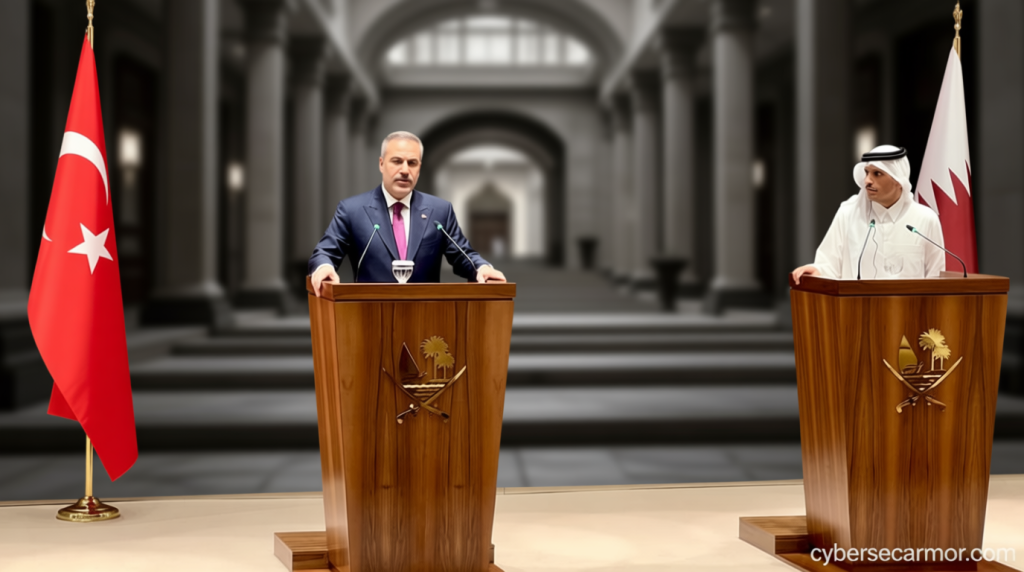
Qatar warns Iran against weaponising Hormuz – On Tuesday, Qatar’s Prime Minister and Foreign Minister, Sheikh Mohammed bin Abdulrahman Al Thani, issued a stern warning to Iran, cautioning against the use of the Strait of Hormuz as a tool for exerting pressure on neighboring Gulf nations. This statement was made during a joint press conference in Doha with Turkish Foreign Minister Hakan Fidan, highlighting the growing concern over Iran’s potential to leverage the strategic waterway for geopolitical gain.
Strait of Hormuz: A Global Economic Lifeline
The strait, a critical chokepoint for international maritime trade, facilitates the passage of roughly 20% of the world’s seaborne oil and gas. Al Thani underscored its importance, declaring, “Iran should not use this strait as a weapon to pressure or to blackmail the Gulf countries.” He emphasized that the region must ensure the strait remains a secure and open corridor for global commerce, warning that any repetition of the current tensions could have far-reaching consequences.
“It’s an international water corridor that should be always protected and always safeguarded,” Al Thani stated. “This current state of the strait and what’s happening over there should never be repeated.”
Fidan echoed Al Thani’s message, stressing the need for the strait to remain a neutral zone. “Preventing the Strait of Hormuz from being used as a weapon is extremely important not only for regional security and stability but also for the global economy,” the Turkish minister added. Both leaders reiterated their commitment to diplomatic solutions, aiming to prevent any escalation that could disrupt vital energy supplies.
Diplomatic Backing for Ceasefire Efforts
Qatar and Turkey have pledged continued support for Pakistan’s mediation in brokering a ceasefire between the United States and Iran. Al Thani highlighted the country’s efforts to “find a solution to this war, reach a ceasefire agreement, end the war as soon as possible, reopen the Strait of Hormuz, and allow freedom of navigation to return to normal once again.” The two nations have also criticized unilateral actions that threaten maritime security, condemning attacks on commercial vessels as breaches of international law.
Al Thani’s recent visit to Washington, which took place just two days prior to the press conference, focused on rallying U.S. support for the peace initiative. During the meeting, he informed American officials of the “impact this war has unfortunately had on the region” and argued that prolonging the conflict would be detrimental to both regional and global interests. “My visit to the United States focused mainly on supporting the Pakistani efforts and ensuring there is positive engagement with these diplomatic efforts to reach a solution as quickly as possible,” he explained.
Escalating Tensions and Regional Security Concerns
The current diplomatic push comes amid mounting fears that the war between Washington and Tehran could intensify. Iranian state-run media had previously demanded full sovereignty over the Strait of Hormuz, an end to sanctions, and compensation for war damages. These demands were accompanied by threats of military retaliation in the event of renewed U.S. strikes, further complicating negotiations.
Al Thani noted that while both sides appear open to ending the conflict, their disagreement centers on the framing of a potential agreement. “Both parties want the war to stop. They want the Strait of Hormuz to be opened, and they want the nuclear files to be resolved in some way,” Fidan remarked. However, he pointed out that the challenge lies in crafting a solution with the right prioritization and wording to ensure mutual acceptance.
The ceasefire, which took effect on 8 April, was brokered through Islamabad’s mediation after 39 days of US and Israeli strikes on Iran, beginning on 28 February. During this period, Tehran launched daily missile and drone attacks on Gulf neighbors, escalating regional tensions. Despite these efforts, the talks have yet to yield a lasting agreement, with Trump extending the truce without setting a specific deadline. This move has raised questions about the sustainability of the fragile ceasefire, as Iran’s latest response was labeled “totally unacceptable” by the U.S. president.
The ongoing crisis has already triggered fears of further disruptions in the Gulf. Recent attacks on commercial shipping and threats to maritime security have driven oil prices to record highs, underscoring the strait’s economic significance. Analysts warn that any prolonged instability could have cascading effects on global markets, with Iran’s strategic leverage over Hormuz becoming a key factor in international energy dynamics.
As the situation evolves, Qatar and Turkey remain steadfast in their advocacy for diplomatic resolution. Their joint stance reflects a broader regional effort to mitigate the risks posed by Iran’s assertive tactics. “Continuation of diplomacy is the only way forward,” Al Thani reiterated, signaling his confidence in the process despite the challenges.
Regional Alliances and the Path Forward
With the conflict’s impact intensifying, the Gulf states are increasingly united in their calls for a stable and secure maritime environment. Qatar’s warning to Iran underscores the nation’s role as a mediator and a guardian of regional stability. By aligning with Turkey, Qatar reinforces its commitment to fostering dialogue and preventing the strait from becoming a battleground for geopolitical influence.
Meanwhile, the U.S. and Iran continue to navigate a complex landscape of mutual interests and competing priorities. While Trump’s rejection of Iran’s latest offer has stalled progress, the potential for renewed talks remains. The success of these efforts will depend on the ability of both parties to address each other’s concerns, particularly regarding the strait’s status and the broader nuclear issue.
In conclusion, the warnings from Qatar and Turkey highlight the delicate balance between security and economic stability in the Gulf. As the region grapples with the implications of Iran’s actions, the role of international diplomacy in safeguarding the Strait of Hormuz becomes more critical than ever. The upcoming negotiations will determine whether the strait can retain its status as a vital artery for global trade or become a tool for geopolitical coercion.

