
Austria expels three Russian Embassy staff over suspected antenna spying in Vienna
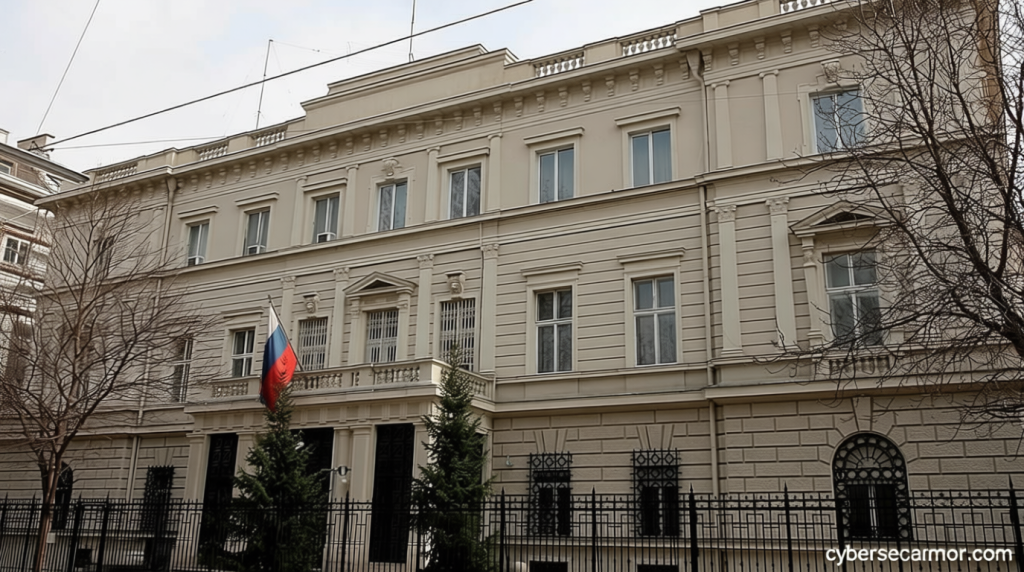
Austria Expels Three Russian Embassy Staff Over Suspected Antenna Spying in Vienna
Austria expels three Russian Embassy staff – Austria has taken decisive action by expelling three Russian diplomats from its embassy in Vienna, citing suspicions of espionage involving the use of antennas. The Foreign Ministry announced the move on Monday, confirming reports from the Austrian public broadcaster ORF that had surfaced the previous day. These reports detailed how the three individuals were allegedly utilizing antennas installed on the roofs of the Russian diplomatic premises to intercept data transmitted by international organizations based in the capital.
The alleged espionage activities were said to target the Russian embassy and a diplomatic compound in the Donaustadt district. According to ORF, the antennas were used to capture information via satellite internet, enabling Russia to monitor communications that could be relevant to its strategic interests. Austria, which hosts several key international institutions, including the International Atomic Energy Agency (IAEA), the Organisation of the Petroleum Exporting Countries (OPEC), and the Organisation for Security and Co-operation in Europe (OSCE), has now linked these installations to potential security threats.
Foreign Minister’s Response
Austria’s Foreign Minister, Beate Meinl-Reisinger, emphasized the significance of the action in a statement. She said,
“Espionage is a security problem for Austria. In this government, we have changed course and are taking decisive action against it.”
The minister further stated that the decision to expel the diplomats was a clear message to Russia regarding the misuse of diplomatic immunity. She added,
“We have made this unequivocally clear to the Russian side, also with regard to the array of antennas at the Russian embassy. One thing is clear: it is unacceptable for diplomatic immunity to be used to engage in espionage.”
The incident has intensified diplomatic tensions between Austria and Russia, marking another escalation in the ongoing rivalry. This comes after a series of expulsions between Western European nations and Russia since the latter’s full-scale invasion of Ukraine in February 2022. Austria, known for its policy of military neutrality within the European Union, initially hesitated to take such measures. However, recent actions indicate a shift in its approach, as more Russian diplomats have been expelled in response to growing concerns about intelligence operations.
The expulsions follow a summons to the Russian ambassador in April, as reported by ORF. During this meeting, Austria requested that the Russian side waive diplomatic immunity to allow prosecutors to investigate the activities of the three diplomats. Russia, however, refused the request, leading to the decision to send the staff back to their home country. The Russian Embassy confirmed that the expelled individuals had already left Austria, according to the broadcaster’s account.
Legal Reforms and Future Measures
Austria is currently revising its espionage laws to address the situation more comprehensively. The existing legislation only penalizes espionage by foreign services when it directly targets Austrian interests. The proposed amendments, as outlined by the Austria Press Agency, aim to extend similar protections to international organizations operating within the country. This would ensure that any unauthorized data interception or surveillance targeting these entities is also subject to legal consequences.
The changes reflect Austria’s commitment to strengthening its security posture and holding foreign actors accountable for their actions. The Foreign Ministry has stated that the new law will be a crucial tool in preventing future espionage incidents, particularly those involving diplomatic missions. This move is part of a broader strategy to safeguard the integrity of international communications and protect Austria’s strategic interests in the region.
Russian Embassy’s Reaction
The Russian Embassy responded to the expulsions with a statement on Monday, calling Austria’s decision “outrageous.” It claimed that the action was an unjustified move that would worsen already strained bilateral relations. The statement added,
“Moscow will respond strongly. Vienna bears full responsibility for the further deterioration of bilateral relations, which are already at a historical low.”
This reaction underscores the deepening diplomatic rift between the two nations, with each side accusing the other of undermining mutual trust through covert operations.
The incident highlights the broader context of espionage as a tool of geopolitical warfare. With the war in Ukraine escalating, countries across Europe have increasingly used expulsions to signal their stance against Russian activities. Austria’s decision to expel the three diplomats is not only a response to the immediate threat but also a demonstration of its alignment with Western European policies in this regard.
Austria’s military neutrality has long been a cornerstone of its foreign policy, but the expulsions suggest a willingness to compromise this principle in favor of national security. By taking a firmer stance against Russian espionage, the country is asserting its role as a proactive defender of its interests in a rapidly changing international landscape. The continued use of antennas by Russian diplomats has raised alarms about the potential for covert intelligence gathering in Vienna, prompting Austria to take swift and measured action.
As the situation unfolds, the impact on Austria’s diplomatic relations with Russia will depend on how Moscow responds. The expulsion of the staff, combined with the legal reforms, signals a turning point in the country’s approach to safeguarding its sovereignty and the integrity of international communications. This development not only affects bilateral ties but also serves as a reminder of the importance of vigilance in the face of evolving threats from foreign intelligence services.

