
Trump says US will reduce troop presence in Germany ‘a lot further’ than initial 5,000 withdrawal
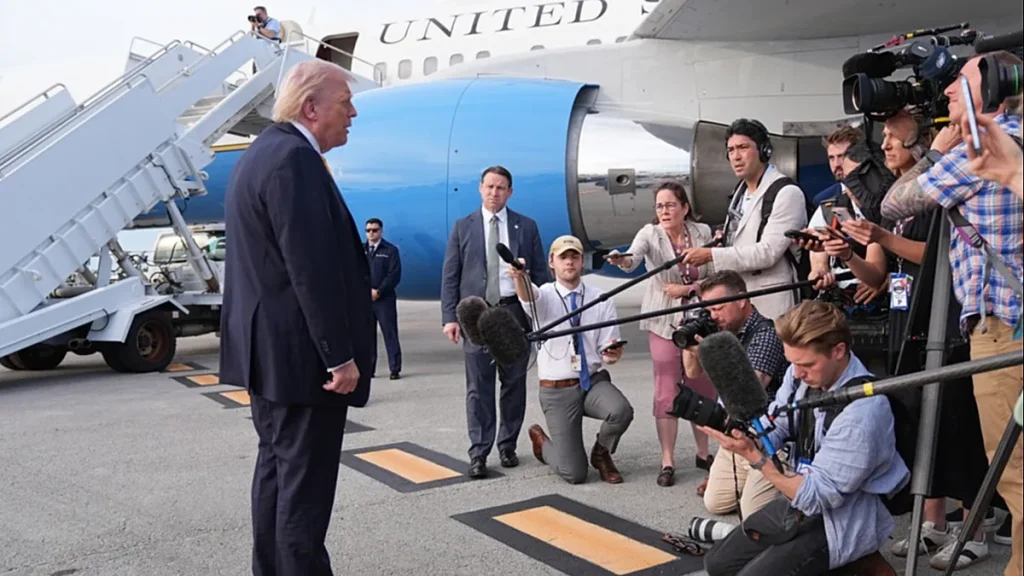
Trump Announces Major Reduction in US Troop Deployment in Germany
Trump says US will reduce troop – President Donald Trump has stated that the United States will cut its military presence in Germany much more than the previously announced 5,000 troop withdrawal. This decision has intensified tensions with German Chancellor Friedrich Merz, who recently criticized Washington’s strategy in the war against Iran. The move comes amid growing disagreements over the role of NATO allies in global conflicts and the allocation of defense responsibilities across the transatlantic alliance.
On Friday, the Pentagon confirmed plans to reduce the number of US troops stationed in Germany over the next six to 12 months. This action follows Merz’s public rebuke of the US-Israeli campaign in Iran, which he described as a “disaster” for American credibility. Merz argued that the White House lacks a clear strategy, defined goals, and a realistic plan for withdrawing from the war. Trump, however, has dismissed these criticisms, framing them as part of a broader effort to redefine US commitments in Europe.
When asked about the rationale for the troop reduction, Trump provided no detailed explanation. Instead, he emphasized that the withdrawal would be more substantial than initially reported. “We’re going to cut way down. And we’re cutting a lot further than 5,000,” he told reporters in Florida. The president’s comments suggest a shift in US priorities, with a focus on scaling back its role in European security while maintaining pressure on Iran.
Germany’s Defence Minister Acknowledges the Shift
Germany’s Defence Minister Boris Pistorius appeared to accept the news of the troop cut with composure. He noted that the drawdown, a long-standing threat from Trump, was anticipated and highlighted the need for European nations to assume greater responsibility for their own defense. “The presence of American soldiers in Europe, and especially in Germany, is in our interest and in the interest of the US,” Pistorius said in a statement to German media. Despite the reduction, he stressed that security cooperation remains mutually beneficial, reinforcing the partnership’s importance.
Pistorius also pointed out that the planned withdrawal would affect only a fraction of the 36,000 US service members currently stationed in Germany. A decrease of 5,000 troops represents roughly one-seventh of the total force, which has been a key component of NATO’s collective defense since the Cold War. However, the impact of this move on Germany’s strategic security could be significant, especially as the country relies heavily on American support for its military operations.
While the Pentagon provided minimal details about which units or operations would be impacted, the decision has sparked debate in Washington. Some analysts argue that the withdrawal signals a weakening of US commitment to Europe, potentially emboldening Russia and other adversaries. Others see it as a pragmatic adjustment to align with Trump’s vision of reducing military overreach.
Bipartisan Concerns Over the Troop Reduction
The proposed troop cut has faced resistance from both Democratic and Republican lawmakers. Critics warn that reducing forces in Germany might send a “wrong signal” to Russian President Vladimir Putin, who has been escalating tensions in Eastern Europe. With the war in Ukraine entering its fifth year, the US has maintained a heightened military posture in the region, and any reduction could be perceived as a strategic retreat.
Trump’s actions are also part of a broader conflict with European allies over their stance in the Iran war. He has repeatedly criticized leaders like Merz, Spanish Prime Minister Pedro Sánchez, and British Prime Minister Keir Starmer for not fully supporting the US position. This has created a rift in the transatlantic alliance, with European nations feeling pressured to take on more of the burden for global security.
Additionally, Trump has accused the European Union of failing to meet its trade obligations under a recent agreement. As part of this dispute, he announced plans to raise tariffs on cars and trucks from the bloc to 25% next week. This move is expected to hit Germany particularly hard, given its status as a major automobile producer. The European Parliament’s trade committee chair, Bernd Lange, swiftly condemned the decision, calling it “unacceptable” and accusing the US of breaking another trade commitment.
“Washington has become an unreliable trading partner,” Lange stated in a press release. The EU’s reaction underscores the growing friction between the US and its European allies, not just over military strategy but also economic policies. For Germany, the dual challenge of losing troops and facing higher tariffs could complicate its efforts to balance defense and economic interests.
Broader Implications for US-Europe Relations
Trump’s decision to withdraw troops from Germany is part of a wider pattern of recalibrating US military deployments across NATO countries. Earlier in the week, he hinted at similar reductions in Italy and Spain, which have also been sources of tension. The US maintains around 12,500 troops in Italy and nearly 4,000 in Spain, with the potential for further cuts in the future.
Historically, the US has stationed tens of thousands of troops in Europe, with numbers fluctuating based on regional threats and operations. The current deployment of 80,000 to 100,000 active-duty soldiers has been bolstered since Russia’s full-scale invasion of Ukraine in February 2022. Berlin, however, has long anticipated these troop reductions, with officials stating they have been preparing for over a year.
Analysts suggest that Trump’s approach reflects his broader philosophy of reducing foreign entanglements. By emphasizing cost-cutting and national interest, he aims to reassert American sovereignty in global affairs. Yet, the move has raised concerns about the stability of NATO and the potential for European allies to become more autonomous in defense matters.
Despite the controversy, Trump remains confident in his strategy. “We’re doing what’s best for our country,” he said, framing the troop reduction as a necessary step to address fiscal challenges and focus on other global priorities. The question now is whether this shift will weaken NATO’s cohesion or strengthen the alliance by encouraging shared responsibility among members.
As the US continues to restructure its military presence, the relationship between Washington and its European partners will remain under scrutiny. The combination of troop withdrawals and trade tensions could reshape the dynamics of transatlantic cooperation in the years ahead. For now, Germany and its allies are navigating a period of uncertainty, balancing strategic needs with political pressures from the White House.
“We’re going to cut way down. And we’re cutting a lot further than 5,000,” Trump told reporters in Florida.
With the Pentagon’s announcement and Trump’s public statements, the US is signaling a decisive shift in its European strategy. Whether this will lead to a lasting reduction in troop presence or a temporary adjustment remains to be seen, but the implications for NATO and global security are clear. The debate over US commitments in Europe is far from over, and the coming months will be critical in determining the direction of this policy change.

