
IOC lifts Olympic ban on Belarus’ athletes but Russians still barred from competiton
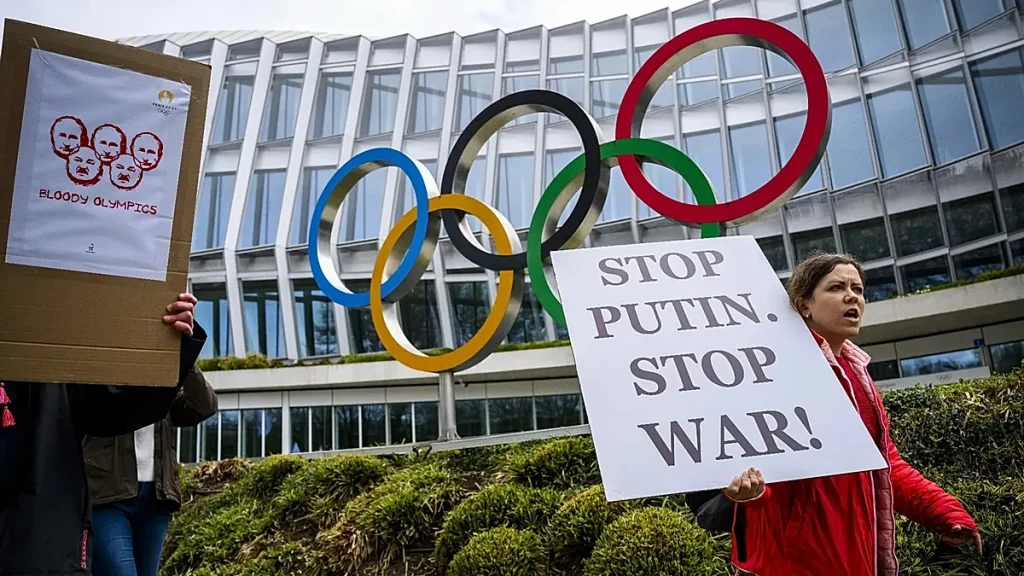
IOC Lifts Olympic Ban on Belarus Athletes, but Russians Remain Excluded
IOC lifts Olympic ban on Belarus – The International Olympic Committee (IOC) has taken a significant step by removing restrictions on Belarusian athletes participating in the Olympic Games, as announced on Thursday. This decision marks a shift in the committee’s stance toward the nation, allowing its competitors to return to the international stage. However, Russian athletes continue to be barred from competition, a lingering consequence of their country’s full-scale invasion of Ukraine. While the IOC has acknowledged the role of Belarus in supporting the conflict through its territorial access to Russian forces, it has decided to focus on individual accountability rather than collective sanctions.
From Neutrality to Full Participation
Since the invasion of Ukraine began, both Russia and Belarus faced widespread exclusion from Olympic events. Athletes from these nations were initially prohibited from competing unless they could qualify under a neutral banner. Belarus, as a key ally of Russia, allowed its territory to be used by Russian military forces as a staging ground for the invasion. Despite this, the IOC has now lifted its restrictions, permitting Belarusian teams to compete in their entirety at the upcoming Los Angeles Summer Olympics in 2028.
“The IOC no longer recommends any restrictions on the participation of Belarusian athletes, including teams.”
This statement underscores a growing emphasis on separating the actions of governments from the personal efforts of individual athletes. The committee has clarified that the decision reflects its belief that athletes should not be penalized for the policies of their nations, particularly in the context of ongoing conflicts. The move also aligns with the IOC’s broader strategy to maintain the integrity of the Olympic Games while fostering inclusivity in sports.
Context of the Ban and Its Evolution
The exclusion of Russian and Belarusian athletes from international competition was a direct response to Russia’s military actions in Ukraine. Initially, the IOC had suspended the Russian Olympic Committee (ROC) in autumn 2023 due to its involvement in the occupation of four Ukrainian regions. This suspension meant that Russian athletes had to compete as “Individual Neutral Athletes,” a designation that stripped them of their national flags and reduced their presence at events. Belarus, however, had not faced the same level of scrutiny until recently.
Under the previous policy, Belarusian athletes were permitted to compete as neutrals during the Paris 2024 and Milan-Cortina 2022 Winter Games. At Paris 2024, 17 Belarusians participated under this arrangement, while seven competed in Italy. The IOC’s decision to lift the ban now allows Belarus to fully rejoin the Olympic fold, a change that could be seen as a compromise between political considerations and sporting unity.
Implications for the 2028 Games
The timing of the IOC’s announcement coincides with the start of the qualification period for the 2028 Los Angeles Summer Olympics. By releasing this statement now, the committee has given Belarusian federations time to prepare for their return to the Games. This includes ensuring their athletes meet the necessary criteria for participation and are ready to represent their country in the opening ceremony and on the medal table.
While the ROC remains suspended, the IOC has highlighted that the situation is distinct from Belarus’s. The ROC was penalized for its control over sports organizations in occupied Ukrainian regions, which was a deliberate political move. In contrast, the IOC has not found similar evidence of Belarusian complicity in the invasion. This distinction is critical, as it allows the committee to differentiate between the two nations and apply varying measures based on their respective roles in the conflict.
Antidoping Concerns and Policy Adjustments
The IOC’s statement also notes that fresh concerns have emerged regarding the Russian anti-doping system. These concerns, combined with the country’s military actions, have contributed to the continued exclusion of Russian athletes. However, the committee has not ruled out the possibility of revisiting this policy in the future, depending on the situation in Russia and the effectiveness of its reforms.
For Belarus, the lifting of restrictions is a symbolic victory, though it does not fully absolve the nation of its association with Russia. The IOC has emphasized that its decision does not imply endorsement of Belarus’s political stance but rather a recognition of the athletes’ right to compete without being held hostage by their government’s actions. This approach aims to balance the need for accountability with the spirit of international sports cooperation.
A Shift in Perspective
As the 2028 Olympics approach, the IOC’s revised policy signals a potential shift in how the committee addresses geopolitical tensions. While Russia remains under sanctions, Belarus’s inclusion represents a more nuanced approach to handling national affiliations in sports. This decision may also encourage other nations to reevaluate their own stances, particularly those with mixed political and sporting ties to the conflict.
The impact of this change could be felt in the structure of the Games, with Belarusian athletes now able to compete in full teams. This contrasts sharply with the previous model, where only a handful of Belarusians participated as neutrals. The IOC’s statement suggests that the new policy will allow for greater representation, provided the athletes meet the conditions of participation. This includes demonstrating that they have not actively supported the invasion of Ukraine.
Looking Ahead
The IOC’s move to lift restrictions on Belarusian athletes has sparked discussions about the role of sports in global politics. While some view this as a gesture of reconciliation, others argue that it weakens the committee’s stance against Russia. Nevertheless, the decision reflects a pragmatic approach to maintaining the Olympic spirit amid ongoing conflicts.
As the qualification process for the 2028 Games progresses, the IOC will closely monitor the situation. If Belarusian athletes continue to meet the criteria, their full participation is likely to become a reality. For Russia, the path to reinstatement may depend on resolving the anti-doping concerns and demonstrating a commitment to fair competition. This evolving landscape highlights the dynamic relationship between sports and politics, where decisions can be both symbolic and strategic.
In summary, the IOC’s decision to allow Belarusian athletes to compete without restrictions marks a pivotal moment in the Olympic movement. It underscores the committee’s willingness to adapt its policies while upholding the values of neutrality and fairness. As the 2028 Games draw near, the distinction between the two nations will be a key factor in shaping the future of Olympic participation.

