
Venice Biennale opens with protests against Russia and Israel
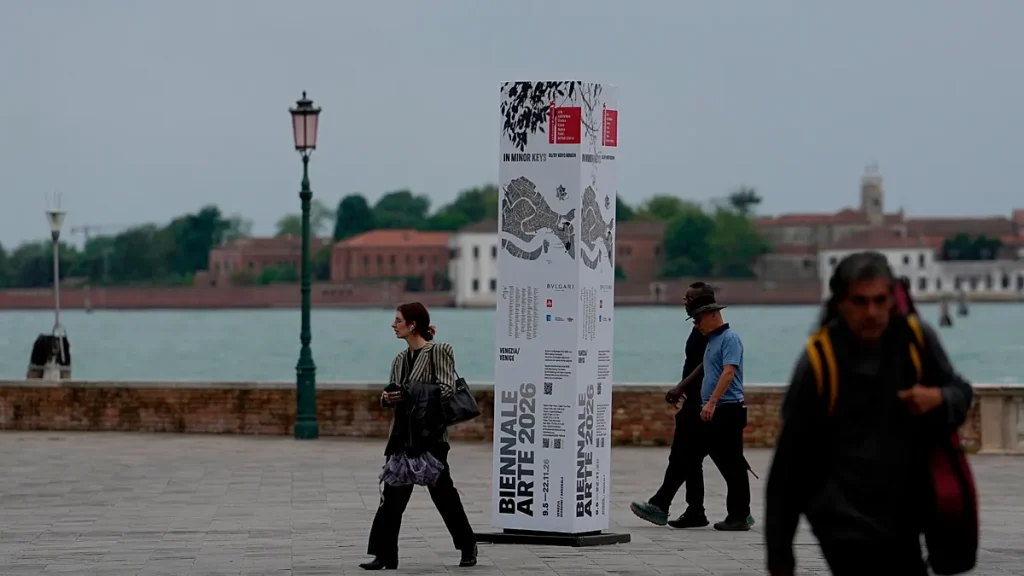
Venice Biennale Unveils Controversy Amid Protests Targeting Russia and Israel
Venice Biennale opens with protests against – The 61st Venice Biennale International Art Exhibition commenced on Saturday, 9 May, marking a significant cultural event in the global art calendar. However, the opening day was overshadowed by widespread demonstrations that highlighted deepening political divisions. The event, traditionally a celebration of creativity, became a stage for public dissent as tensions mounted around the participation of Russia and Israel. These protests, which began the day before the official unveiling, transformed the pre-opening period into a prolonged display of political activism, with thousands gathering to voice their concerns.
Protesters Challenge the Biennale’s Neutrality
On Friday, the final day of the pre-opening phase, a striking number of participants took to the streets, demanding accountability from the Biennale for its inclusion of Israeli and Russian pavilions. The demonstration, organized by a coalition of trade unions and grassroots groups, drew around two thousand attendees who marched along Via Garibaldi. This marked the first instance of a workers’ strike in the Biennale’s history, as participants argued that the event should not serve as a platform for political agendas. Their march was directed toward the Arsenale, the historic venue hosting the Israeli pavilion, which they labeled the “genocide pavilion” in reference to the ongoing conflict in Gaza.
As the procession neared the Campo della Tana, a pivotal moment unfolded. Demonstrators attempted to bypass security barriers to access the armored exhibition halls, leading to a confrontation with the police’s rapid response unit. The clash highlighted the intensity of the protests, with some participants pushing through to reach the pavilions while others stood firm at the perimeter. The event’s organizers faced mounting pressure to address these demonstrations, which were seen as a reflection of broader global tensions between military operations and public sentiment.
Russia’s Pavilion Sparks Institutional Controversy
Amid the protests, the reopening of the Russia pavilion added another layer of complexity to the Biennale’s opening. The temporary access to the Russian exhibit was met with criticism, as the Pussy Riot collective staged symbolic disruptions to challenge the event’s alignment with Moscow’s policies. The European Union, sensitive to the political implications, reiterated its threat to withdraw financial support if the Biennale was perceived as endorsing the Kremlin’s stance on the Ukraine invasion. This move placed the Biennale’s budget at risk, as Brussels emphasized the need for consistency between cultural initiatives and international sanctions.
The Biennale’s decision to keep the Russia pavilion closed during the exhibition period was a compromise aimed at appeasing the EU. While visitors could glimpse the artworks through windows, the closure signaled a symbolic rejection of Russia’s participation. This decision, however, did not fully quell the controversy, as the European Commission continued to scrutinize the event’s neutrality. The situation underscored the growing influence of geopolitical issues on artistic events, turning the Biennale into a battleground for ideological debates.
Support and Division Among National Pavilions
The protests extended beyond the streets, as several national pavilions joined the cause by closing temporarily. Over twenty countries, including Austria, Belgium, Spain, the UK, and Turkey, suspended operations in solidarity with the anti-Israel demonstrations. Even nations like Finland and Ireland, which had previously maintained a neutral stance, participated by locking their doors during the height of the movement. The ANGA collective, representing these nations, stressed that their actions were not merely symbolic but a clear stance against complicity in supporting political and economic systems that perpetuate war.
Meanwhile, the Italian pavilion’s inauguration on Friday took place in a politically charged atmosphere. While the national headquarters remained unrepresented, prominent politicians attended the opening, including Deputy Prime Minister Matteo Salvini, Mayor of Venice Luigi Brugnaro, and Regional Council President Luca Zaia. Salvini, known for his strong views on cultural independence, framed his presence as a tribute to Venice and its artistic legacy, asserting that the Biennale should remain free from political boycotts.
Salvini’s Defiance and Giuli’s Discontent
Salvini’s visit to the Russian pavilion was a defining moment of the day. The Italian Deputy Prime Minister was warmly received by Commissioner Anastasia Karneeva, who expressed gratitude for his support. “The Italian Deputy Prime Minister Matteo Salvini gave us a wonderful surprise, and we thank him: his visit gave us great pleasure,” Karneeva remarked, highlighting the diplomatic tension between national leaders and the Biennale’s international ethos.
Contrastingly, Alessandro Giuli, the Italian Minister of Culture, chose to boycott the Biennale’s opening. His decision stemmed from a disagreement with the event’s leadership, particularly the Biennale president Pierangelo Buttafuoco. Giuli had written a formal letter to Buttafuoco expressing his dissent over the Russia pavilion’s inclusion, but the response was delayed. “I wrote him my respectful dissent and received no reply. So we stayed, but now we look ahead,” Giuli stated, underscoring the rift within Italy’s cultural administration.
Giuli’s absence from the opening ceremony left the Italian pavilion’s inauguration in an “institutional desert,” as the event’s organizers were left to manage the occasion without their minister’s presence. Despite this, the event proceeded with a mix of support and skepticism, as the Italian government’s stance on the Biennale’s political alignment remained a point of contention. The split between Giuli and Buttafuoco reflected a broader debate about the role of art in political discourse, with some arguing that the Biennale should remain a neutral space for creative expression.
Global Rifts and Cultural Consequences
The protests at the Venice Biennale mirrored the larger global conflicts between nations and their citizens. As the event continued through the remainder of 2026, the political pressure on its organizers grew, with the EU’s financial threat looming over its operations. The closure of the Russia pavilion, while a concession to external criticism, did not resolve the underlying tensions. Instead, it raised questions about the Biennale’s ability to navigate the delicate balance between artistic freedom and political accountability.
For many, the protests were a powerful reminder of how cultural events can become focal points for ideological clashes. The Biennale, once a beacon of artistic collaboration, now found itself at the center of a global debate over the role of art in reflecting or shaping political narratives. As the exhibition unfolded, the question remained: could the Biennale maintain its status as an impartial platform for creativity, or would it be forever marked by the controversies of its opening?
The demonstrations, though disruptive, also demonstrated the power of collective action in shaping public perception. By linking their cause to the Biennale’s global reach, protesters amplified their message, turning a single cultural event into a symbol of broader geopolitical struggles. The closing of national pavilions and the symbolic gestures of the participating artists and collectives reinforced the idea that the Biennale’s opening was not just a celebration of art but a declaration of political values.
A New Era for the Venice Biennale
As the Biennale welcomed visitors until the end of November 2026, the challenges it faced became more apparent. The opening had set the tone for a year of cultural diplomacy, where art would be both a refuge and a battleground. The protests, while contentious, ensured that the event’s significance extended beyond the galleries, embedding itself in the heart of contemporary political discourse. Whether this would lead to lasting change or deepen the divisions, the Biennale was now irrevocably tied to the struggles of its time.

