
‘This is not patriotism’: Outrage at Donald Trump’s face on new passports
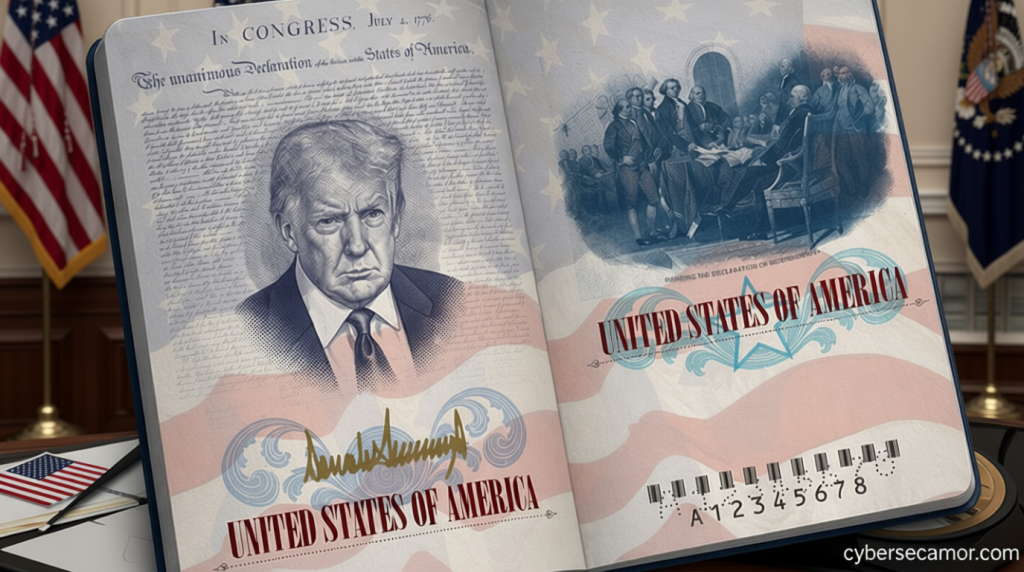
‘This is not patriotism’: Outrage at Donald Trump’s face on new passports
A National Symbol Under Scrutiny
This is not patriotism – Donald Trump’s decision to feature his likeness on the redesigned U.S. passport has sparked widespread public backlash, with critics arguing that the move reflects more than just national pride. The controversy has drawn comparisons to Oscar Wilde’s sharp critique of patriotism, which he once described as “the virtue of the vicious.” While many Americans embrace the idea of celebrating their country through symbols, the addition of Trump’s face to a document that represents global identity and travel has raised eyebrows. The debate centers on whether this gesture is a genuine expression of patriotism or an over-the-top display of personal ambition.
The U.S. State Department is reportedly set to finalize a bold “radical redesign” of the passport, which will include a portrait of Trump from his second inaugural ceremony. This change has already been highlighted on social media, with the White House’s official post captioned “Patriot passport unlocked” and accompanied by an all-American bald eagle emoji. The imagery, while patriotic in tone, has been met with mixed reactions. Some view the redesign as a fitting tribute to a leader who has championed national identity, while others see it as a marketing ploy to elevate Trump’s personal brand.
Public Discontent Over Personal Promotion
Online discussions have increasingly framed the passport redesign as a symbol of Trump’s relentless pursuit of visibility. A State Department official, when asked about the new design, told CNN that the passport with Trump’s image will be the standard option available at Washington’s Passport Agency once the change is implemented. The official added that digital platforms and other locations will continue to use the older passport format, emphasizing that the new design is a matter of choice. However, this distinction has not calmed the growing discontent.
Many have expressed frustration that the passport, a document representing a country’s authority and international standing, is being transformed into a personal endorsement. The phrase “Patriot passport unlocked” has become a point of contention, with some interpreting it as an attempt to associate Trump with a sense of national unity and pride. Others, however, argue that the phrase is misleading, suggesting that the redesign is more about promoting Trump’s image than fostering patriotism. This sentiment has been echoed by lawmakers and citizens alike, who see the move as prioritizing political spectacle over practical concerns.
Mike Levin, the U.S. representative for California’s 49th congressional district, has been vocal in his criticism of the plan. In a statement, Levin pointed out that no sitting president has ever had their face placed on coins, banknotes, or other national symbols in this way. “Coins, park passes, battleships, and now your passport,” he wrote, “the man cannot find a surface he will not slap his name or face on. This is not patriotism. It is vanity.” His words capture the growing perception that Trump’s image on the passport is not about honoring the nation but about enhancing his own legacy.
Vanity as a Political Strategy
The backlash against the passport redesign highlights a broader tension between political leadership and public perception. Critics argue that the move exemplifies a trend of using state institutions to promote individualism, blurring the line between national identity and personal branding. For those who value the passport as a neutral emblem of citizenship, Trump’s face feels like an intrusion—a reminder that the document is now being weaponized for partisan purposes.
Supporters of the redesign, on the other hand, see it as a natural extension of Trump’s “America First” rhetoric. They believe that showcasing a leader’s face on such a prominent document reinforces their role as a symbol of the nation. However, this perspective has not won over everyone. The phrase “Patriot passport unlocked” has been mocked for its overused marketing tone, with some suggesting it’s more reminiscent of a viral social media campaign than a serious policy decision.
The timing of the redesign has also fueled speculation. With the U.S. approaching its 250th anniversary of independence, the decision to feature Trump’s image seems strategically calculated. Advocates argue that the redesign is a way to celebrate the nation’s history with a contemporary figure, while detractors claim it’s an attempt to create a sense of urgency and patriotism around Trump’s presidency. The debate has taken on a symbolic dimension, with the passport becoming a microcosm of the larger political divide.
Interestingly, the controversy has drawn a direct parallel to Oscar Wilde’s philosophical musings on patriotism. Wilde’s quip, “Patriotism is the virtue of the vicious,” has been revisited by critics who see Trump’s passport redesign as a perfect example of the phrase in action. The idea that patriotism can be co-opted for self-serving purposes resonates strongly in the current climate, where the line between public service and personal aggrandizement is often blurred.
A Cultural Moment in Question
As the redesign moves closer to implementation, the question remains: does it align with the values of a nation that prides itself on inclusivity and collective identity? The passport, traditionally a symbol of unity and shared purpose, now appears to serve as a canvas for individualism. This shift has sparked conversations about the role of national symbols in shaping public opinion and the potential for political figures to use them for their own gain.
Levin’s criticism, which ties the passport redesign to Trump’s broader efforts to imprint his image on everyday objects, underscores the concern that the move is part of a larger campaign to monopolize national recognition. His argument—that this is not patriotism but vanity—has found support among those who feel the redesign is a distraction from pressing issues like economic policy, healthcare, and climate change. For them, the focus on Trump’s face on passports feels like a misallocation of resources and attention.
The debate has also prompted reflections on the power of visual imagery in politics. A president’s image, whether on currency, stamps, or passports, carries significant cultural weight. By placing Trump’s face on the passport, the government is signaling that his leadership is now a cornerstone of national identity—a choice that has divided opinions. Some see it as a necessary step in recognizing Trump’s achievements, while others view it as an endorsement of his controversial policies and divisive rhetoric.
Amid the controversy, the reference to Oscar Wilde’s “The Importance of Being Earnest” has reemerged as a poignant reminder of the absurdity of the situation. In Act 2, the character Jack says to Algernon, “Your vanity is ridiculous, your conduct an outrage, and your presence in my garden utterly absurd.” These words, though from a play, now seem to echo the public’s frustration with Trump’s approach to national symbols. Whether the redesign is seen as an act of vanity or a symbol of patriotism, one thing is clear: it has ignited a passionate discussion about the role of leaders in shaping national identity.
As the U.S. prepares to commemorate its 250th anniversary, the passport redesign stands as a focal point of this debate. While some may argue that it’s a way to honor the nation’s leaders, others believe it’s a misguided attempt to create a new narrative. The question of whether Trump’s face belongs on the passport continues to divide opinions, with the broader implications of this choice shaping the discourse around leadership and national symbolism in the modern era.

