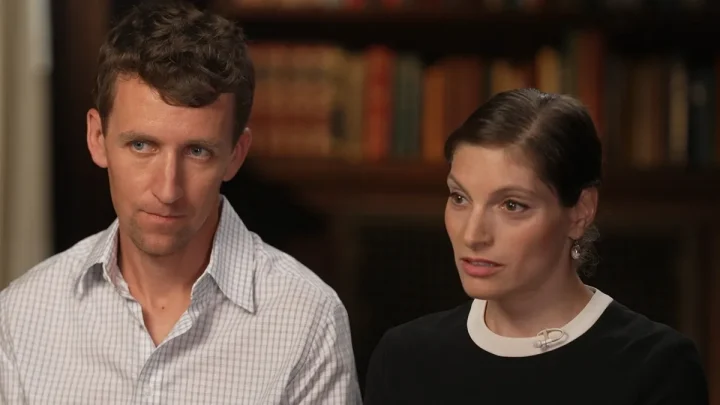
Trump endorses Mike Collins for Senate in tight Georgia runoff race

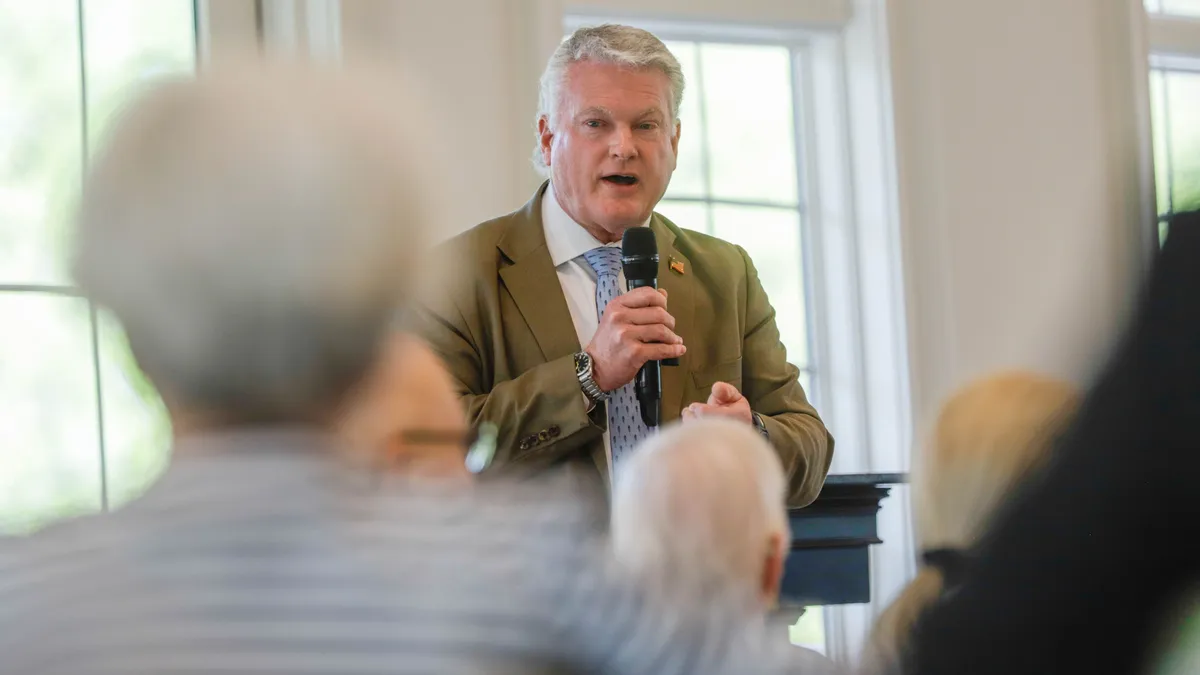
Trump’s Endorsement of Mike Collins in Georgia Senate Runoff Sparks Political Tug-of-War
Cybersecarmor.com – As the final stretch of the Georgia Senate runoff approaches, President Donald Trump has made a pivotal move by endorsing U.S. House Representative Mike Collins in a late-night Truth Social post. This endorsement comes just days before the June 16 election, which will determine the next senator representing the state. The race pits Collins against former college football coach Derek Dooley, both of whom are seeking to unseat the incumbent Democrat Jon Ossoff. With the stakes high and the outcome uncertain, Trump’s backing adds a significant boost to Collins’ campaign.
Collins: A MAGA Advocate with a Political Track Record
Trump’s endorsement highlights Collins’ alignment with his policies and rhetoric. In his post, the president praised Collins as a “MAGA warrior” and emphasized his role in the Georgia congressional district. Collins, who has represented Georgia’s 10th district since 2023, has long been a vocal supporter of conservative values, including tax cuts and deregulation. His campaign has focused on economic growth and national security, themes that resonate strongly with Trump’s base.
Trump’s message also touched on the broader political context of Georgia, a state that has been a battleground for Republican control of the Senate. The president pointed to his 2020 victory in the state, which he claims was the most significant win in Georgia’s history. “Mike is strongly supported by the most Highly Respected MAGA Patriots in Georgia and beyond,” Trump wrote, underscoring the importance of the endorsement in mobilizing his core supporters.
Dooley: A Rising Star with Governor Kemp’s Backing
Meanwhile, Derek Dooley, a former college football coach turned political candidate, has been heavily backed by outgoing Governor Brian Kemp. Kemp, a key figure in Georgia’s Republican Party, has previously clashed with Trump over the legitimacy of the 2020 presidential election results. Dooley’s campaign has positioned him as a reformer, drawing on his experience in leadership and community engagement.
Despite Trump’s endorsement, Dooley has been able to maintain a strong presence in the race. Polls indicate that the two candidates are closely matched, with neither gaining a clear advantage. The runoff has become a test of political strategy, as both Collins and Dooley aim to secure the support of Georgia’s voters. Trump’s decision to back Collins has sparked debate among Republicans, with some questioning whether the endorsement will help unify the party or create division.
Trump’s Attack on Ossoff: Framing the Race as a Battle for Values
In his Truth Social post, Trump not only endorsed Collins but also launched a sharp critique of Sen. Jon Ossoff, the Democrat running in the runoff. The president accused Ossoff of being a “Radical Left Lunatic” and a “Dumocrat,” suggesting that he fails to represent the values of Georgia’s people. “He is a laughingstock in Washington; he is weak and pathetic!” Trump declared, a sentiment that has been echoed by his supporters.
“He is a Radical Left Lunatic, a Dumocrat, and doesn’t represent the values of the Great People of Georgia. I beat him years ago in a Congressional Race where he was winning by a lot until I offered my Endorsement, my Candidate won easily, and that’s going to happen again because Jon Ossoff doesn’t have what it takes.”
Trump’s remarks reflect his broader strategy of framing the election as a choice between traditional conservative values and progressive policies. He argued that Ossoff’s support for initiatives like healthcare expansion and climate regulations puts him at odds with the majority of Georgians. Additionally, Trump cited Ossoff’s loss in the 2017 special election for Georgia’s 6th congressional district as evidence of his lack of political viability.
Ossoff’s Response: Calling Trump’s Endorsement “Toxic”
Ossoff’s campaign has responded to Trump’s attacks with a mix of defiance and strategic messaging. In a statement, campaign communications director Ellie Dougherty accused Trump of using his influence to align Collins with his own agenda. “After nearly a year-long brutally messy audition to win over the White House, Trump puppets Mike Collins and Derek Dooley have made themselves both unelectable and terminally inseparable from the toxic president,” she said.
Ossoff has also emphasized his record as a senator, including his efforts to protect the Second Amendment and promote economic growth. While he has faced criticism for his alignment with progressive policies, his team argues that his focus on integrity and accountability remains a key differentiator. The campaign has been particularly vocal about its stance against corruption, a theme that has been highlighted in recent House ethics investigations involving Collins.
Collins’ Campaign: Leveraging Trump’s Support and Personal History
Collins’ campaign has seized the opportunity to highlight Trump’s endorsement as a validation of his leadership and principles. In a video posted on X, Collins expressed gratitude to Trump and wished him a happy birthday, a gesture that has been interpreted as an effort to strengthen the personal connection between the two. He also shared a memory of their first meeting, which took place on June 14, reinforcing the idea of a shared political journey.
Collins has framed his candidacy as a continuation of the progress made under Trump’s administration. He has emphasized his role in the U.S. House, where he has worked on issues like energy policy and tax reform. “Mike will continue to work hard to Grow the Economy, Cut Taxes and Regulations, Promote MADE IN THE U.S.A., and Strengthen our incredible Military/Veterans,” Trump wrote in his post, a message that Collins’ team has amplified.
The Road Ahead: A High-Stakes Runoff
With the June 16 runoff fast approaching, the race has intensified. Trump has made it clear that Collins’ next challenge is to secure victory against Dooley, who he admits he doesn’t know well. “Mike has to beat a Republican Opponent before he gets to Ossoff,” Trump said, a reminder that the runoff is the first hurdle before the November general election.
Dooley’s campaign, meanwhile, has focused on contrasting his record with Collins’. Trump criticized Dooley for not voting in 2020 or 2016 and for claiming he lost the state in 2020. The president has been quick to counter that narrative, asserting that the facts have proven his victory in Georgia. “Unfortunately, he has lived outside of Georgia for most of his life, didn’t vote in 2020 or 2016, and said I lost Georgia in 2020 when, in actuality, the facts have now proven that I won by a lot!” Trump added, a pointed reminder of the stakes involved.
As the final days of the campaign unfold, the focus will remain on messaging and voter turnout. Both Collins and Dooley have been working to rally their bases, with Trump’s endorsement likely playing a crucial role in Collins’ efforts. However, Ossoff’s team is determined to counter the narrative, emphasizing the importance of choosing a candidate who upholds the values of the state.
Key Issues and Voter Concerns
The runoff race has been shaped by a few key issues that resonate with Georgia voters. Economic growth, tax policies, and national security have been central to Collins’ platform, while Dooley has positioned himself as a reformer focused on reducing government overreach. Ossoff, on the other hand, has stressed his commitment to protecting civil liberties and ensuring the integrity of the electoral process.
Recent polls show that the race is still tight, with neither candidate holding a decisive lead. This has led to a surge in campaign activity, as both sides seek to capture the attention of undecided voters. Trump’s endorsement has provided Collins with a significant advantage, but the effectiveness of this support will depend on how well it translates into votes in a state where political leanings are often divided.
As the June 16 runoff draws near, the outcome could have far-reaching implications for the balance of power in the Senate. A victory for Collins would not only secure a Republican seat but also bolster Trump’s influence in the state. Conversely, a win for Dooley might signal a shift in the party’s priorities or a potential realignment of Georgia’s political landscape.
The final stretch of the campaign is likely to be defined by sharp messaging, aggressive advertising, and the mobilization of key voter demographics. With Trump’s endorsement and the state’s political history, the race has become a critical test of the GOP’s ability to unify and maintain momentum in the face of a determined Democratic opponent.