Trump’s name removed from Kennedy Center after blowing past deadline

Trump’s Name Removed from Kennedy Center Following Deadline Miss
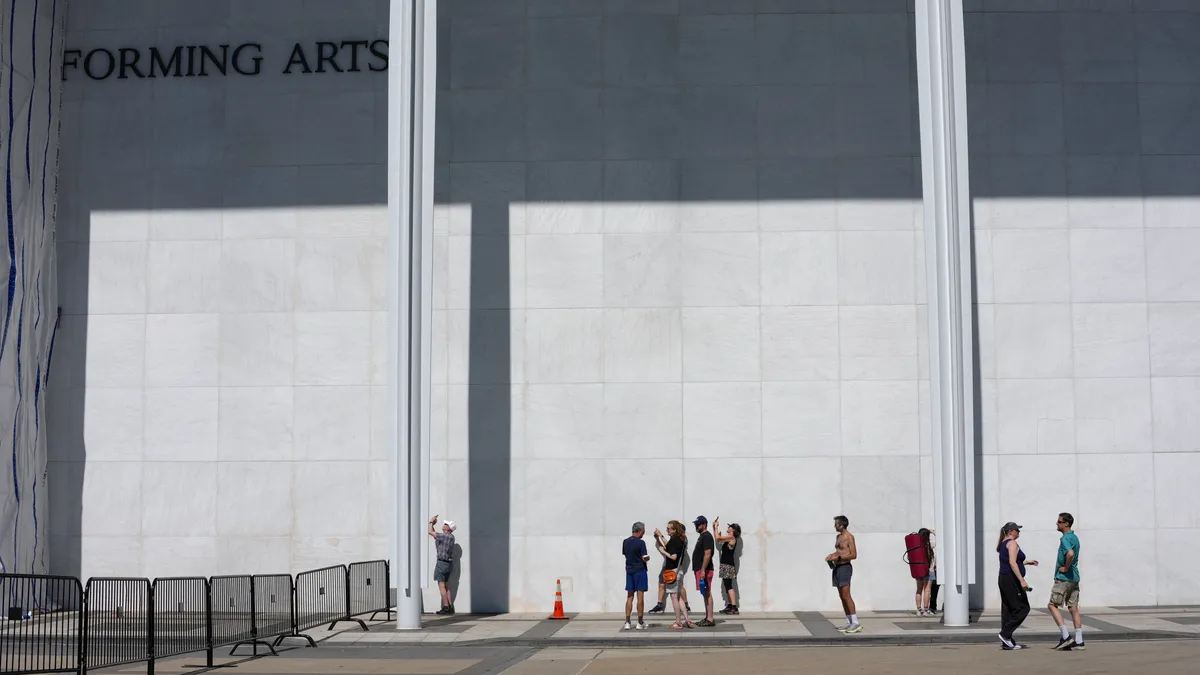
Cybersecarmor.com – Washington, D.C. – The iconic Kennedy Center has officially removed President Donald Trump’s name from its exterior signage, marking a significant moment in the ongoing dispute over the presidential label on the historic arts institution. The decision came after a last-minute effort by Trump’s team to delay the process, which ultimately failed. Workers began dismantling the display on the early morning of June 13, just hours after the court-ordered deadline passed on June 12.
Discrepancy in Timeline Sparks Controversy
The removal was executed by construction crews who first arrived on June 12 to set up scaffolding and prepare for the task. Despite the initial setup, the work was delayed for several hours, with the Trump-appointed leadership waiting until after the end-of-day deadline to proceed. The final act of removing the letters began at 3:10 a.m. ET, taking approximately 30 minutes to complete. A tarp was placed over parts of the scaffolding, likely to obscure the removal process from public view.
“We’re going to see this coming down,” said Carolina Clarence, a local resident who attended the event with her dog, Ruffino. She described the addition of Trump’s name as “ridiculous,” arguing it tarnished the Kennedy Center’s legacy. “They’re going to destroy the Kennedy Center,” she added, noting the impact on artists and donors who had withdrawn support in response to the change.
Judge’s Ruling and Legal Challenges
In a May 29 ruling, U.S. District Judge Christopher Cooper declared the addition of Trump’s name to the Kennedy Center unconstitutional, citing violations of the 1964 federal law that established the institution to honor the late President John F. Kennedy. The judge mandated the name be removed from all official materials and signage within 14 days, by June 12. However, the Trump administration pushed for an extension, arguing that recent thunderstorms had disrupted the timeline.
Despite the plea for a pause, the judge denied the request early on June 13, after the original deadline had expired. The Department of Justice confirmed the removal of Trump’s name from the building’s exterior, stating the work was finalized by the late morning. The action leaves the Kennedy Center without its most visible Trump-related emblem, a large all-caps sign that read, “THE DONALD J. TRUMP AND,” above the original inscription, “THE JOHN F. KENNEDY MEMORIAL CENTER FOR THE PERFORMING ARTS.”
Public Spectacle Amid Legal Uncertainty
As the removal process unfolded, the area around the Kennedy Center transformed into a lively scene. Hundreds of spectators gathered to witness the event, with some donning costumes as if attending a performance. The crowd erupted in cheers and patriotic songs, notably chanting “take it down” during the balmy evening. Despite the threat of thunderstorms, attendees remained enthusiastic, with honking car horns and animated conversations adding to the atmosphere.
Carolina Clarence, a retired kindergarten teacher, joined the onlookers, expressing frustration with the decision to add Trump’s name to the building. “It’s ridiculous that his name was ever put up at all,” she remarked, highlighting the perceived negative effect on the center’s reputation. Her comments reflect the broader sentiment among some D.C. residents, who view the change as an unnecessary political move.
Renaming Vote and Trump’s Influence
The Kennedy Center’s board had voted in December 2025 to rename the venue in honor of Trump, claiming the president’s policies helped secure federal funding essential for the center’s redevelopment. The name was swiftly added to the building’s exterior less than 24 hours later, sparking immediate controversy. Cooper’s ruling, however, questioned the legitimacy of this decision, pointing to the board’s composition of Trump loyalists and the rushed nature of the renaming.
With the legal battle intensifying, the center’s staff followed through on the judge’s directive, removing Trump’s name from the website and email signatures by the early part of the week. The final step—dismantling the large exterior sign—came only after the judge reviewed a last-minute appeal to delay the process. This moment symbolized the culmination of a months-long struggle, as the center’s leadership faced pressure to align with judicial decisions over its political affiliations.
Legacy of the Kennedy Center and Future Implications
The Kennedy Center, a cornerstone of Washington’s cultural landscape, has long been a symbol of bipartisan support and artistic excellence. Its decision to rename itself in Trump’s honor, however, has drawn criticism from those who argue it undermines the institution’s original mission. The removal of the name now serves as a visible reset, restoring the center’s connection to its founding ideals while signaling a shift in its public perception.
While the immediate removal was completed, the broader implications of the legal dispute linger. Cooper’s ruling underscores the importance of adhering to the Kennedy Center’s charter, which was designed to honor the legacy of President John F. Kennedy. The Trump administration’s attempt to claim ownership of the institution has been challenged as a symbolic effort to reshape its identity, a move that now appears to have been reversed.
Timeline of Events and Legal Process
From the initial vote in December 2025 to the final removal on June 13, the Kennedy Center’s name change followed a contentious path. The board’s decision to rename the venue was based on the argument that Trump’s policies had bolstered federal funding, which was critical for the center’s modernization. Yet, the rapid implementation of the change, completed within a day, raised questions about its thoroughness.
After the June 12 deadline passed, the Trump administration filed an emergency petition with the U.S. Court of Appeals, seeking to halt Cooper’s order before 7 p.m. ET. The panel of judges rejected the request, allowing the removal to proceed. This sequence of events highlights the tension between the executive branch and the judiciary, as well as the role of public opinion in shaping the outcome.
The removal of Trump’s name from the Kennedy Center represents more than just a symbolic gesture; it reflects the legal and political forces at play in the institution’s history. The center, which has hosted some of the nation’s most celebrated performances, now faces the challenge of reestablishing its original purpose while navigating the aftermath of the renaming. For now, the event stands as a testament to the power of judicial oversight and the public’s desire to see the Kennedy Center remain a beacon of cultural unity.