SpaceX IPO makes Elon Musk the first trillionaire

Elon Musk’s SpaceX IPO Marks Historic Leap to Trillionaire Status
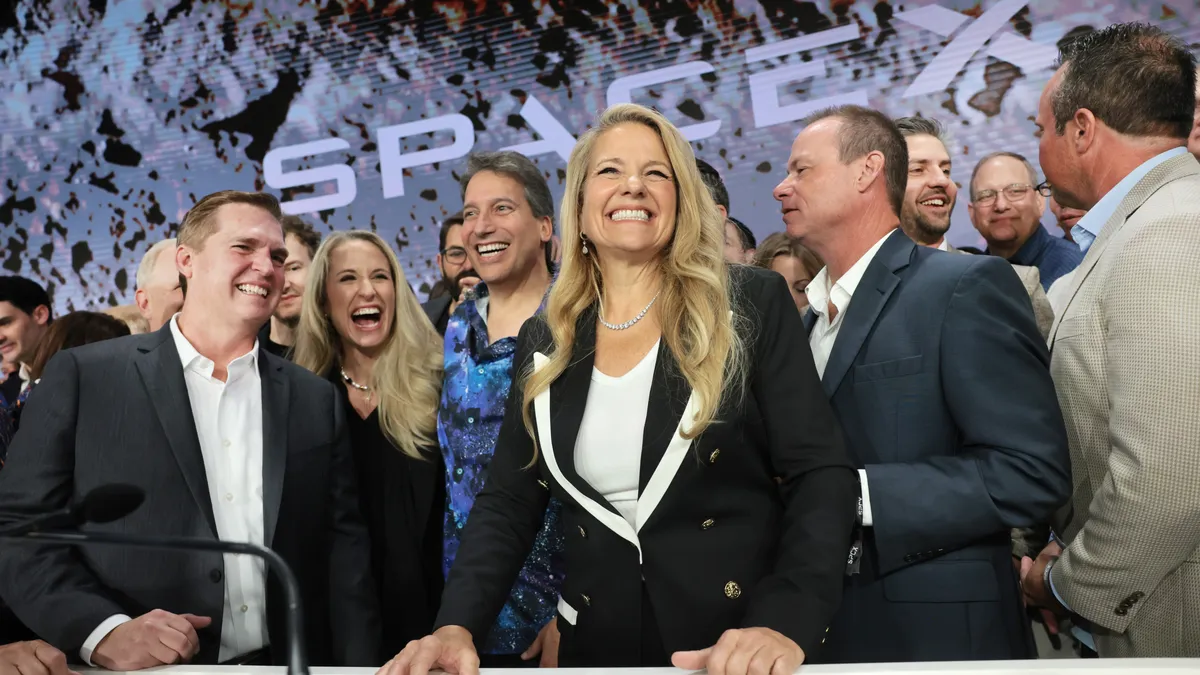
Cybersecarmor.com – On June 12, 2026, SpaceX’s debut on the Nasdaq exchange catalyzed a seismic shift in the wealth landscape, transforming Elon Musk into the first self-made trillionaire and generating over 4,000 new millionaires. The event, which saw the company’s stock surge dramatically, underscored the transformative power of the public market for private enterprises, particularly those spearheaded by visionary entrepreneurs like Musk.
IPO Details and Market Reaction
SpaceX opted for a unique IPO structure, pricing 555.6 million shares at $135 each. This valuation catapulted the company to the title of the largest initial public offering in history, a feat that drew widespread attention from investors and financial analysts. Shares opened at $150, immediately surpassing the initial offering price, and continued to climb, ending the day at $161.11—a 19.34% increase. The rapid ascent highlighted the immense public appetite for the company’s innovative mission and its potential to reshape industries.
The milestone was not just a financial triumph but a symbolic moment for the space industry. As shares traded under the ticker symbol SPCX, the market’s enthusiasm reflected broader optimism about the future of private space exploration and the disruptive potential of companies like SpaceX. However, this rapid growth also sparked debates about the sustainability of such high valuations and the role of retail investors in driving them.
Elon Musk’s Wealth Surge
With the stock’s sharp increase, Elon Musk, who had already amassed a fortune through his ventures, saw his net worth soar to unprecedented levels. Forbes officially recognized him as the world’s first trillionaire, a title earned on paper due to the IPO’s performance. The surge in value was fueled not only by the company’s growth but also by the confidence of shareholders in Musk’s leadership and his long-term vision for humanity’s expansion into space.
Among the beneficiaries were approximately 4,400 current and former SpaceX employees who held company stock or options prior to the IPO. This group, which includes both early-stage contributors and recent hires, now finds itself in a position of significant financial advantage. Of these, around 400 are projected to gain over $100 million each, a testament to the company’s meteoric rise and the rewards for those who invested in its journey.
Expert Perspectives on the IPO
“SpaceX is a prime example of how retail investors can gain access to groundbreaking private companies through a listed investment trust model,” remarked Richard Hickman, a managing director at HarbourVest Global Private Equity. His insight highlights the structural innovation behind the IPO, which allowed smaller investors to participate in a high-growth enterprise without direct ownership.
Despite the initial optimism, some advisers cautioned against overreacting to the stock’s rapid climb. Jay Woods, chief strategist at Freedom Capital Markets, noted that while the IPO generated excitement, it might follow the typical pattern of high-profile offerings: an initial price surge followed by a correction as investors reassess risks. “The most probable outcome is that the gains will eventually be given back,” he said, suggesting that patience might be key for long-term holders.
On the other hand, John Belton, a portfolio manager at Gabelli Funds, framed the IPO as a long-term opportunity. “SpaceX represents the ultimate growth stock,” he argued. “Its potential to revolutionize industries and establish a lasting legacy in space travel makes it a compelling investment for those willing to hold for years.”
Nancy Tengler, CEO of Laffer Tengler Investments, echoed this sentiment by drawing a parallel to Amazon’s transformative impact. “Jeff Bezos once said, ‘You can hate me because I’m a billionaire, but if you look at what Amazon has done for the average consumer, it saves time, hassle, and money. How do you put a price on that?’” she quoted. Tengler emphasized that even if only a fraction of SpaceX’s ambitious plans materialize, the implications could be profound, reinforcing the value of long-term investment in disruptive innovation.
Financial Challenges and Investor Confidence
Despite the IPO’s success, SpaceX’s journey has not been without hurdles. The company reported losses of approximately $4.9 billion in 2025 and another $4.3 billion in the first three months of 2026, raising questions about its financial viability. Yet, long-term investors remain undeterred, citing Musk’s track record and his ability to navigate challenges while pushing the boundaries of technology.
“Our focus is on the long haul,” Tengler explained. “We’re looking at three, five, or even ten years rather than short-term fluctuations.” This perspective aligns with the belief that SpaceX’s contributions to space travel, satellite technology, and global connectivity will justify its current valuation over time.
Meanwhile, Mike O’Rourke, chief market strategist at JonesTrading, took a more critical stance. “The frenzied buying by individual investors signals that SpaceX’s debut could become a landmark in investing infamy,” he stated. “It’s the culmination of everything that’s flawed in today’s equity markets—a clear sign of a bubble.” O’Rourke warned that the excitement around SpaceX’s “coolness” might mask deeper risks, urging investors to consider purchasing at more stable prices rather than chasing the hype.
Role of Retail Investors
Individual investors played a pivotal role in the IPO’s success, with Vanda Research noting that SpaceX’s debut far outperformed every major IPO in the past six years. The company’s public offering became a benchmark for retail participation, as investors flocked to the trust structure that made it accessible to a broader audience.
“Retail investors have poured in aggressively for SpaceX,” Vanda said in its report. “This is poised to be the most significant retail-driven IPO in recent history, surpassing even Coinbase’s debut in April 2021, which attracted $92 million in net retail buying on its first day.” The trust model, which allows retail investors to own shares without direct equity in the company, proved instrumental in fueling the demand.
However, the sheer scale of retail participation also sparked concerns about market speculation. O’Rourke highlighted the potential for overvaluation, stating, “Buying because it’s cool is the complacency that leads to investor losses.” He argued that the IPO’s success might be more about the novelty of the company than its intrinsic value, a dynamic that could play out in the months ahead.
As the market digests the IPO’s implications, the focus shifts to the future. Analysts and investors alike are now evaluating whether SpaceX’s current valuation reflects its true potential or if the market has become overly optimistic. The company’s next steps, including its financial performance and progress toward ambitious goals like Mars colonization, will likely determine how the stock evolves in the public markets.
For now, the IPO has cemented SpaceX as a symbol of innovation and financial achievement, with Elon Musk at the center of the storm. The event not only reshaped wealth distribution but also highlighted the growing influence of retail investors in the stock market—a trend that may redefine how private companies transition to public ownership in the years to come.
Medora Lee, a money, markets, and personal finance reporter at USA TODAY, covered the developments. Readers can contact her at mjlee@usatoday.com or subscribe to the free Daily Money newsletter for insights on personal finance and market trends delivered Monday through Friday.