Republicans jump ship as Trump’s anchor weighs heavy on party

Daftar Isi
Republican candidates create distance from Trump as midterm pressures intensify
Cybersecarmor.com – With the midterm election approaching, a growing number of Republican candidates are signaling that they do not want their campaigns defined entirely by President Donald Trump’s agenda. The shift is emerging in competitive races across the country, where concerns about the war in Iran, gasoline costs, immigration enforcement, tariffs and other issues have put GOP candidates under pressure.
Republicans have generally supported Trump’s ambitious second-term program in Washington and on the campaign trail. But the political environment is becoming more difficult as voter dissatisfaction with the president grows and Democrats gain ground in several races that could determine which party controls Congress.
A Reuters/Ipsos survey this week placed Trump’s approval rating at 32%, a historic low in that poll. The result has added urgency for Republican candidates who have long been closely identified with the president but now must persuade skeptical voters that they can offer an independent voice.
“You’ve got to show that you’re different,” Republican pollster and Cygnal founder Brent Buchanan said of GOP candidates appealing to Trump voters who have soured on the president.
Signs of separation in key races
In Florida, Byron Donalds, the Republican nominee for governor endorsed by Trump, removed prominent references to the president from his campaign website. Rep. Maria Elvira Salazar, also a Florida Republican, has criticized the administration’s forceful approach to deportations.
In Senate contests expected to draw national attention, Iowa Republican Ashley Hinson and Michigan Republican Mike Rogers have called for the conflict with Iran to end. Hinson, a congresswoman, is running against Democrat Josh Turek in Iowa and is trailing despite Trump’s double-digit victory in the state in 2024.
Sen. Roger Marshall of Kansas has also raised concerns about Immigration and Customs Enforcement activity in his state. Kansas has traditionally been favorable territory for Republicans, making the unease notable as the party tries to defend its position nationally.
The war in Iran has become particularly challenging for GOP candidates because of its economic consequences, including elevated fuel prices. Candidates must weigh loyalty to Trump against voters’ concerns about household costs and the course of U.S. policy abroad.
Trump remains central to the campaign
Creating distance may prove difficult. Trump has made clear that he wants the election viewed as a test of his own leadership. He has encouraged voters to act as if he were personally on the ballot and has promised to remain highly visible during the campaign.
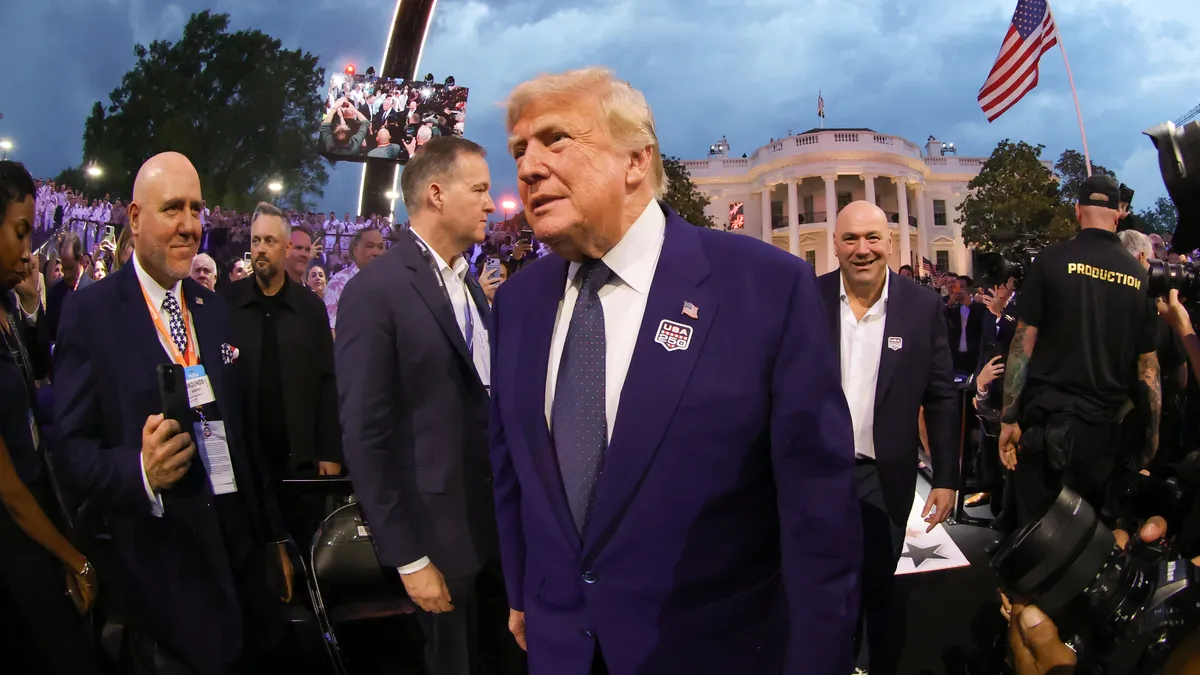
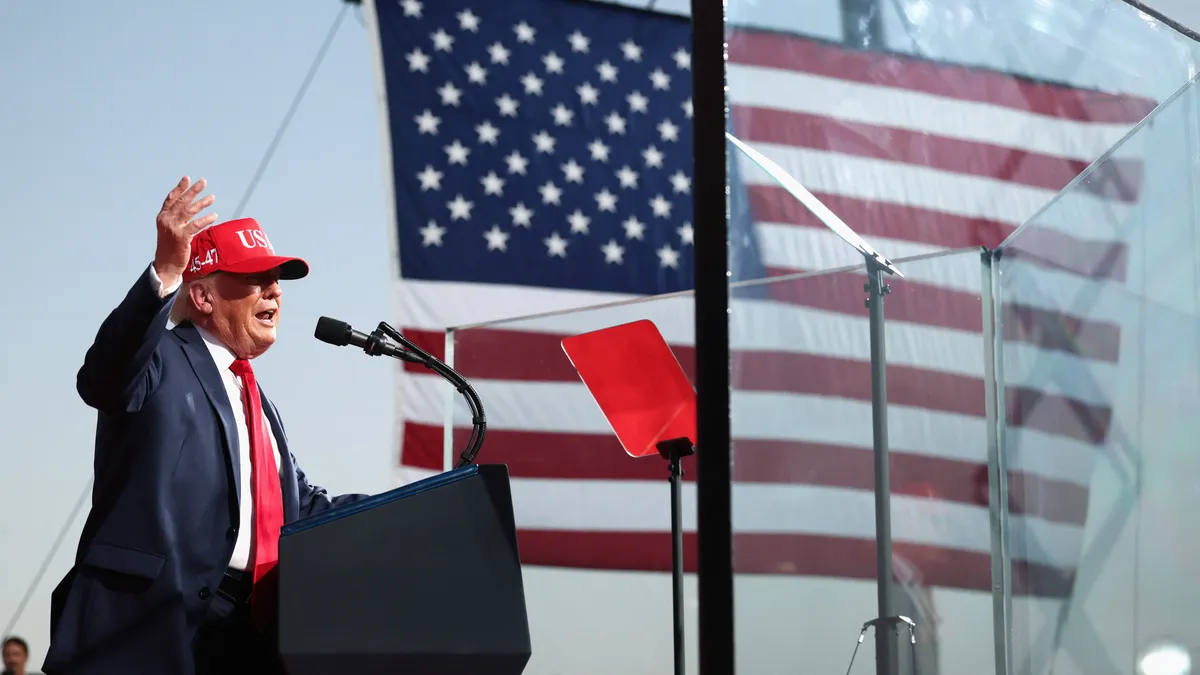
At the Republican Party’s first midterm convention in Dallas earlier this month, Trump sought to consolidate support behind his movement. Addressing the crowd, he framed the Nov. 3 election as a decisive moment for his political agenda.
“On Nov. 3, the great American majority is going to stand up and continue to make America great again,” Trump said.
Trump also floated $5,000 dividend checks for voters if Republicans keep control of Congress. The idea immediately faced skepticism, including from some prominent MAGA-aligned voices, while Democrats described it as bribery. During the event, Trump asked supporters to raise their hands, pledge allegiance and promise that they would vote.
The gathering was intended to showcase enthusiasm and cohesion; the Republican National Committee chair called it “Trumpapalooza.” Yet the convention also exposed strains within the party. Numerous seats were unoccupied, and several candidates from closely contested races did not attend.
Hinson was among those who avoided the main convention program. Although she attended a campaign fundraiser in Dallas, she did not appear on the stage where Trump delivered prime-time speeches on both nights. Days later, she widened the political gap by calling for an immediate end to the Iran war.
Policies add to Republican anxiety
The administration’s political burden extends beyond foreign policy. Polling has shown broad voter disapproval of several central elements of Trump’s program, including the Iran war, sweeping import tariffs and the administration’s hardline immigration crackdown.
Trump has also complicated the midterm landscape by promoting data centers used to power artificial intelligence. The large facilities have drawn resistance in communities across the country. In heavily Republican Western states, his effort to increase foreign beef imports in an attempt to reduce grocery prices has frustrated ranchers.
For candidates in difficult races, these issues create competing demands. They need to retain Trump supporters, many of whom remain central to Republican turnout, while also speaking to independents and disaffected voters who oppose parts of his agenda. The result is a more delicate campaign strategy than the party anticipated when Trump’s standing appeared stronger.
Political science professor David Cohen of the University of Akron argued that Republican candidates are struggling to escape an association they previously embraced. He said the party had supported treating the midterms as a judgment on Trump before the president’s poor polling became apparent.
“This is way too little, way too late,” Cohen said, arguing that Republican candidates and officeholders are “superglued to Trump, whether they want to be or not.”
A referendum Republicans cannot easily avoid
The central question for the GOP is whether selective breaks with Trump can change voters’ perceptions before Election Day. A call to halt the Iran war or criticism of immigration enforcement may help candidates demonstrate independence on a specific issue. But those efforts could be limited if voters see the larger election as a verdict on the president and the party that has largely defended him.
Democrats are seeking to turn discontent with Trump into a wider electoral advantage. Republicans, meanwhile, are trying to preserve the coalition that delivered victories in past cycles without becoming trapped by the president’s declining approval numbers.
The tension was visible in Dallas and is likely to grow in the months ahead. For Republican candidates in battleground states and districts, the challenge is no longer simply how closely to stand with Trump. It is how to separate themselves enough to survive politically while still relying on voters who remain loyal to him.
Related Reading
Frequently Asked Questions
What is Republicans jump ship as Trump s anchor?
Republicans jump ship as Trump s anchor is the main topic of this guide. The article explains the context, practical details, and next steps readers should understand.
Why does Republicans jump ship as Trump s anchor matter?
Republicans jump ship as Trump s anchor matters because readers are looking for a useful answer, not just a short summary. Good content should match search intent and help them decide what to do next.