Winter forecast controversy. Can you trust an almanac?

Daftar Isi
Winter Outlooks Stir Debate Over Almanac Forecasts
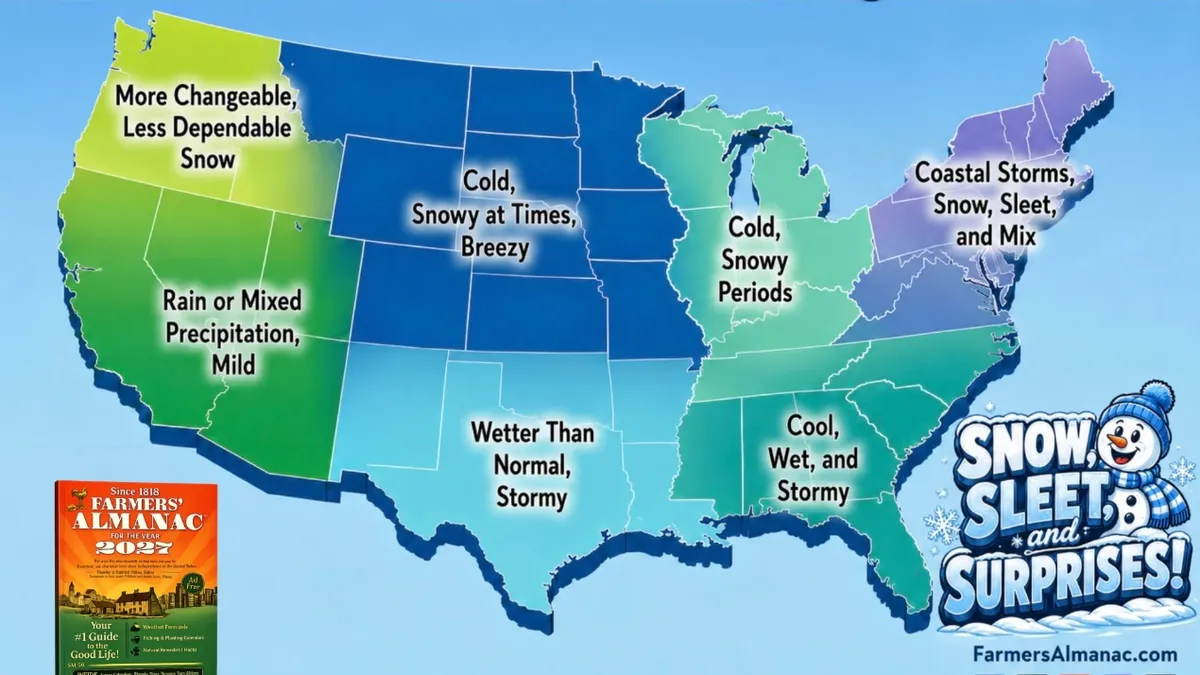
Cybersecarmor.com – After a summer marked by repeated heat, many people are already wondering when colder air, snow and more familiar winter conditions will arrive. For generations, that curiosity has sent readers to farmers’ almanacs, whether through online forecasts or the recognizable yellow-covered editions sold in print.
The appeal is easy to understand. Weather can shape travel, holiday plans, outdoor work, gardening and daily routines. A seasonal prediction may seem especially useful when people are trying to decide how to prepare for months that remain well ahead. But the confidence associated with long-range almanac forecasts has long been challenged by atmospheric scientists.
Two publications dominate the conversation: the Old Farmer’s Almanac, first published in 1792, and the Farmers’ Almanac, founded in 1818. They are separate publications, despite their similar names. Both have promoted long-term forecasts for many decades, and each says its predictions rely on a confidential formula established by its founders more than 200 years ago.
The Farmers’ Almanac is expected to end publication after its 2026 edition, closing a long chapter for one of the best-known names in seasonal weather lore. Its forecasts are prepared two years before publication, and the organization says it does not revise them after an edition has been printed.
Why Experts Question the Forecasts
Modern weather science has made major advances in observing the atmosphere and modeling near-term conditions. J. Marshall Shepherd, an atmospheric scientist at the University of Georgia, has been among the experts who reject almanacs as reliable forecasting tools.
“Scientific-based weather forecasting and short-term seasonal prediction has advanced significantly. Our models, observational systems and knowledge base has made short-term prediction, hurricane tracking, and El Niño forecasts quite reliable.”
Shepherd noted that people nevertheless continue to rely on traditional weather signs and folk methods.
“Yet people still default to groundhogs, almanacs and folklore.”
Forecasting skill depends heavily on the time frame. Day-to-day weather predictions can be useful, but even they have limits. Many people have experienced a predicted heavy storm that produced only a brief shower, or an anticipated clear day interrupted by unexpected rain. Estimates extending across an entire season face even greater uncertainty because weather patterns can change substantially over time.
Routine forecasts are generally considered reliable only for roughly two weeks. Seasonal outlooks can identify broader possibilities or trends, but they cannot offer the same certainty as a short-range forecast for a particular town, date or event.
What Almanacs Say They Use
The methods behind the almanacs remain largely undisclosed. Both publications describe their systems as combinations of weather science, climate patterns and astronomical influences, but neither shares enough detail for outside experts to independently test the complete formula.
The Old Farmer’s Almanac says its work draws on solar science, climatology and meteorology, while also using current satellite information, technology and equipment. Its stated approach includes the belief that energy released by the Sun can influence the atmosphere, weather and climate. Sunspots and solar activity are among the factors it highlights.
The Farmers’ Almanac has described a broader mix of inputs over the years, including sunspot cycles, solar activity, lunar tidal forces, planetary positions and shifts in stratospheric winds above the equator. The publication says its formula incorporates multiple techniques, along with the influence of the Moon and the Sun.
Those explanations are part of why the forecasts remain controversial. Scientists generally expect forecasting methods to be transparent enough to evaluate, compare and improve. A secret formula may preserve an almanac’s tradition and mystique, but it also makes it difficult to measure whether its methods consistently outperform chance or established climate forecasting tools.
More Than a Weather Prediction Book
The debate can obscure the fact that almanacs are not solely weather publications. An almanac is a reference work that gathers practical information on a variety of subjects. Depending on the edition, readers may find sunrise and sunset schedules, calendars, notable dates, gardening material and other seasonal information alongside weather outlooks.
That broader role helps explain their continuing cultural reach. Readers may value an almanac for its traditions, household reference material or conversation-starting forecasts, even if they do not treat every long-range prediction as a planning tool.
Heidi Stonehill, executive editor of the Old Farmer’s Almanac, said the goal of both extended outlooks and shorter forecasts is to provide useful guidance for the public.
“Both long-range weather predictions and shorter-term forecasts provide guidance on likely trends in an effort to help individuals and communities stay safe, keep productive, and enjoy life.”
She said weather matters across ordinary and significant moments alike, from trips and special gatherings to the care of plants during periods of heat, cold or dryness.
“Weather affects all our lives, in both small and large ways. Therefore, people like to know what’s ahead – how to be best prepared for inclement weather, to find out if they can look forward to a bright sunny day during their trip or special event, or if their plants need a bit of extra loving care during a hot, cold, or dry spell.”
How Readers Can Use a Seasonal Outlook
For readers eager to know what winter may bring, an almanac forecast can be viewed as a traditional long-range perspective rather than a precise promise of conditions on a specific day. It may be interesting to compare its outlook with official seasonal guidance, especially when planning activities that depend on snow, cold or severe weather.
Closer to a trip, outdoor event or potentially hazardous weather period, short-term forecasts and local weather alerts are more appropriate tools. The difference matters: a broad expectation for a colder or snowier period is not the same as a dependable prediction of when a storm will begin, how much snow will fall or which communities will be affected.
The enduring popularity of almanacs reflects a lasting desire to make sense of the seasons before they arrive. That interest is unlikely to disappear, even as scientific forecasting becomes more sophisticated. For now, the safest approach is to enjoy the long-range outlooks for the perspective they offer while relying on current, locally focused forecasts when weather decisions carry real consequences.
Related Reading
Frequently Asked Questions
What is Winter forecast controversy Can you trust?
Winter forecast controversy Can you trust is the main topic of this guide. The article explains the context, practical details, and next steps readers should understand.
Why does Winter forecast controversy Can you trust matter?
Winter forecast controversy Can you trust matters because readers are looking for a useful answer, not just a short summary. Good content should match search intent and help them decide what to do next.