Trump says US has deal to establish military presence in Greenland

Daftar Isi
U.S., Denmark and Greenland Move Toward Arctic Security Agreement
Cybersecarmor.com – President Donald Trump says the United States has reached an agreement with Denmark and Greenland that would establish a major and lasting American military presence on the Arctic territory, a development that could ease weeks of diplomatic strain among NATO partners.
Trump announced the deal Sept. 18 in a social media post, describing an arrangement that would provide the United States with permanent authority over security matters and other operational needs connected to Greenland. He said the agreement would also prevent U.S. adversaries from establishing a foothold there.
“We will immediately begin the process of developing a large Military presence in the appropriate part of Greenland,” Trump said.
The three governments are expected to formally sign the accord next week in New York during the United Nations General Assembly. Details concerning the size, location and timeline for the planned military expansion have not been publicly outlined.
Denmark says sovereignty and self-determination remain protected
Danish Prime Minister Mette Frederiksen welcomed the emerging agreement, framing it as a shared defense measure for the Arctic and the North Atlantic rather than a change in Greenland’s political status.
“I am glad that we are about to make a great agreement for Greenland, the Kingdom of Denmark, and the United States,” Frederiksen said. “An agreement which strengthens our common security in the Arctic and the North Atlantic Area and therefore is great for NATO and Europe as well.”
Frederiksen said the agreement recognizes Denmark’s sovereignty and territorial integrity, as well as the Greenlandic people’s right to determine their own future. Those points carry particular importance after earlier remarks from Trump raised fears that Washington might seek to acquire the island outright.
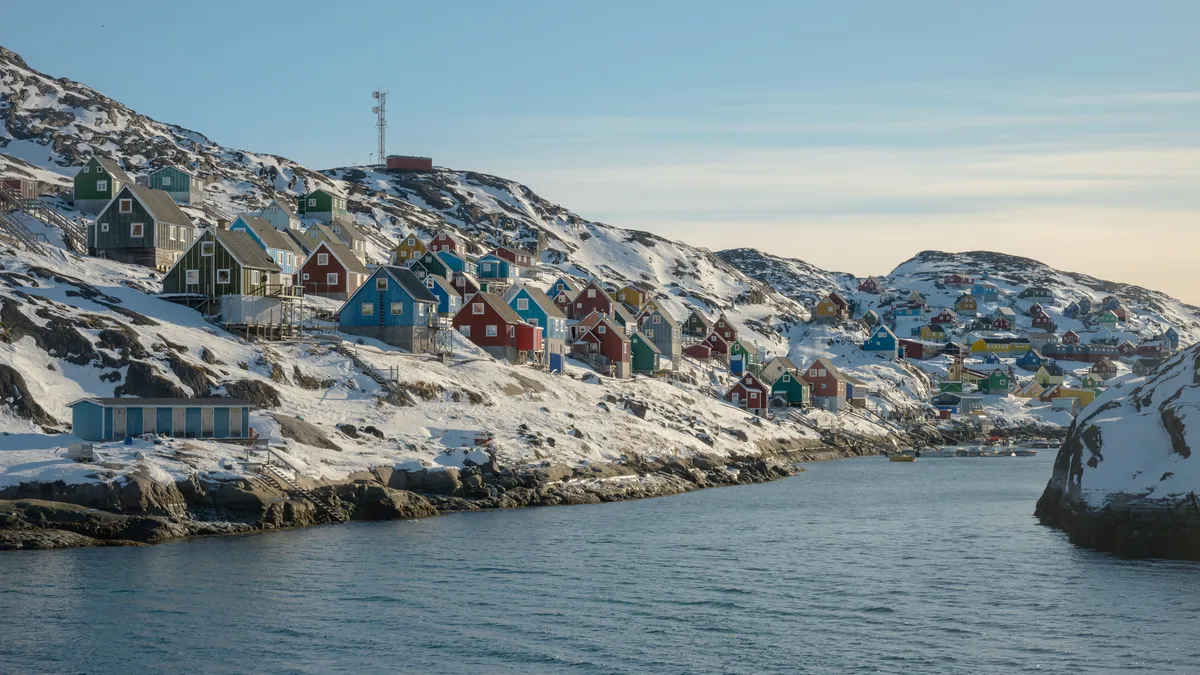
Greenland is an autonomous territory within the Kingdom of Denmark and has a population of about 57,000. Although Denmark remains responsible for key areas including defense and foreign policy, Greenland has extensive self-government and its own political institutions.
The island’s position between North America and Europe gives it major strategic value. Arctic routes, airspace and regional surveillance have long made Greenland significant to U.S. and allied defense planning. A State Department official said the United States would receive permanent access to Greenland along with basing and overflight rights.
A shift from annexation rhetoric to security cooperation
The agreement appears to offer Trump a way to secure a stronger U.S. role in Greenland without pursuing the annexation of territory governed by a NATO ally. His interest in Greenland has persisted for years, but tensions intensified earlier in 2026 when he suggested the United States could acquire it through force if necessary.
“I would like to make a deal the easy way, but if we don’t do it the easy way we’re going to do it the hard way,” Trump said on Jan. 9.
That language triggered protests in Greenland and Denmark and drew criticism from European leaders. The prospect of military action against territory linked to a fellow NATO member created an unusually sharp dispute within the alliance.
In the months since, Trump moved away from suggestions that military force could be used against the Arctic island. His administration nevertheless continued to emphasize Greenland’s security importance. In May, the United States opened a larger consulate in Nuuk, Greenland’s capital, signaling sustained diplomatic and strategic engagement.
The new arrangement would place that engagement on a more formal footing. It could allow Washington to strengthen defense operations while giving Denmark and Greenland assurances that their territorial rights remain intact.
Implications for NATO and Arctic defense
Secretary of State Marco Rubio said the planned agreement would settle the core security dispute involving Greenland. His comments emphasized the territory’s place in the broader defense of North America and the North Atlantic.
“Greenland will forever be part of the strategic defense area of North America and exclude any adversary from it and the surrounding area,” Rubio said. “This deal permanently and completely addresses our national security concerns in Greenland.”
For NATO, the accord could reinforce cooperation in a region where security concerns have increased in importance. The Arctic connects North America and Europe and is central to monitoring activity across northern air and sea approaches. A permanent U.S. military presence would add to the alliance’s ability to operate and coordinate in that environment.
The planned signing will be closely watched for language defining American access, the responsibilities of Denmark and Greenland, and protections for Greenland’s autonomy. For now, all three governments are presenting the proposed accord as a security partnership designed to strengthen the Arctic while avoiding the confrontation that dominated the issue earlier this year.
Related Reading
Frequently Asked Questions
What is Trump says US has deal to establish?
Trump says US has deal to establish is the main topic of this guide. The article explains the context, practical details, and next steps readers should understand.
Why does Trump says US has deal to establish matter?
Trump says US has deal to establish matters because readers are looking for a useful answer, not just a short summary. Good content should match search intent and help them decide what to do next.