The surprising new way to find friends and true love? Your Costco card

Daftar Isi
Costco Is Becoming an Unlikely Place to Build Connection
Cybersecarmor.com – For many shoppers, a Costco membership is primarily about buying household essentials in bulk. Yet for a growing number of Americans, a trip through the warehouse also creates time for friendship, family routines, dates and informal community.
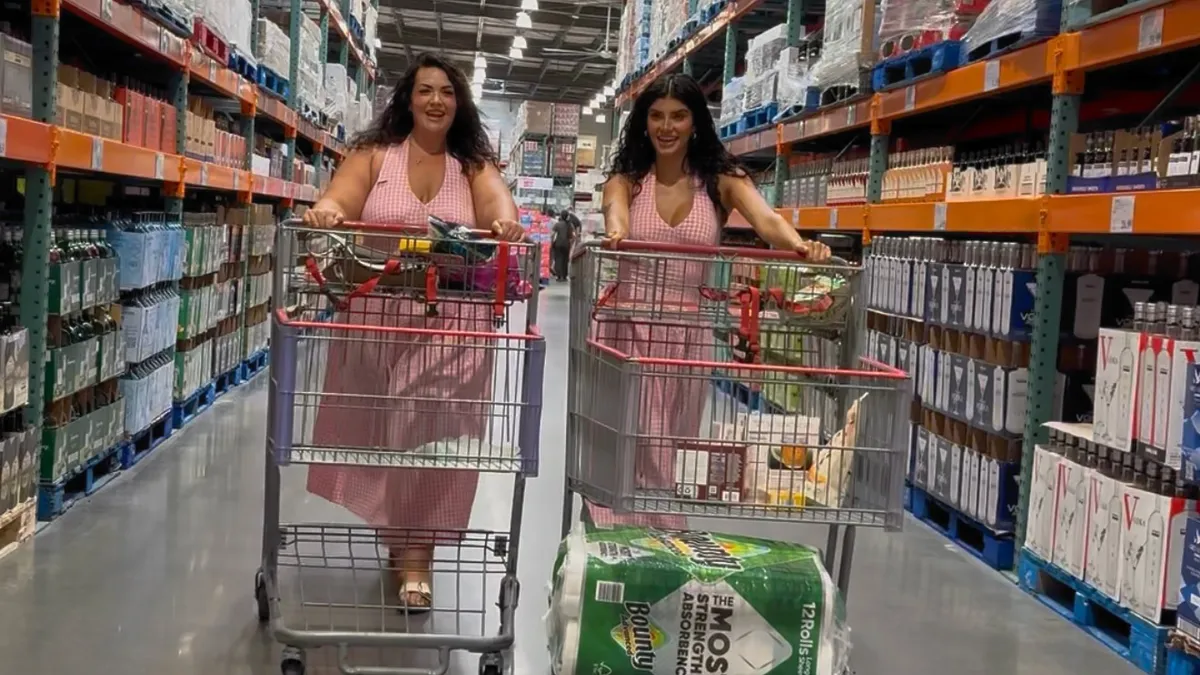
Los Angeles friends and social media creators Analyse Talavera and Carmen Rene Smith have turned shared Costco runs into a practical way to stay close despite crowded calendars. While filling carts with spicy albacore tins, protein bowls, Neutrogena makeup wipes and paper towels, they also get the chance to catch up.
“Especially in this economy, instead of going out and dropping $200 on dinner – which Analyse and I are good for – we go to Costco and stock up on meal prep for the week and then top it off with a $3 fro yo,” Smith said. “You really can’t beat that.”
Their routine reflects an appeal that goes beyond low prices. A warehouse visit can be an inexpensive social outing, with food samples, browsing and a stop at the food court built into an errand people already need to complete.
Errands With a Social Purpose
In Arizona, Lisa Bayless and Jeff Stitt have made Costco part of their marriage for 18 years. They generally shop together rather than separately. Stitt takes charge of steering and unloading the heavily loaded cart, while Bayless follows their list and keeps track of staples such as water, sugar and toilet paper.
“It’s sort of like date night, but it’s an afternoon date with a purpose,” Bayless said.
For San Jose mother Alyssa Munoz, the warehouse offers a different type of weekend outing for families. On Sunday mornings, she meets other parents there instead of gathering at a nearby park. The adults move through the aisles alongside one another, sometimes using one cart for children and another for groceries, before ending at the food court.
“They get samples , lunch and ice cream and we get our groceries done,” Munoz said.
That arrangement gives parents a chance to combine social time, childcare and shopping. It also shows why a retail environment can become useful as other casual gathering spaces feel less available.
The Modern Search for a “Third Place”
Sociologists use the phrase “third place” for settings outside the home and workplace where people can spend time with others and form relationships. Parks, libraries, neighborhood barbershops and similar public-facing spaces have traditionally filled that role.
Costco is increasingly serving a version of that purpose. Neil Saunders, managing director of GlobalData Retail, describes socializing as an important but often underestimated part of the retailer’s draw.
“While Costco’s primary purpose is as a place to stock up on products, it has also become something of a social destination,” Saunders said.
Many familiar community institutions have faced declining participation, while suburban development can make walkable meeting spots harder to find. At the same time, hours spent scrolling social platforms or watching streaming entertainment can displace face-to-face interaction. The result is a stronger desire for places that feel welcoming without requiring a formal invitation or a costly night out.
Federal data illustrates the broader shift: in-person socializing has fallen since measurement began in 2003. Americans now spend 35 minutes a day socializing face to face, a decline of 15% over a decade.
In that environment, people are finding community in settings that may once have seemed purely functional. Climbing gyms, yoga studios, independent bookstores and pickleball courts can all become regular gathering places. A membership warehouse can do the same, particularly when families and friends return frequently enough to recognize employees and fellow shoppers.
Jessica Finlay, an assistant professor of geography at the University of Colorado Boulder, points to the features that make these locations socially valuable: accessibility, relatively manageable costs, a low-pressure atmosphere, broad welcome and multiple generations sharing the same space.
“They’re typically physically accessible, relatively low-cost, low-pressure hub/hangouts, socially welcoming to a diversity of folks, and multigenerational – all key ‘third place’ attributes,’ said Jessica Finlay, an assistant professor of geography at the University of Colorado Boulder.
A Familiar Face in the Warehouse
For Wil Cid, Costco has long been more than a place to buy groceries. He has held a membership since 1988, when the company was still known as Price Club, and visits local locations three or four times each week.
His frequent presence has made him recognizable to store employees, who know him by name. After one vacation, workers repeatedly stopped him as he walked through the warehouse to ask where he had been. Friends have become accustomed to spotting him there and texting his wife, Vivian, about the sighting.
“I tell them I’m not surprised,” Vivian said. “He’s there all the time.”
Vivian embraced her husband’s enthusiasm by planning a surprise gathering at the food court for his 68th birthday, even though she does not share his devotion at the same level.
“I like Costco in an average, normal, healthy way,” she said.
Commercial spaces have served as informal town squares before. Richard Kyte, a Viterbo University ethics professor and author of Finding Your Third Place, notes that American businesses have a history of designing places where commerce and social life overlap. Suburban malls in the 1950s and 1960s were created with the ambition of becoming community anchors, often centered on busy food areas and shared public spaces.
Costco’s version of that model is less polished and more practical: oversized carts, weekend crowds, sample stations and bulk purchases. But its appeal may lie precisely in that ordinary quality. People do not need to plan a special occasion to meet there. They can shop, talk, share a meal and leave with the week’s supplies.
For households trying to protect both their budgets and their time, that combination can make a routine errand feel more meaningful. A Costco card may not replace every traditional gathering spot, but for some members it has become a small passport to connection.
Related Reading
Frequently Asked Questions
What is The surprising new way to find?
The surprising new way to find is the main topic of this guide. The article explains the context, practical details, and next steps readers should understand.
Why does The surprising new way to find matter?
The surprising new way to find matters because readers are looking for a useful answer, not just a short summary. Good content should match search intent and help them decide what to do next.